
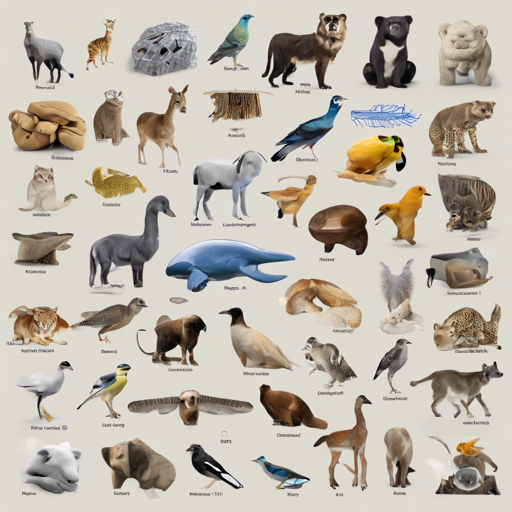
Welcome to the world of deep learning! Today, we will explore the powerful ResNet-101 v1.5 model, a convolutional neural network designed to help you classify images from the renowned ImageNet dataset. Whether you’re a beginner or an advanced user, this guide will help you harness the capabilities of this model effectively.
Understanding ResNet-101 v1.5
Before diving into the implementation, let’s clarify what ResNet-101 v1.5 is. Imagine you’re trying to build a skyscraper without any scaffolding. It can be tough to get to the upper floors without a solid foundation. ResNet introduced the idea of ‘skip connections’ – like scaffolding – which help complex models learn more effectively by allowing them to skip layers. The v1.5 model refines traditional methods by adjusting how the network downsamples, improving accuracy while balancing performance.
Model Description
The ResNet model, originally presented in the paper Deep Residual Learning for Image Recognition by Kaiming He et al., allows for deeper networks to be trained effectively. ResNet-101 v1.5 has modifications over its predecessors, making it slightly more accurate while being mindful of processing speed.
Intended Uses and Limitations
You can utilize the raw ResNet-101 v1.5 model primarily for image classification tasks. If you’re looking for models fine-tuned for specific tasks, you can visit the model hub for more options.
How to Use ResNet-101 v1.5
Here’s how you can easily classify images from the COCO 2017 dataset using ResNet-101 v1.5:
python
from transformers import AutoFeatureExtractor, ResNetForImageClassification
import torch
from datasets import load_dataset

# Load dataset and select an image
dataset = load_dataset('huggingface/cats-image')
image = dataset['test']['image'][0]

# Load the feature extractor and model
feature_extractor = AutoFeatureExtractor.from_pretrained('microsoft/resnet-101')
model = ResNetForImageClassification.from_pretrained('microsoft/resnet-101')

# Prepare inputs for the model
inputs = feature_extractor(image, return_tensors='pt')

# Predict using the model
with torch.no_grad():
    logits = model(**inputs).logits

# Getting the predicted label
predicted_label = logits.argmax(-1).item()
print(model.config.id2label[predicted_label])
Breaking Down the Code
Using an analogy, think of this code as baking a cake. Each step corresponds to a specific phase of the cake-making process:
- Gather Ingredients: Loading the dataset and selecting an image is like collecting all your ingredients before starting to bake.
- Prepare Your Tools: The feature extractor and model loading phase is akin to preheating your oven and prepping your baking pans.
- Mix Everything Together: When you prepare the inputs, you’re combining your ingredients to make the batter.
- Cook: The prediction step is like placing your batter in the oven to bake, waiting for the cake to rise and come together.
- Final Touch: Printing the predicted label is akin to carefully pulling the cake out of the oven and presenting it for taste-testing!
Troubleshooting
If you encounter issues while using the ResNet-101 v1.5 model, consider the following troubleshooting ideas:
- Import Errors: Ensure that you have installed all necessary libraries like `transformers`, `torch`, and `datasets`.
- Image Not Found: Verify that the dataset is loaded correctly and the image path is accurate.
- CUDA Out of Memory: If you are using a GPU, try reducing your batch size or using a less intensive model.
- Invalid Predictions: Check that your input image is in the correct format and adheres to pre-processing requirements.
For more insights, updates, or to collaborate on AI development projects, stay connected with fxis.ai.
Conclusion
At fxis.ai, we believe that such advancements are crucial for the future of AI, as they enable more comprehensive and effective solutions. Our team is continually exploring new methodologies to push the envelope in artificial intelligence, ensuring that our clients benefit from the latest technological innovations.
With this guide, you’re equipped to begin using ResNet-101 v1.5 for your image classification tasks. Dive in and enjoy uncovering the hidden layers of AI!