
The E5-large-unsupervised model offers a powerful solution for tasks involving sentence similarity through its ability to encode text efficiently. In this article, we will walk you through how to use this model, troubleshoot common issues, and delve into a metaphor to better understand its workings.
Understanding the E5-large-unsupervised Model
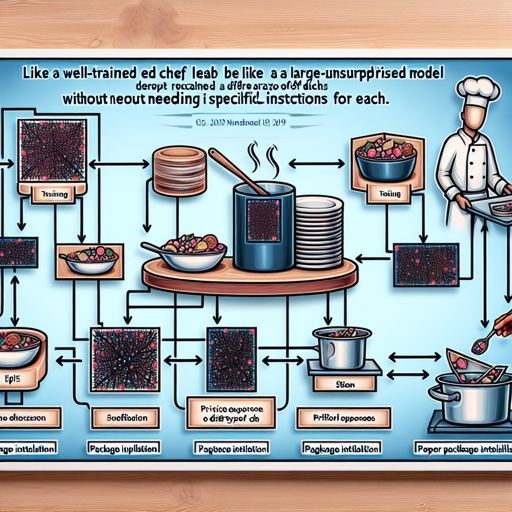
The E5-large-unsupervised model is designed to generate text embeddings without the need for supervised fine-tuning. Just like a well-trained chef can whip up flavorful dishes without needing a set recipe for every meal, this model applies its training to understand and encode text meaningfully based on previous exposure rather than direct instruction.
Using the Model
To utilize the E5-large-unsupervised model, follow these steps:
- First, ensure you have the correct package installed:
pip install sentence_transformers~=2.2.2from sentence_transformers import SentenceTransformermodel = SentenceTransformer('intfloat/e5-large-unsupervised')input_texts = [\n "query: how much protein should a female eat",\n "query: summit define",\n "passage: As a general guideline, the CDC's average requirement of protein for women ages 19 to 70 is 46 grams per day.",\n "passage: Definition of summit for English Language Learners. : 1 the highest point of a mountain."]\n\nembeddings = model.encode(input_texts, normalize_embeddings=True)That’s it! You now have embeddings that represent the input text and can be manipulated as required.
Explaining the Code: An Analogy
Let’s say encoding sentences is like creating unique fingerprints for each person. In our analogy:
- The model equates to a skilled fingerprint examiner, trained to recognize intricate patterns.
- The input texts are like the individuals whose fingerprints are being analyzed. Each fingerprint has unique characteristics (akin to word meanings and structures).
- The embedding generation process is like the examiner producing a database of fingerprints. This allows for easy comparison and retrieval of information.
- Normalizing embeddings ensures that all fingerprints are measured uniformly, allowing fair comparisons between all types.
Just as fingerprints can be used for identification purposes, sentence embeddings allow you to assess the similarity between different pieces of text.
Troubleshooting Common Issues
If you encounter issues while using the E5-large-unsupervised model, consider the following:
- If the application is giving unexpected results, ensure you are providing the correct prefixes such as “query:” and “passage:” in your input texts. This is vital for the model’s comprehension, especially for asymmetrical tasks like passage retrieval.
- If performance differs from what’s reported, it might be due to different versions of the transformers or PyTorch libraries. Make sure your versions are up-to-date.
- If you find that the model only works for English texts and truncates inputs longer than 512 tokens, consider pre-processing your data to fit these constraints.
For more insights, updates, or to collaborate on AI development projects, stay connected with fxis.ai.
Final Thoughts
At fxis.ai, we believe that such advancements are crucial for the future of AI, as they enable more comprehensive and effective solutions. Our team is continually exploring new methodologies to push the envelope in artificial intelligence, ensuring that our clients benefit from the latest technological innovations.