
Welcome to a deep dive into utilizing the German BERT models developed by the MDZ Digital Library team at the Bavarian State Library. This blog will guide you through the process of implementing and utilizing these models effectively in your natural language processing (NLP) tasks.
Introduction to German BERT Models
BERT (Bidirectional Encoder Representations from Transformers) has revolutionized the way we approach language processing. The dbmdz team has taken BERT to another level by creating models specifically tailored for German text using a wealth of training data, including Wikipedia dumps and other significant language corpora.
Understanding the Dataset
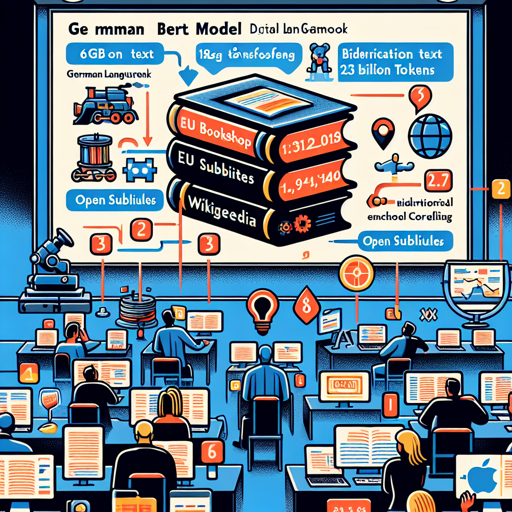
The training dataset comprises an impressive 16GB of text, amounting to over 2.3 billion tokens. This rich repository includes data from various sources:
- Wikipedia
- EU Bookshop corpus
- Open Subtitles
- CommonCrawl
- ParaCrawl
- News Crawl
How to Use the Models
To get started, you’ll need the Transformers library. Here’s a step-by-step guide on how to implement the German BERT model using Python:
from transformers import AutoModel, AutoTokenizer

tokenizer = AutoTokenizer.from_pretrained("dbmdz/bert-base-german-cased")
model = AutoModel.from_pretrained("dbmdz/bert-base-german-cased")
Analogously, think of this code as unpacking your toolbox to prepare for a DIY project. Each tool (component) you extract has a specific purpose – the AutoTokenizer helps break down sentences into manageable parts, while the AutoModel processes these parts to generate meaningful insights from your German texts.
Model Weights and Compatibility
Currently, the models are designed for PyTorch and available as follows:
- bert-base-german-dbmdz-cased
- bert-base-german-dbmdz-uncased
Troubleshooting Tips
If you encounter any issues while utilizing the German BERT models, here are some troubleshooting ideas:
- Make sure that you have the correct version of the Transformers library (≥ 2.3).
- Check your internet connection as model downloads may fail without a stable connection.
- If you need access to TensorFlow checkpoints, don’t hesitate to raise an issue here.
For more insights, updates, or to collaborate on AI development projects, stay connected with fxis.ai.
Conclusion
At fxis.ai, we believe that such advancements are crucial for the future of AI, as they enable more comprehensive and effective solutions. Our team is continually exploring new methodologies to push the envelope in artificial intelligence, ensuring that our clients benefit from the latest technological innovations.