
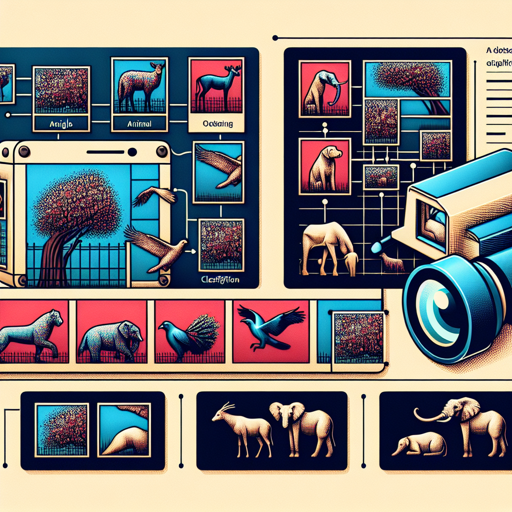
The SDXL Detector is a robust tool designed for image classification tasks. By fine-tuning the umm-maybe AI art detector using a collection of Wikimedia-SDXL image pairs, this model excels at identifying images generated by recent diffusion models while also maintaining flexibility with non-artistic images. This guide will walk you through the process of using the SDXL Detector effectively.
Understanding the Functionality
Imagine you’re at a zoo, and your task is to identify all the animals you see, but there’s a catch—you can only use pictures that have been shown to you beforehand. This is what the SDXL Detector does; it’s been trained on specific images, learning to recognize and classify them accurately. The fine-tuning on more recent AI-generated images means it has a sharper eye for the latest visual trends. However, if it were to identify images from older styles, like trying to identify a dinosaur from a sketch, it might struggle.
How to Setup SDXL Detector for Image Classification
- Step 1: Prepare Your Environment
- Ensure you have Python and necessary libraries installed, such as Hugging Face’s Transformers.
- Step 2: Load the Model
- Use the following code to import the model:
from transformers import AutoModelForImageClassification, AutoTokenizer
- Once everything is set up, run your images through the model, and it will predict the classifications based on what it has learned.
Validation Metrics
After executing the model, you’ll want to evaluate its performance using the following validation metrics:
- Loss: 0.08717025071382523
- F1 Score: 0.9732620320855615
- Precision: 0.994535519125683
- Recall: 0.9528795811518325
- AUC: 0.9980461893059392
- Accuracy: 0.9812734082397003
Troubleshooting and Tips
Sometimes things don’t go as planned. Here are some common hiccups and how to fix them:
- If your model fails to load, double-check that your environment setup is correct and that all libraries are up to date.
- An unexpected output might indicate that your images don’t closely match the training samples. SQL out older model images might lead to inaccurate classifications.
- Ensure you are processing a variety of images to test the model’s ability thoroughly—diverse datasets yield the best results.
For more insights, updates, or to collaborate on AI development projects, stay connected with fxis.ai.
Conclusion
The SDXL Detector is a significant advancement in image classification, showcasing how fine-tuning can generate powerful tools capable of discerning complex visual data. At fxis.ai, we believe that such advancements are crucial for the future of AI, as they enable more comprehensive and effective solutions. Our team is continually exploring new methodologies to push the envelope in artificial intelligence, ensuring that our clients benefit from the latest technological innovations.