
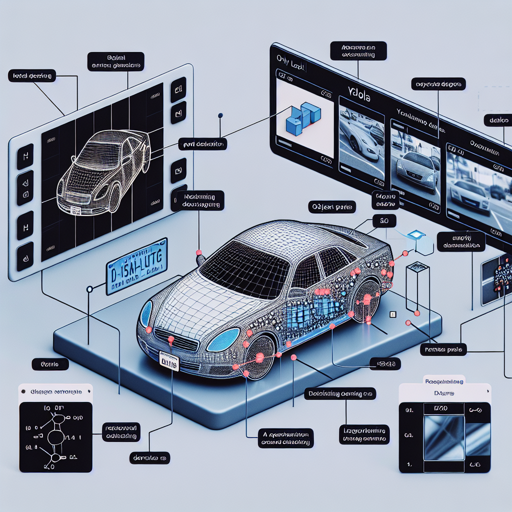
Are you ready to dive into the world of object detection? The YOLOS (You Only Look One-level Series) model is a handy tool for recognizing and locating objects in images, particularly for tasks like license plate detection. This guide will walk you through the process of using this model efficiently and effectively.
Introduction to YOLOS
The YOLOS model is a refined version of the hustvlyolos-small architecture. It has been fine-tuned using the license-plate-recognition dataset, containing thousands of images for improving its accuracy in real-world applications.
Understanding the Model Structure
Think of the YOLOS model as a talented artist who, after years of studying various painting techniques (analogous to training on diverse datasets), is adept at building compelling images (detections) of objects in a scene. This artist can recognize different objects based on their features and position them correctly—just as YOLOS recognizes various objects while also drawing bounding boxes around them.
How to Use YOLOS in Your Project
Follow these simple steps to start using the YOLOS model:
- Ensure you have Python and the necessary libraries installed.
- Import the required packages:
from transformers import YolosFeatureExtractor, YolosForObjectDetection
from PIL import Image
import requests
- Load an image from a URL:
url = "https://drive.google.com/uc?id=1p9wJIqRz3W50e2f_A0D8ftla8hoXz4T5"
image = Image.open(requests.get(url, stream=True).raw)
- Initialize the feature extractor and model:
feature_extractor = YolosFeatureExtractor.from_pretrained("nickmuchi/yolos-small-finetuned-license-plate-detection")
model = YolosForObjectDetection.from_pretrained("nickmuchi/yolos-small-finetuned-license-plate-detection")
- Prepare the image for the model:
inputs = feature_extractor(images=image, return_tensors="pt")- Get the model’s predictions:
outputs = model(**inputs)
logits = outputs.logits
bboxes = outputs.pred_boxes
Evaluation Metrics
The effectiveness of the YOLOS model can be quantified using metrics such as Average Precision (AP) and Average Recall (AR). For example, this model achieves an AP value of **49.0**, demonstrating its reliability in detecting objects accurately.
Troubleshooting
If you encounter issues while using this model, consider the following suggestions:
- Ensure all libraries are updated to their latest versions.
- Check the image URL for accessibility and correct format.
- Verify that the model has been correctly loaded.
- If performance is lacking, consider fine-tuning on additional relevant datasets.
- Refer to the model hub for more options.
For more insights, updates, or to collaborate on AI development projects, stay connected with **fxis.ai**.
Conclusion
At fxis.ai, we believe that such advancements are crucial for the future of AI, as they enable more comprehensive and effective solutions. Our team is continually exploring new methodologies to push the envelope in artificial intelligence, ensuring that our clients benefit from the latest technological innovations.