
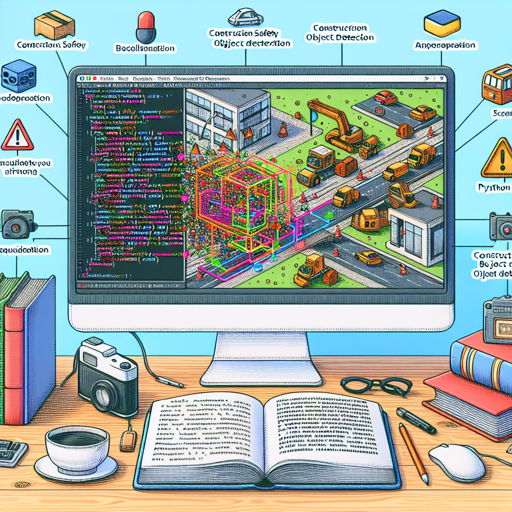
Welcome to a step-by-step guide on how to utilize YOLOv5 for detecting objects in construction safety scenarios. This article seeks to make the complexities of object detection accessible and straightforward. Let’s embark on your journey toward enhancing safety in construction through effective object detection!
What is YOLOv5?
YOLOv5 is an object detection model that allows for real-time detection of various objects from images or video feeds. It stands out for its speed and accuracy, making it a preferred choice in many applications, including construction safety.
Prerequisites
- Familiarity with Python
- Access to a terminal or command line
- Basic understanding of machine learning concepts
Step-by-Step Instructions
Step 1: Install YOLOv5
The first step is to ensure that you have YOLOv5 installed. You can do this using pip, a package manager for Python.
pip install -U yolov5Step 2: Load the Model and Perform Prediction
Once YOLOv5 is installed, the next step is to load the pre-trained model. The following code will help you set the parameters for the model and load an image for object detection:
import yolov5

# Load model
model = yolov5.load('keremberkeyolov5n-construction-safety')

# Set model parameters
model.conf = 0.25  # NMS confidence threshold
model.iou = 0.45  # NMS IoU threshold
model.agnostic = False  # NMS class-agnostic
model.multi_label = False  # NMS multiple labels per box
model.max_det = 1000  # Maximum number of detections per image

# Set image
img = 'https://github.com/ultralytics/yolov5/raw/master/data/images/zidane.jpg'

# Perform inference
results = model(img, size=640)
# Inference with test time augmentation
results = model(img, augment=True)

# Parse results
predictions = results.pred[0]
boxes = predictions[:, :4]  # x1, y1, x2, y2
scores = predictions[:, 4]
categories = predictions[:, 5]

# Show detection bounding boxes on image
results.show()

# Save results into results folder
results.save(save_dir='results')
Step 3: Fine-tuning the Model
If you want to tailor YOLOv5 to identify specific objects unique to your dataset, you can fine-tune the model:
!yolov5 train --data data.yaml --img 640 --batch 16 --weights keremberkeyolov5n-construction-safety --epochs 10Understanding the Code: An Analogy
Imagine you’re a chef preparing a special dish using a recipe (the YOLOv5 model) from an exquisite cookbook (the dataset). Here’s how the components work:
- Ingredients (Images): Just as a chef needs fresh ingredients to make a meal, YOLOv5 requires input images to analyze.
- Recipe (Model Loading): Loading the model is like reading the recipe, ensuring you understand what flavors (detection parameters) should blend together for a successful dish.
- Cooking (Inference): The inference process is similar to the cooking phase where raw ingredients are combined and heated (processed) to reveal the final dish (detection results).
- Tasting (Results Visualization): Just as a chef tastes their dish to gauge its flavor, the results showing bounding boxes visualize the detected objects to confirm the model’s accuracy.
Troubleshooting Common Issues
If you encounter issues at any stage, here are a few troubleshooting tips to help you out:
- Ensure that your Python environment has all the necessary libraries installed.
- Check the URLs for the images; they must be correct to ensure they are accessible.
- If your model isn’t detecting objects as expected, consider adjusting the confidence and IoU thresholds.
- For any other inquiries or issues, feel free to reach out for assistance.
For more insights, updates, or to collaborate on AI development projects, stay connected with fxis.ai.
Conclusion
By following these steps, you are now equipped to use YOLOv5 for object detection in construction safety scenarios. This can significantly enhance safety measures on construction sites. Keep experimenting and adjusting the model to best suit your requirements.
At fxis.ai, we believe that such advancements are crucial for the future of AI, as they enable more comprehensive and effective solutions. Our team is continually exploring new methodologies to push the envelope in artificial intelligence, ensuring that our clients benefit from the latest technological innovations.