
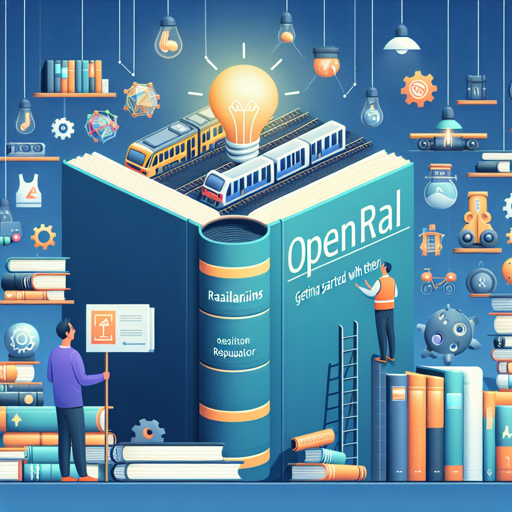
OpenRail is an innovative project designed to make rail data and resources more accessible for developers. In this blog, we’ll explore how to integrate OpenRail into your projects seamlessly, giving you the tools to harness rail data effectively.
Understanding the Basics of OpenRail
Before diving into how to use OpenRail, let’s take a moment to understand its essence. Think of OpenRail as a library filled with books about railways; each book represents various datasets and resources that can help developers create innovative rail-related applications.
Getting Started with OpenRail
- Step 1: Access the OpenRail Resource To start using OpenRail, first, you need to access its resources. This typically involves visiting the main repository or website.
- Step 2: Fork the Repository By forking the repository, you create your own copy of all the data. This is akin to borrowing books from that library, ensuring you can work on your own without disturbing the original collection.
- Step 3: Clone to Your Local Environment Once forked, clone the repository to your local development environment. It’s like checking out a book that you’ll read at home.
- Step 4: Integration Now, you can start integrating the data into your applications. Use the datasets to create simulations, build analytics tools, or develop new features. This is where your creativity comes in!
Example Code to Get You Started
Here’s an example of how you might initiate a connection to the OpenRail dataset:
import openrail

# Connect to OpenRail API
rail_data = openrail.connect(api_key='YOUR_API_KEY')

# Fetch rail network information
rail_network = rail_data.get_network_info()
Analogies to Simplify Understanding
Think of the code above as a ticketing system at a train station:
- The import openrail line is like having your train ticket ready before you get on board.
- The openrail.connect(api_key=’YOUR_API_KEY’) function is akin to showing your ticket to the operator, proving that you have permission to access the train services.
- The .get_network_info() call represents your journey. Once onboard, you can explore various stops and see the network layout, just as you would by collecting rail information.
Troubleshooting Common Issues
While using OpenRail, you might encounter some hurdles. Here are some troubleshooting ideas:
- Issue: Authentication Failure If you receive an error regarding authentication, double-check your API key. Ensure that it’s correctly entered and has the necessary permissions.
- Issue: Data Not Loading If the datasets are not loading, there could be a connectivity issue. Ensure that you’re connected to the internet and that the OpenRail server is up and running.
- Need More Help? For more insights, updates, or to collaborate on AI development projects, stay connected with fxis.ai.
Concluding Thoughts
At fxis.ai, we believe that such advancements are crucial for the future of AI, as they enable more comprehensive and effective solutions. Our team is continually exploring new methodologies to push the envelope in artificial intelligence, ensuring that our clients benefit from the latest technological innovations.