
Welcome to the world of PhilTa, a groundbreaking language model that bridges the past with the present! In this article, we’ll walk you through how to leverage this multilingual encoder-decoder model and explain its components using creative analogies, ensuring you have an enjoyable and enriching experience.
Understanding PhilTa: A Culinary Analogy
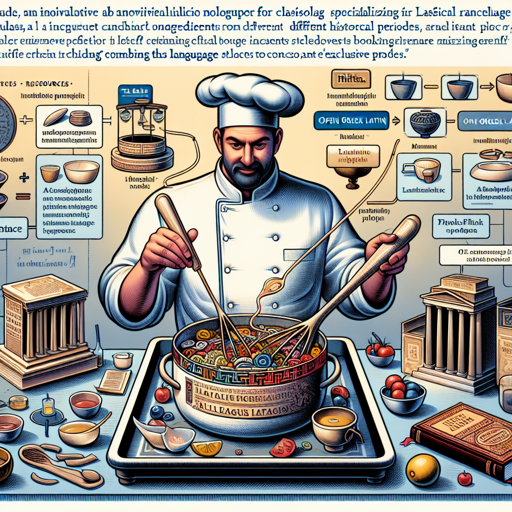
Imagine PhilTa as a master chef specializing in ancient languages—an expert who can concoct delightful linguistic dishes using rare ingredients from different historical kitchen timelines. With its T5-base size, PhilTa combines the essence of various language styles—Greek, Latin, and others—much like a chef mixes bold flavors to create a unique dish. This model is finely tuned, having been trained with rich ingredients from sources like the Open Greek Latin Project, the CLARIN corpus, and many more.
Getting Started with PhilTa
Let’s whip up some delicious outputs with PhilTa by following these simple steps:
- Install Required Libraries:
To create your own masterpieces with PhilTa, ensure you have the
transformerslibrary installed in your Python environment. - Import the Tokenizer and Model:
Open your favorite code editor and insert the following code snippet:
python
from transformers import AutoTokenizer, AutoModelForConditionalGeneration

tokenizer = AutoTokenizer.from_pretrained("bowphs/PhilTa")
model = AutoModelForConditionalGeneration.from_pretrained("bowphs/PhilTa")
This code selects the appropriate tokenizer and model, allowing you to prepare your ingredients for cooking!
Evaluating PhilTa’s Outputs
Once you have fine-tuned your model, it’s essential to assess its performance, much like tasting a dish before serving it up. PhilTa has showcased impressive results, achieving a 97.33% accuracy in classical lemmatization when evaluated on the EvaLatin 2022 dataset. This means it excels at understanding the nuances across different time periods and genres!
Troubleshooting Tips
Should you face any hiccups while using PhilTa, don’t worry! Here are some troubleshooting ideas:
- Ensure that the libraries are installed correctly and are up to date. Sometimes a simple update can save the day!
- If you encounter memory errors, consider optimizing your data or adjusting batch sizes.
- Review your input data for formatting issues, as incorrect formats can lead to unexpected outputs.
For further assistance, feel free to reach out. For more insights, updates, or to collaborate on AI development projects, stay connected with fxis.ai.
Our Commitment to AI Advancements
At fxis.ai, we believe that such advancements are crucial for the future of AI, as they enable more comprehensive and effective solutions. Our team is continually exploring new methodologies to push the envelope in artificial intelligence, ensuring that our clients benefit from the latest technological innovations.
By harnessing PhilTa, you’re not only accessing a phenomenal tool for classical philology but also participating in a broader narrative of linguistic exploration. Happy coding!