
Are you eager to bridge the gap between Ancient Chinese and Modern Chinese? The Erya model, meticulously crafted for this purpose, operates on the cutting-edge Encoder-Decoder architecture. In this guide, we’ll walk you through the steps to get started with Erya, ensuring you’re well-equipped to leverage its capabilities.
Understanding Erya: An Analogous Approach
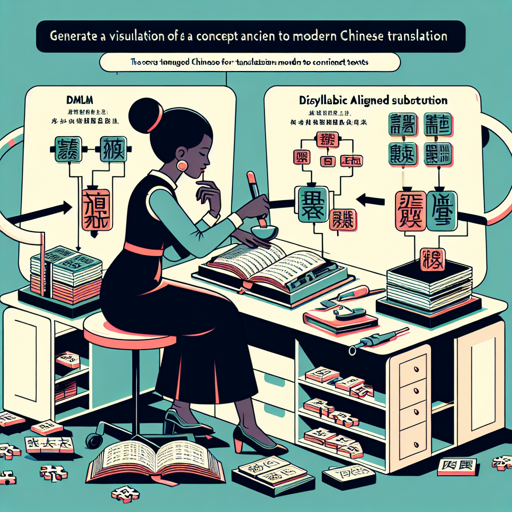
Think of the Erya model as a skilled librarian who specializes in ancient texts. The librarian has two key tasks: understanding the old inscriptions (Ancient Chinese) and translating them into contemporary language (Modern Chinese). To efficiently do this, the librarian uses two main techniques:
- DMLM (Dual Masked Language Model): This is like a puzzle where the final picture is revealed by guessing some missing pieces based on context.
- DAS (Disyllabic Aligned Substitution): Consider this a translating dictionary that intelligently replaces complex words with their simpler modern counterparts, ensuring clarity.
With these tools, our librarian (the Erya model) can produce coherent translations that resonate with today’s readers.
Getting Started with Erya
To begin your journey with the Erya model, you will first need to install the necessary packages. You’ll want to use the ‘transformers’ library in Python to make this happen. Below is a streamlined code example to get you rolling:
python
from transformers import BertTokenizer, CPTForConditionalGeneration

tokenizer = BertTokenizer.from_pretrained("RUCAIBoxErya")
model = CPTForConditionalGeneration.from_pretrained("RUCAIBoxErya")

input_ids = tokenizer("安世字子孺,少以父任为郎。", return_tensors="pt")
input_ids.pop("token_type_ids")

pred_ids = model.generate(max_new_tokens=256, **input_ids)
print(tokenizer.batch_decode(pred_ids, skip_special_tokens=True))
Breakdown of the Code Explanation
Here’s what’s happening in the code, step-by-step:
- Importing Libraries: We start by bringing in the necessary tools from the transformers library.
- Loading the Model: The tokenizer and model are loaded based on the specific pathway “RUCAIBoxErya”.
- Input Preparation: The ancient text you intend to translate is prepared and converted into ‘input_ids’ that the model can understand.
- Making Predictions: The model generates a predicted translation by processing the input IDs, considering special tokens for nuanced comprehension.
- Decoding the Output: Finally, the translated text is decoded and displayed, giving you the Modern Chinese equivalent!
Troubleshooting Tips
If you encounter any issues while using the Erya model, don’t fret! Here are some troubleshooting ideas:
- Model Not Found Errors: Ensure you’ve correctly specified the model name “RUCAIBoxErya” and that your internet connection is stable.
- Input Length Issues: Verify that your input doesn’t exceed the model’s token limit. Simplifying longer texts may help.
- Dependency Problems: Ensure that you have the latest version of the transformers library installed. Run
pip install --upgrade transformersto fix this.
For more insights, updates, or to collaborate on AI development projects, stay connected with fxis.ai.
Conclusion
With the Erya model, embarking on the journey to transform ancient wisdom into contemporary language has never been easier. Just like our librarian, who’s got all the right tools to decode the past for the present, you’ll have the means to explore the rich tapestry of Chinese literature.
At fxis.ai, we believe that such advancements are crucial for the future of AI, as they enable more comprehensive and effective solutions. Our team is continually exploring new methodologies to push the envelope in artificial intelligence, ensuring that our clients benefit from the latest technological innovations.