
The shibing624text2vec-base-chinese-paraphrase model is an advanced tool designed to encode sentences into a multidimensional vector space. This model excels at tasks such as sentence embeddings, text matching, and semantic search. In this blog post, we will walk you through the steps to implement this model effectively, as well as troubleshoot potential issues you may encounter along the way.
Understanding the Model
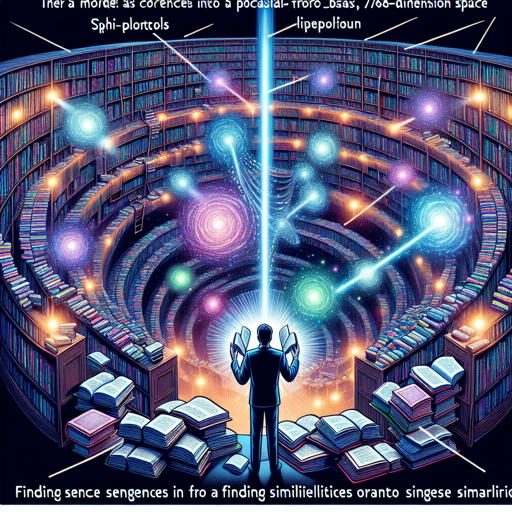
Imagine the model as a sophisticated librarian with a massive library of knowledge stored in the form of books (sentences). Each sentence is transformed into a 768-dimensional space, allowing the librarian to easily find similarities between different sentences based on their content. In this analogy, just as the librarian can quickly locate similar topics across various literature, this model can find similarities between sentences efficiently.
Installation Steps
First, ensure you have the required packages installed. You can use pip to install the text2vec library:
pip install -U text2vecUsage with text2vec
Once you have installed the library, you can easily use the model as follows:
from text2vec import SentenceModel

sentences = [如何更换花呗绑定银行卡, 花呗更改绑定银行卡]
model = SentenceModel('shibing624text2vec-base-chinese-paraphrase')
embeddings = model.encode(sentences)

print(embeddings)
Usage without text2vec
If you prefer not to use text2vec, you have the option to use the transformers library directly:
pip install transformersAfter installing, load the model as shown below:
from transformers import BertTokenizer, BertModel
import torch

def mean_pooling(model_output, attention_mask):
    token_embeddings = model_output[0]
    input_mask_expanded = attention_mask.unsqueeze(-1).expand(token_embeddings.size()).float()
    return torch.sum(token_embeddings * input_mask_expanded, 1) / torch.clamp(input_mask_expanded.sum(1), min=1e-9)

tokenizer = BertTokenizer.from_pretrained('shibing624text2vec-base-chinese-paraphrase')
model = BertModel.from_pretrained('shibing624text2vec-base-chinese-paraphrase')

sentences = [如何更换花呗绑定银行卡, 花呗更改绑定银行卡]
encoded_input = tokenizer(sentences, padding=True, truncation=True, return_tensors='pt')

with torch.no_grad():
    model_output = model(**encoded_input)

sentence_embeddings = mean_pooling(model_output, encoded_input['attention_mask'])
print('Sentence embeddings:')
print(sentence_embeddings)
Using Sentence-Transformers
You can also utilize the popular sentence-transformers library by running:
pip install -U sentence-transformersLoad the model and compute embeddings as follows:
from sentence_transformers import SentenceTransformer

m = SentenceTransformer('shibing624text2vec-base-chinese-paraphrase')
sentences = [如何更换花呗绑定银行卡, 花呗更改绑定银行卡]
sentence_embeddings = m.encode(sentences)

print('Sentence embeddings:')
print(sentence_embeddings)
Intended Uses
The primary aim of this model is to serve as a sentence and short paragraph encoder. It outputs a vector that encapsulates the semantic information of the input text, which can be applied in various tasks such as information retrieval, clustering, or determining sentence similarity. It’s worth noting that any input exceeding 256 word pieces will be truncated.
Troubleshooting Tips
- Installation Errors: Ensure that you have a compatible Python version and that all dependencies are properly installed. Re-run the installation commands if necessary.
- Memory Issues: If you run into memory problems, try using a smaller batch size or optimizing your model performance settings.
- Model Not Found: Verify that your model name is correctly spelled and that you have internet access to download the model.
- If issues persist, don’t hesitate to seek further assistance. For more insights, updates, or to collaborate on AI development projects, stay connected with fxis.ai.
Conclusion
By following the outlined steps, you can efficiently leverage the shibing624text2vec-base-chinese-paraphrase model to enhance your text processing tasks. This model simplifies the complexity of working with text embeddings, allowing you to focus on your core application. At fxis.ai, we believe that such advancements are crucial for the future of AI, as they enable more comprehensive and effective solutions. Our team is continually exploring new methodologies to push the envelope in artificial intelligence, ensuring that our clients benefit from the latest technological innovations.