
The Apache License 2.0 is a popular open-source license known for its permissive nature that allows for both commercial and private use. This blog post will guide you through understanding, implementing, and troubleshooting issues that may arise while using this license.
Understanding the Apache License 2.0
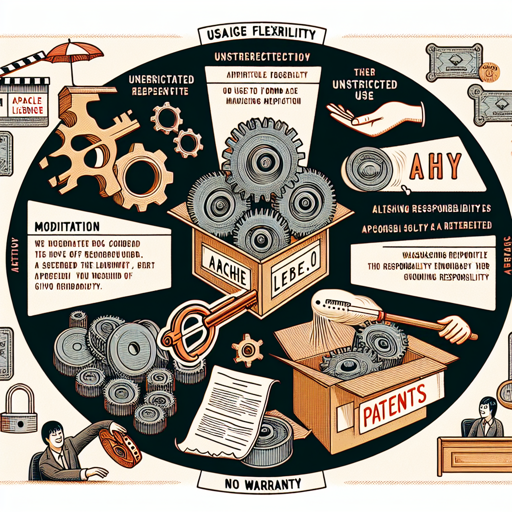
Before diving into how to use the Apache 2.0 License, it’s important to grasp its core components:
- Usage flexibility: You can use the software in any way you see fit, including for commercial projects.
- Modification: You’re allowed to modify the code and distribute it under your terms.
- Attribution: Users must credit the original authors in any distributed software.
- Patents: The license grants a license for any patents associated with the code.
- No warranty: The license explicitly states that the software comes “as-is” without warranty.
How to Implement the Apache License 2.0
Here’s a step-by-step guide to implementing the Apache License 2.0 in your projects:
Step 1: Choose Your Project
Start with a project where you want to apply the license. This could be anything from a small tool to a large software suite.
Step 2: Include the License File
Create a file named LICENSE in your project root. You can find the text for the Apache 2.0 license on the Apache website.
Step 3: Add a Header to Your Source Files
Including a standard header in your source files is crucial. It indicates that your project is licensed under the Apache License 2.0. Here’s an example:
/*
 * Licensed to the Apache Software Foundation (ASF) under one
 * or more contributor license agreements. See the NOTICE file
 * distributed with this work for additional information
 * regarding copyright ownership. The ASF licenses this file
 * to you under the Apache License, Version 2.0 (the
 * "License"); you may not use this file except in compliance
 * with the License. You may obtain a copy of the License at
 *
 *     http://www.apache.org/licenses/LICENSE-2.0
 *
 * Unless required by applicable law or agreed to in writing,
 * software distributed under the License is distributed on an
 * "AS IS" BASIS, WITHOUT WARRANTIES OR CONDITIONS OF ANY KIND,
 * either express or implied. See the License for the specific
 * language governing permissions and limitations under the
 * License.
 */
Step 4: Publish Your Project
Once you’ve completed the above steps, you can publish your project! Make sure to include the license in all distributions.
Analogies to Simplify Understanding
Think of the Apache License like a community garden. You can plant your vegetables (software) there, tend to them (modify the code), and invite others to join you. However, you must ensure that everyone knows who cultivated the garden (attribution) and that each gardener agrees not to hold the others responsible if a plant fails (no warranty). You can even share seeds with friends or use them for your own dish (commercial use) as long as you acknowledge the original source.
Troubleshooting Common Issues
Here are some common problems you might encounter while using the Apache 2.0 License:
- Issue: Confusion over Attribution: Always check that your project’s documentation clearly cites all original authors.
- Issue: Not Including the License File: Make sure the LICENSE file is included in every release and distribution.
- Issue: Misunderstanding Supporting Patents: Familiarize yourself with the patent rights stated in the license to avoid legal problems.
For more insights, updates, or to collaborate on AI development projects, stay connected with fxis.ai.
Conclusion
Understanding and implementing the Apache License 2.0 can open doors to collaboration and innovation in the software community. By following these simple steps, you can ensure that your projects remain compliant while benefiting from the permissions that this license offers.
At fxis.ai, we believe that such advancements are crucial for the future of AI, as they enable more comprehensive and effective solutions. Our team is continually exploring new methodologies to push the envelope in artificial intelligence, ensuring that our clients benefit from the latest technological innovations.