
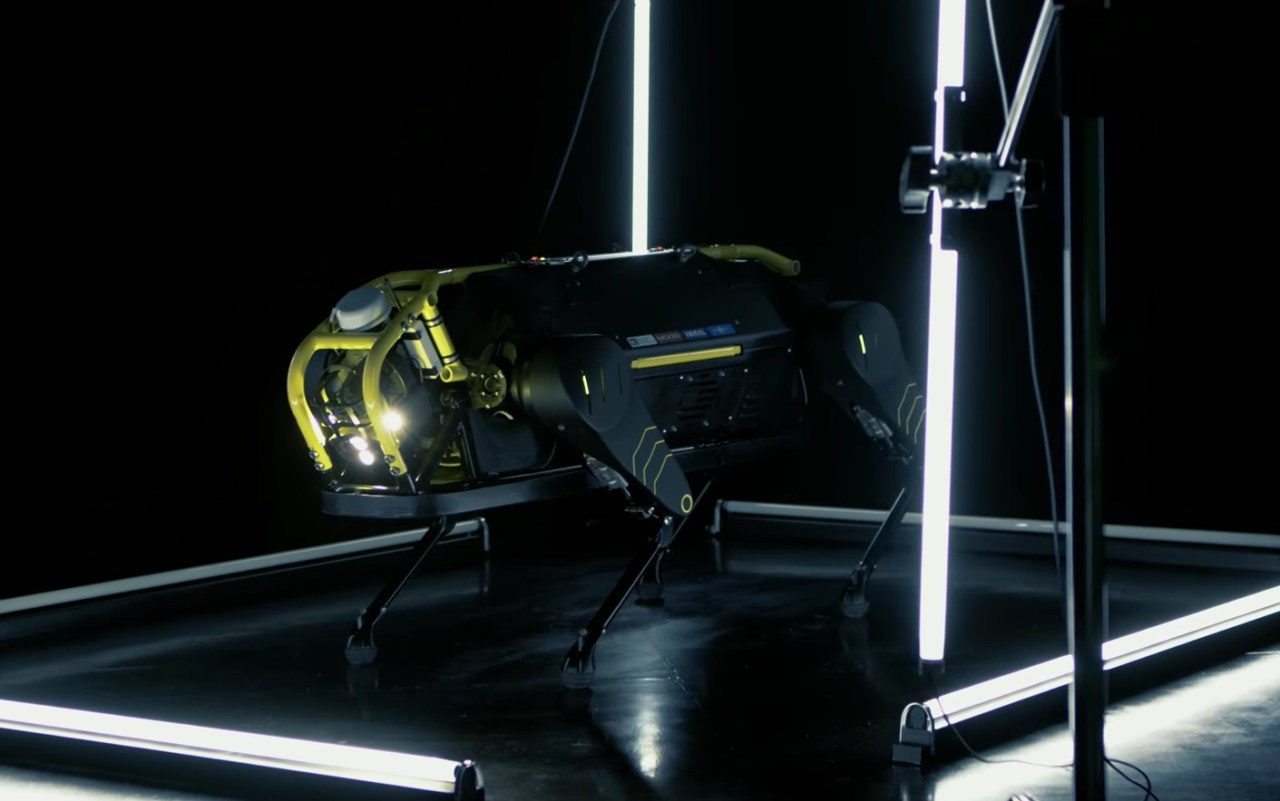
The evolution of robotic technology continues to astound us, pushing the boundaries of what’s possible and reimagining the roles these machines can play in our daily lives. One of the latest advancements in this field is the HyQReal—an innovative quadrupedal robot that recently made waves by demonstrating its impressive strength by pulling a small airplane. This remarkable feat not only showcases what HyQReal is capable of but also opens the door to a myriad of potential applications for powerful robotics.
The Evolution of HyQReal
HyQReal stands out as the successor to the earlier HyQ model created by the Italian Institute of Technology. This robust robot has been designed with enhanced features that set it apart from its predecessor. Its hefty frame, which is akin to that of a well-built linebacker, is constructed from durable materials, providing both stability and strength.
- Dimensions and Weight: Measuring about four feet long and three feet high, HyQReal weighs in at a formidable 130 kilograms (approximately 287 pounds).
- Hydraulic Innovations: Collaborating with Moog, the robotics team has integrated high-powered hydraulics that enable the robot to execute powerful movements, ensuring that it can handle strenuous tasks that standard robots might struggle with.
- Resilience: Designed to withstand dust and water exposure, HyQReal shows promise in challenging environments, demonstrating its ability to function even under adverse conditions.
Capabilities and Future Prospects
While the spectacle of a robot pulling an airplane is captivating, it’s essential to recognize that HyQReal’s true potential lies in its versatility. As robotic arms and cargo attachments are still in development, this quadrupedal powerhouse serves as a testbed for future enhancements.
What makes HyQReal particularly exciting is the shift from novelty to practical applications. Engineers are now exploring ways for these robots to operate efficiently within human-centric environments, offering potential solutions for various industries:
- Agriculture: HyQReal could assist in heavy lifting or transporting goods across expansive farmland.
- Search and Rescue: Its robust design may help navigate terrains that are difficult for humans, providing critical support during emergencies.
- Military Applications: The strength and resilience of HyQReal make it suitable for deployments in challenging environments.
Conclusion: Embracing the Future of Robotics
HyQReal represents a pivotal step in the evolution of quadrupedal robots, demonstrating that capability extends beyond size to encompass versatility and adaptability. While it stands as a symbol of strength today, its true impact lies in the various roles it can embark on in the future. As the field of robotics continues to grow, innovations like HyQReal encourage us to imagine a world where humans and robots collaborate seamlessly for mutual benefit.
At **[fxis.ai](https://fxis.ai/edu)**, we believe that such advancements are crucial for the future of AI, as they enable more comprehensive and effective solutions. Our team is continually exploring new methodologies to push the envelope in artificial intelligence, ensuring that our clients benefit from the latest technological innovations.
For more insights, updates, or to collaborate on AI development projects, stay connected with **[fxis.ai](https://fxis.ai/edu)**.