
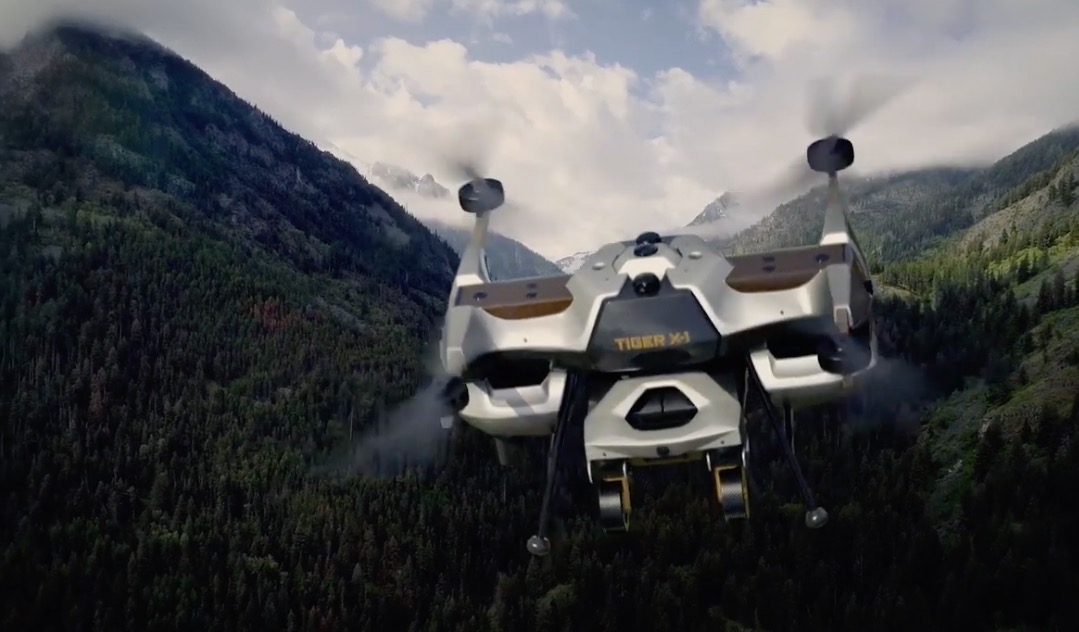
The Hyundai Motor Group is once again pushing the boundaries of mobility technology with its latest innovation—the TIGER robot. This remarkable creation is a “walking car” that combines both wheeled and legged locomotion, allowing it to traverse various terrains with ease. Designed primarily for cargo transport, this compact robot can also interface seamlessly with drones for enhanced functionality. In this blog post, we’ll explore the fascinating features of the TIGER robot, its development journey, and the potential implications for future mobility solutions.
The Concept Behind TIGER
Hyundai’s TIGER, short for Transforming Intelligent Ground Excursion Robot, is the first uncrewed ultimate mobility vehicle (UMV) concept developed at New Horizons Studio in Mountain View, California. This concept arose following the success of its larger predecessor, the Elevate, which catered to transporting individuals. By shrinking its core elements, Hyundai aims to explore new functionalities without compromising on performance or usability.
Design and Technology Features
- Modular Platform Architecture: Much like the Elevate, the TIGER boasts a modular design that enables flexibility in its applications. This foundational aspect simplifies modifications for various missions.
- Dual Locomotion System: The TIGER possesses the ability to switch between wheel and leg modes. On smoother surfaces, it operates on its wheels. When faced with obstacles such as logs or small walls, it can stand up and walk, showcasing impressive adaptability.
- 360-Degree Control: This feature grants the robot full maneuverability, allowing it to navigate even the most challenging environments with precision and ease.
- Drone Connectivity: One of the TIGER’s standout features is its ability to connect with drones, which can not only transport it but also recharge it mid-flight—a visionary move towards integrating land and air mobility.
Development Timeline
Hyundai’s head of New Horizons Studio, John Suh, has ambitious goals for the TIGER robot, aiming to bring this innovative concept to fruition in about five years. With the initial two years focused on solving core technical challenges, the team plans to refine the design before moving into the beta product stage by 2023. The implementation of rigorous testing phases is essential to ensuring the robot meets both safety and efficiency standards, paving the way for consumer availability.
Collaborative Innovations
The development of TIGER has seen collaborations with renowned firms including Autodesk and Sundberg-Ferar. By leveraging their expertise in engineering design software and concept design, Hyundai is positioned to optimize the robot’s performance and design aesthetics. Such partnerships highlight the importance of collaboration in pushing the envelope of technology and innovation.
Implications for the Future
As cities evolve and the demand for versatile and efficient transportation options grows, the potential applications for the TIGER robot are vast. From delivering packages in urban areas to performing search and rescue missions in challenging environments, TIGER represents a transformative approach to mobility. Moreover, it opens the door to a future where drones and ground vehicles work in tandem, reshaping our perception of how goods and services are transported.
Conclusion
The TIGER robot is not just a fascinating concept; it embodies Hyundai’s vision for the future of mobility. By integrating advanced technologies and focusing on solving real-world problems, this innovation could pave the way for entirely new modes of transportation. As we eagerly await its arrival in the market, the continued development of autonomous robots like TIGER is essential in building a future that is both efficient and sustainable. At fxis.ai, we believe that such advancements are crucial for the future of AI, as they enable more comprehensive and effective solutions. Our team is continually exploring new methodologies to push the envelope in artificial intelligence, ensuring that our clients benefit from the latest technological innovations. For more insights, updates, or to collaborate on AI development projects, stay connected with fxis.ai.