
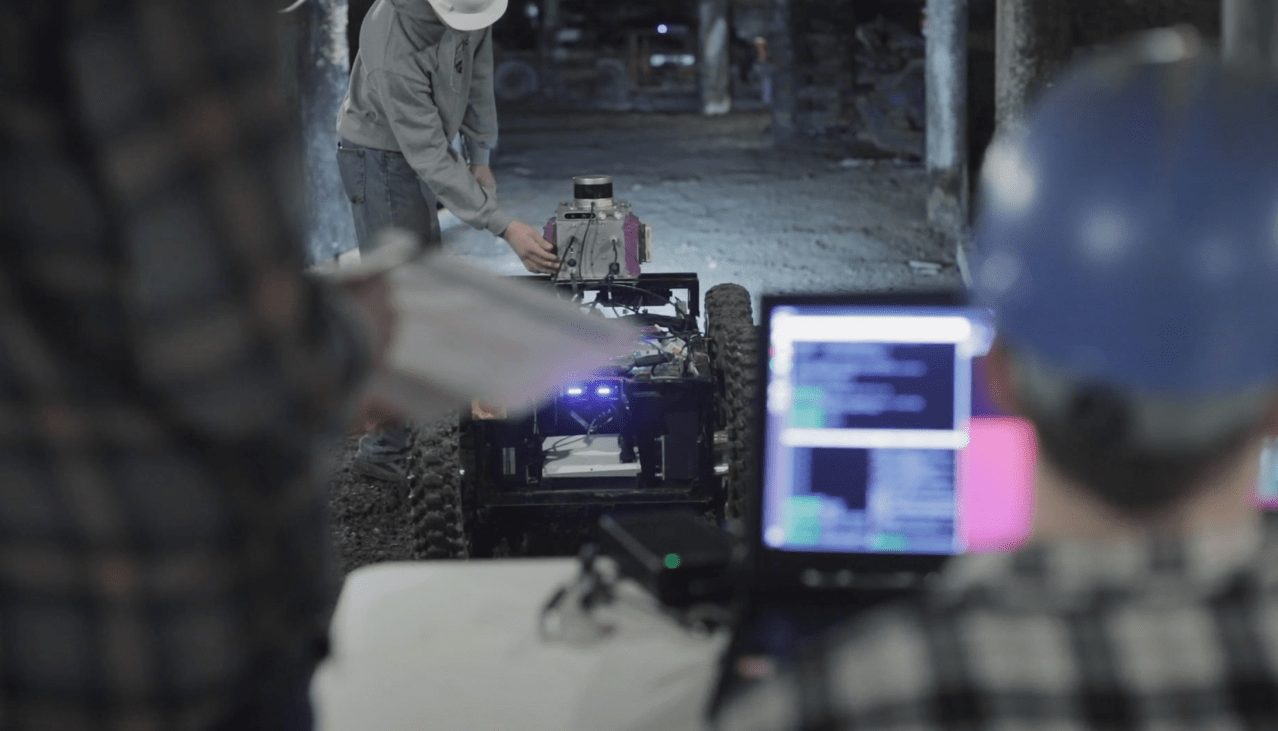
In an age where technology plays a pivotal role in emergency response and disaster management, the Carnegie Mellon University (CMU) team, in collaboration with Oregon State University, is taking monumental strides towards creating a game-changing robot and drone system tailored for mine rescues. Set against the backdrop of Pittsburgh’s cold, decommissioned coal mines, this project is not just another academic endeavor but a vital initiative aimed at saving lives in perilous underground environments.
The DARPA Subterranean Challenge
At the heart of this ambitious project lies DARPA’s Subterranean Challenge, a competition designed to push the boundaries of robotics by exploring innovative approaches to map, navigate, and search complex underground environments. This challenge extends the horizon of traditional robotics to include not just human-made tunnels but also natural cave systems. With a substantial prize of $2 million at stake, this competition is a rallying call for teams to develop technologies that can make a real difference in emergencies like cave-ins and rescues from underground structures.
The Robotics Solution: Design and Functionality
The CMU team’s robotic system is a two-pronged approach featuring both a sophisticated ground rover and a nimble aerial drone.
- Ground Rover: Equipped with advanced 3D cameras and LiDAR technology, the rover can effectively navigate and map its surroundings while searching for human victims trapped under debris.
- Aerial Drone: The hexacopter drone complements the rover’s capabilities by covering areas that may be unreachable by ground vehicles, such as small passageways or vertical obstacles.
“Our system consists of ground robots that will be able to track and follow the terrain,” explains Steve Willits, advisor on the project. The rover also drops Wi-Fi repeaters as it maneuvers, creating a robust communication network—essential in scenarios where connectivity is critical.
Challenges Ahead
Although the capabilities of the robots show promise, the team is currently focused on integrating their functionalities. Perfecting the coordination between the rover and drone remains a challenge, one that the team aims to tackle through rigorous testing. Scheduled tests will begin in September with the Tunnel Circuit, followed by further evaluations at various circuits leading to the final event in September 2022. Each testing phase is essential for refining their technology and ensuring operational efficacy in real-world scenarios.
The Bigger Picture
The implications of this project extend far beyond academic achievement. By developing a reliable robotic system for rescue missions, the CMU team is addressing critical needs in emergency preparedness. The robots are engineered to go where human rescue teams cannot—potentially saving lives and reducing risks in treacherous conditions.
Future Directions
The roadmap ahead is filled with opportunities not just for the CMU team but also for the wider robotics community. As these innovations are tested and refined, there is an exciting potential for collaboration between universities, tech developers, and emergency service providers to enhance rescue operations worldwide. The integration of robotics in disaster response represents a crucial step towards more comprehensive and effective solutions in lifesaving scenarios.
Conclusion
The venture taken by the CMU and Oregon State teams is indicative of what the future holds—not just in robotics but for emergency response strategies on a global scale. As tests progress and systems evolve, the hope is that these technological advancements will create a robust safety net in underground rescue missions. The work being done here teaches us that with creativity and scientific diligence, we can forge strategies that directly address humanitarian challenges.
For more insights, updates, or to collaborate on AI development projects, stay connected with fxis.ai.
At fxis.ai, we believe that such advancements are crucial for the future of AI, as they enable more comprehensive and effective solutions. Our team is continually exploring new methodologies to push the envelope in artificial intelligence, ensuring that our clients benefit from the latest technological innovations.