
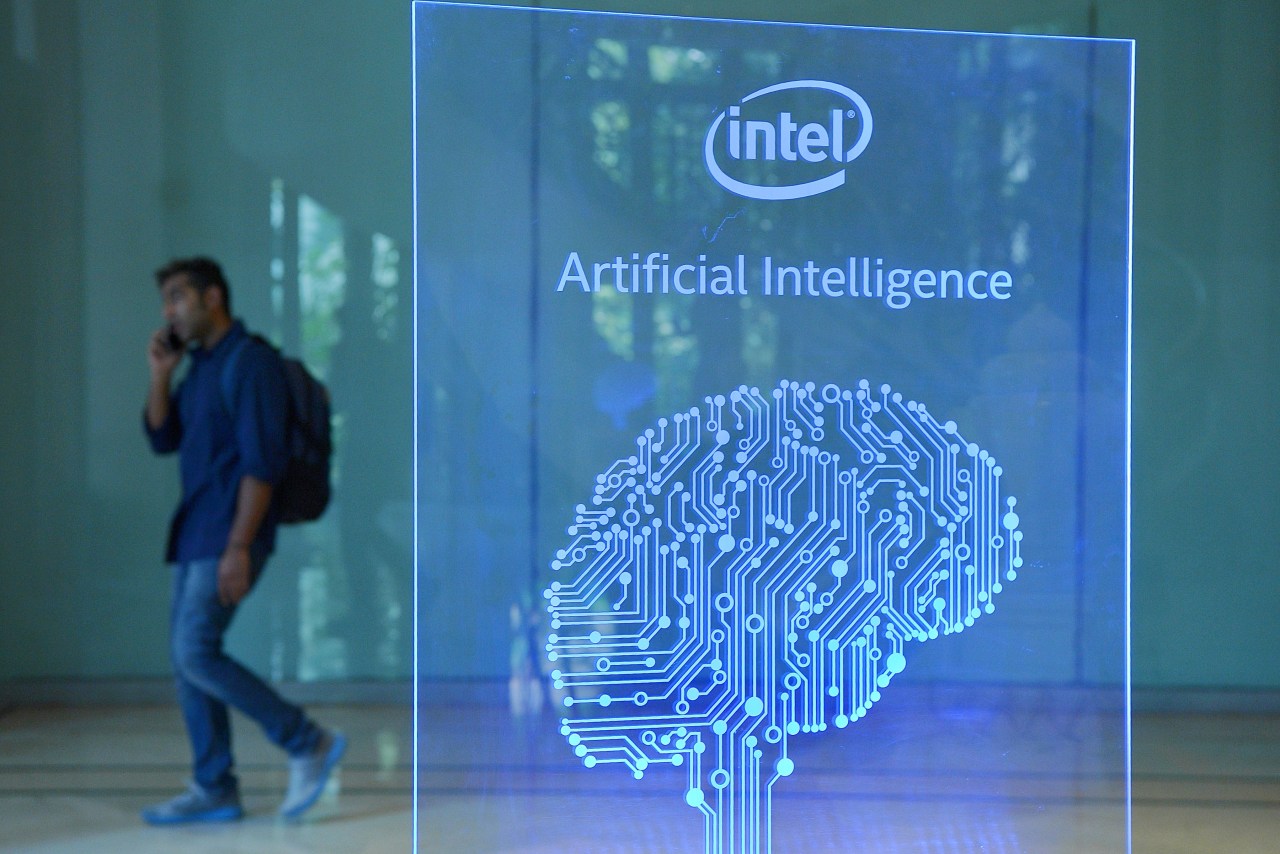
In the ever-evolving landscape of technology, companies must not only keep pace with current trends but also forecast future potential. Intel recently reported a robust financial performance, buoyed by a solid 9 percent growth in its Data Center Group. As the company showcased strong earnings, investors felt a renewed sense of confidence in its strategic direction—which integrates artificial intelligence and data-driven innovation. Let’s delve deeper into Intel’s current position and future prospects.
Strong Financial Performance in a Competitive Market
Intel’s earnings report revealed a revenue of $14.8 billion, surpassing analysts’ expectations of $14.41 billion, along with an earnings per share (EPS) of 72 cents compared to the anticipated 68 cents. This performance reflects the company’s resilience amid mounting competition from other tech giants like AMD. The aftermath saw a noticeable surge in Intel’s stock, which climbed initially 3.43 percent in after-hours trading. These numbers not only reaffirm Intel’s dominance but also highlight its commitment to maintaining and growing its Data Center business.
The Data Center Group: A Core Strength
Intel’s Data Center Group has long been the backbone of its business, contributing significantly to its revenue streams. With a reported revenue of $13.5 billion in Q2 2016, the subsequent 9 percent year-over-year growth showcases Intel’s ability to adapt and evolve its offerings. As more businesses transit to cloud computing and data-driven decision-making, Intel’s x86 chips remain at the forefront—facilitating robust performance in data centers worldwide.
The AI Imperative: Beyond Traditional Markets
But it’s not just about data centers anymore. Intel recognizes that its long-term sustainability hinges on successfully integrating artificial intelligence into its ecosystem. The $15.3 billion acquisition of Mobileye positions Intel strategically within the burgeoning autonomous vehicle industry. By venturing into AI, Intel intends not only to diversify its portfolio but also to redefine its role in technology. The acquisition, anticipated to close in Q3 2017, is critical as industries evolve toward smarter systems and innovative solutions.
Future Prospects: Optimism Amidst Competition
Looking ahead, Intel’s CFO Bob Swan noted the company is lifting its full-year revenue and EPS forecast, projecting $61.3 billion in revenue and an EPS of $3.00. This optimism is not unfounded; as technology continues to advance, Intel has the operational scale and R&D capabilities needed to lead in both the data center and AI landscapes. However, the pressure from competitors like AMD will require Intel to remain vigilant and proactive in its strategies—particularly in enhancing operating margins.
Conclusion: A Balancing Act of Innovation and Competition
Intel’s recent quarterly performance underscores a dynamic that the tech industry must navigate: balancing traditional strengths with new opportunities. While its Data Center Group continues to thrive, the emphasis on AI signals a transformative shift. For stakeholders, the next few quarters will be crucial in determining whether Intel can leverage its high-profile acquisitions to cultivate a robust position in AI alongside its data center prowess.
At fxis.ai, we believe that such advancements are crucial for the future of AI, as they enable more comprehensive and effective solutions. Our team is continually exploring new methodologies to push the envelope in artificial intelligence, ensuring that our clients benefit from the latest technological innovations.
For more insights, updates, or to collaborate on AI development projects, stay connected with fxis.ai.