
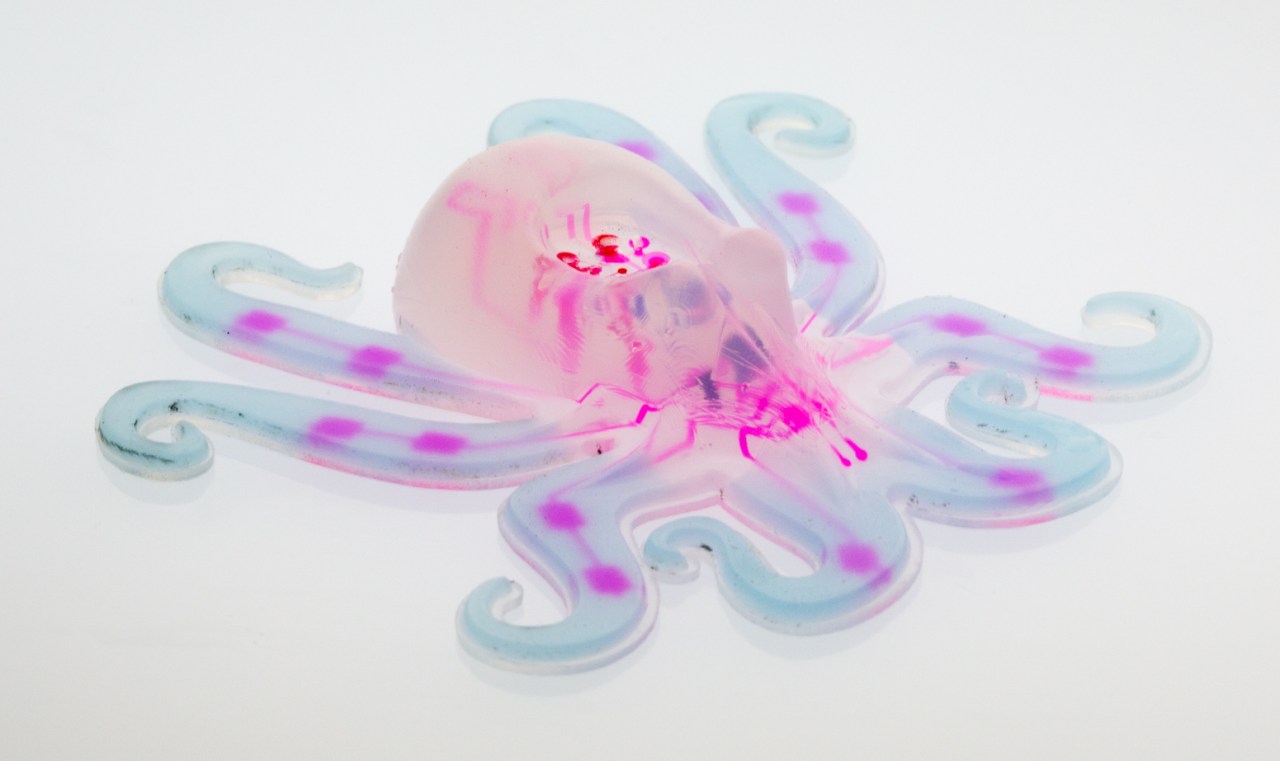
Robotics has often been synonymous with rigid materials like metal and plastic, which have paved the way for countless innovations. However, the quest for softer, more malleable robots has led to an incredible breakthrough—the Octobot. Developed by Harvard’s Wyss Institute for Biologically Inspired Engineering, Octobot is a pioneering autonomous robot that is entirely made of soft materials, marking a significant milestone in the evolution of robotics.
The Vision of Soft Robotics
For years, researchers have been captivated by the potential of soft robotics, which promises to enhance human-robot interaction and make machines safer in various settings. Robert Wood and Jennifer Lewis, the figures behind the Octobot’s design, underscore its groundbreaking nature: it completely lacks rigid components, including traditional batteries and electronic controls, which have historically limited the adaptability of robots.
Innovative Manufacturing Techniques
The Octobot is primarily crafted through 3D printing techniques that create a flexible structure, incorporated with a network of microfluidic channels that orchestrate its movements. This method of construction does not just add versatility; it revolutionizes the foundational elements of robotics, laying the groundwork for more sophisticated systems in the near future.
- 3D Printing: Aesthetic and functional elements come together, allowing for complex designs while maintaining flexibility.
- Microfluidic Network: This ingenious feature plays a critical role in regulating movement. By using gas derived from hydrogen peroxide, the robot can inflate its limbs, something that showcases the intersection of chemistry and engineering.
Understanding Autonomous Movement
One standout feature of the Octobot is its autonomy, which is facilitated by its microfluidic network. Unlike traditional robotics, where computer systems dictate movement, Octobot operates on a self-regulating system that sequentially inflates and deflates its limbs. This ability to manage its movements independently, without external guidance, heralds a new era for soft robots.
Applications and Future Prospects
While the Octobot may appear simple compared to other autonomous robots, its implications are profound, especially in areas where sensitive interaction is required, such as in healthcare or search and rescue operations. The elasticity and adaptability of soft robotics make them ideal candidates for these applications:
- Medical Robotics: Soft robots can safely interact with human tissues and organs, revolutionizing surgical procedures.
- Environmental Challenges: The flexibility of soft robotics allows for navigation through delicate ecosystems and performing tasks that rigid robots may damage.
A Vision for the Future
The next steps for the Octobot involve enhancing its capabilities, including potential aquatic movements and improved interaction with surrounding objects. This evolution represents a shift toward integrating advanced functionalities into soft robotics, harnessing the natural wonders of designs found in the animal kingdom.
At fxis.ai, we believe that such advancements are crucial for the future of AI, as they enable more comprehensive and effective solutions. Our team is continually exploring new methodologies to push the envelope in artificial intelligence, ensuring that our clients benefit from the latest technological innovations. For more insights, updates, or to collaborate on AI development projects, stay connected with fxis.ai.
Conclusion
The Octobot isn’t just an experiment; it symbolizes a revolution in how we conceive of robotics. Its soft, autonomous nature brings forth opportunities for numerous applications, paving the way for future developments in this captivating field. As we continue to explore the boundaries of robotics and AI, innovations like Octobot are just the beginning of a transformative journey that blurs the lines between biology and mechanics.