
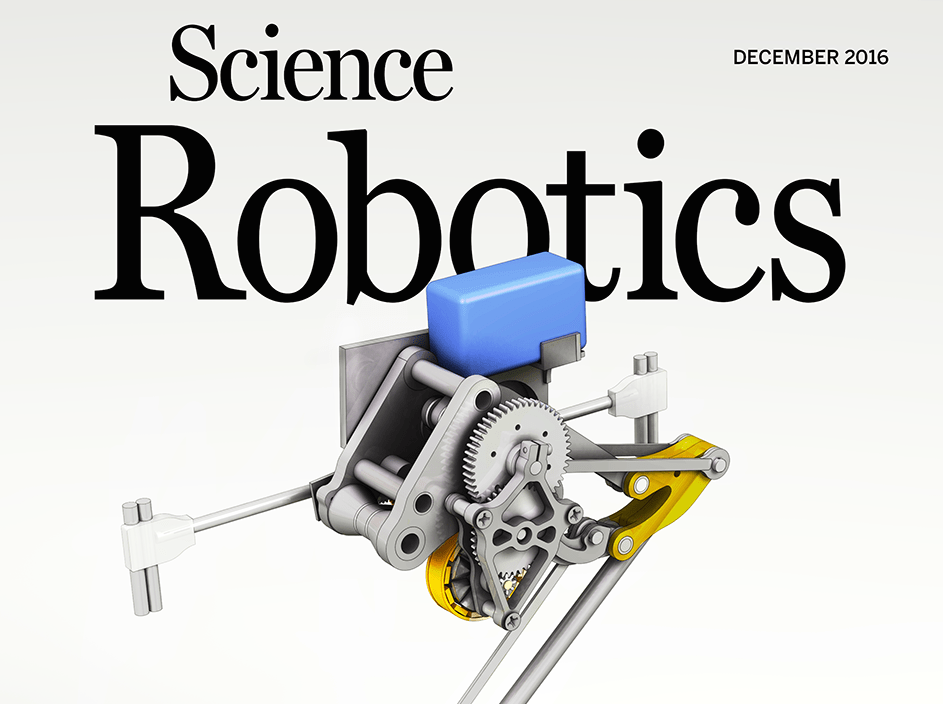
In a historic move for the robotics community, a new journal—Science Robotics—has recently emerged, signaling the growing intertwine between robotics and modern science. For years, robotics has occupied a niche realm, often seen through the lens of science fiction rather than practical application. However, the advancements in robotics are now permeating everyday life and various scientific disciplines, necessitating a platform dedicated to chronicling these innovative developments.
A Groundbreaking Initiative in Robotics
The establishment of Science Robotics comes as no surprise to those who have witnessed the dramatic transformation of robots from mere theoretical concepts to essential components of industrial, medical, and scientific landscapes. Under the insightful guidance of editor Guang-Zhong Yang and Marcia McNutt, president of the National Academy of Sciences, this journal aims to provide a voice to the diverse research community passionate about robotics worldwide.
The Universe of Robotics
Over the past few decades, robots have transcended the boundaries of traditional manufacturing. Today, they perform complex surgeries, conduct exploratory missions in uncharted territories, and construct intricate underwater structures. This has revolutionized sectors like healthcare, construction, and even space exploration, making it clear that robots are no longer just mechanical oddities but pivotal to our societal infrastructure.
Encouraging Global Collaboration
With Science Robotics now open for submissions, a critical opportunity arises for researchers from all corners of the globe. The journal is not just a repository of findings; it serves as a bridge connecting various domains of robotics research. Fields such as soft robotics, nano-scale engineering, and bio-inspired systems are now under one roof, encouraging cross-disciplinary collaboration that can lead to groundbreaking discoveries.
Insightful Inaugural Issue
The inaugural issue of Science Robotics has already captured attention with articles that showcase a plethora of ideas and innovations ranging from complex robot designs to the latest advances in robotic applications. Although the first offering is limited to a few articles, each piece is thoughtfully curated to highlight the immense potential and versatility of robotic technology.
Accessing Advanced Research
For those eager to engage with the ongoing developments in robotics, the journal is offering free access until February 1. After this date, it will align with the subscription services of the broader Science publications. This limited-time offer provides an excellent chance for enthusiasts and professionals alike to delve into the cutting-edge research shaping the future of robotics.
The Future of Robotics Research
At [fxis.ai](https://fxis.ai/edu), we believe that such advancements are crucial for the future of AI, as they enable more comprehensive and effective solutions. Our team is continually exploring new methodologies to push the envelope in artificial intelligence, ensuring that our clients benefit from the latest technological innovations.
Conclusion: Embracing the Robotics Renaissance
The launch of Science Robotics marks an incredible milestone in the evolution of robotics research, providing the community with a much-needed platform for collaboration and information exchange. As robots increasingly become integral in various sectors, the significance of such journals is bound to grow, ensuring that both researchers and practitioners stay informed about emerging trends and technologies. This is just the beginning of a robotics renaissance that promises to impact our world profoundly.
For more insights, updates, or to collaborate on AI development projects, stay connected with [fxis.ai](https://fxis.ai/edu).