
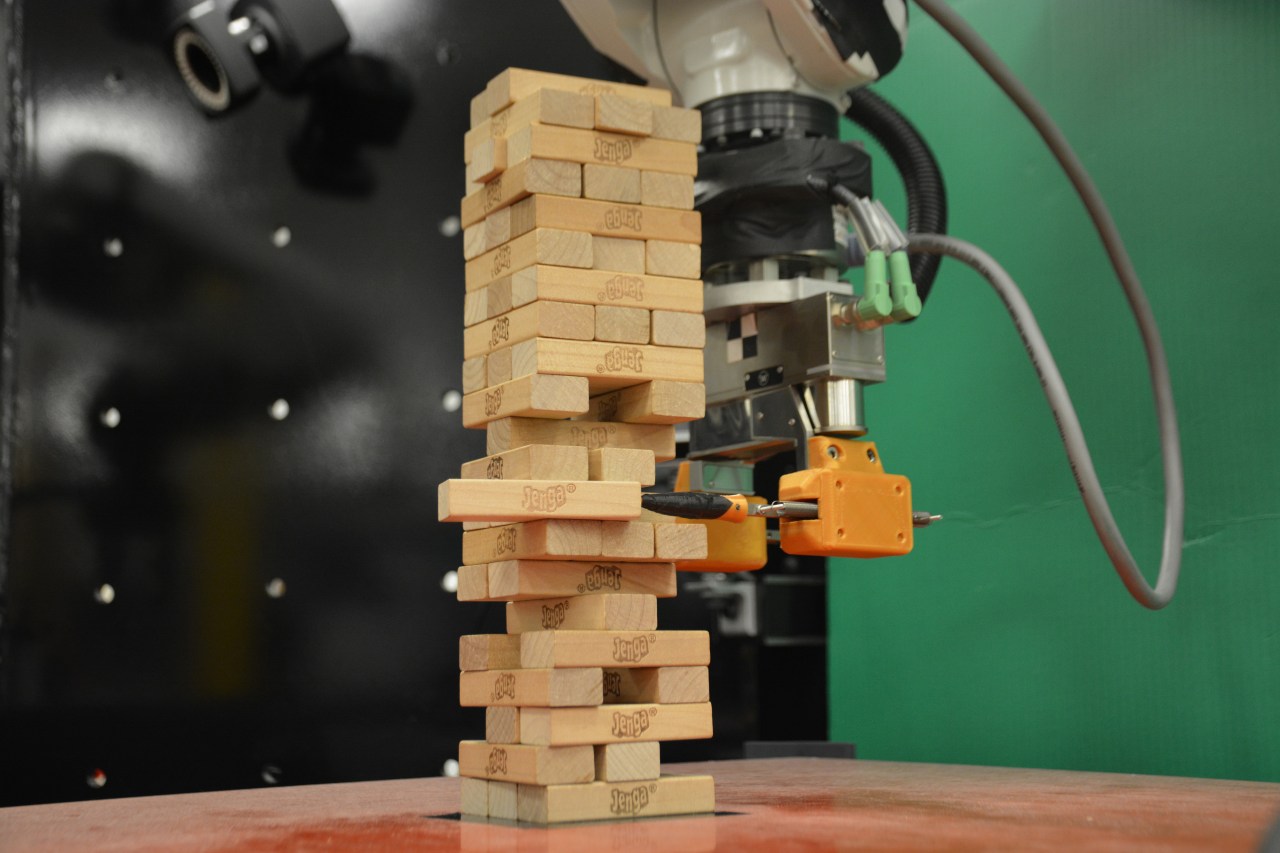
When we think of robotics, we often envision machines performing assembly line tasks or navigating complex environments. However, a recent project out of the Massachusetts Institute of Technology (MIT) takes robotics into an entirely new arena: tabletop gaming. The ambitious goal? To teach a robotic arm to play the classic game of Jenga. While it might seem straightforward, the challenge is anything but simple, blending the intricate nuances of physical interaction with the complexities of cognitive learning.
The Mechanics of Learning
Robots traditionally require numerous repetitions to learn a new task effectively. However, the researchers at MIT have found a way to cut down on training time significantly. By employing modified technology, particularly a revamped ABB IRB 120 robot arm, they have designed a system that can learn to remove Jenga blocks with just 300 attempts. This is achieved through a combination of:
- Soft Gripper: A specialized gripping tool that provides gentle handling of the wooden blocks.
- Force-Sensing Wrist Joint: This feature allows the robot to gauge the pressure applied while interacting with the blocks.
- External Cameras: Visual feedback aids in assessing the position and stability of the tower.
This innovative setup allows the robot to gather tactile feedback and make informed decisions about which blocks to target. By clustering different attempts into groups, the robot essentially mimics human learning strategies. It’s a fascinating glimpse into how robots can utilize a common sense approach to physical interaction, a feat that opens up many possibilities for future applications.
Physical Skills vs. Cognitive Tasks
Unlike games such as chess or Go, where the playing field is purely intellectual, Jenga introduces a physical layer that makes the challenge uniquely complex. MIT assistant professor Alberto Rodriguez emphasizes this point: “Playing Jenga requires mastery of probing, pushing, pulling, placing, and aligning pieces.” The robot must engage in a process called “interactive perception,” where it learns through real-world contact with the Jenga tower.
Each movement requires not just precision but an understanding of physics—knowing how to balance weight distributions while strategically extracting blocks. This intricate learning process highlights the challenge robots face when it comes to simulating tangible interactions, making this MIT project a milestone in the field of robotics.
Current Performance and Future Prospects
While the robot has shown remarkable capability in its attempts to play Jenga, it’s important to note that it is still in the developmental phase. It has yet to grasp the foundational strategic elements of the game, such as identifying which blocks pose more risk to the tower’s stability in subsequent turns. This limitation suggests that while the robot excels in physical manipulation, it requires further advancements to integrate strategic reasoning.
As robotics continues to evolve, the successes and setbacks of projects like this will pave the way for more sophisticated robotic systems capable of performing a broader spectrum of tasks. Imagine robots that can not only assist in manufacturing but also engage in more dynamic social interactions—this might just be the start.
Conclusion: The Future of Robotics and Cognitive Learning
The MIT project serves as a profound illustration of how robotics can bridge the gap between cognitive challenges and physical tasks. As researchers continue to refine their approaches, we can expect to see robots become increasingly adept not only in games but also in real-world applications where finesse and strategy are critical.
At fxis.ai, we believe that such advancements are crucial for the future of AI, as they enable more comprehensive and effective solutions. Our team is continually exploring new methodologies to push the envelope in artificial intelligence, ensuring that our clients benefit from the latest technological innovations.
For more insights, updates, or to collaborate on AI development projects, stay connected with fxis.ai.