
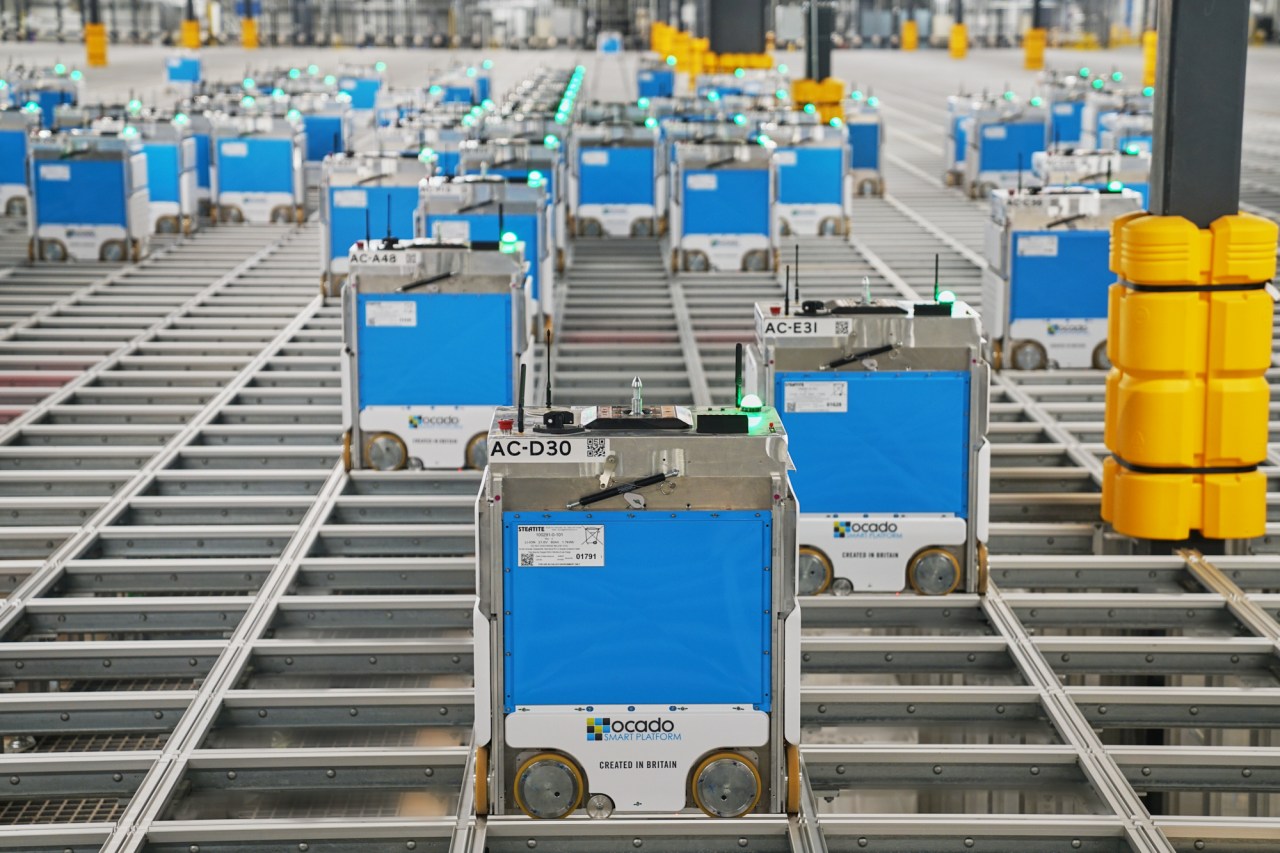
The landscape of grocery shopping is rapidly evolving, with traditional supermarkets racing to keep pace with the growing demand for online services. A striking example of this transformative trend can be seen with Kroger, one of the largest supermarket chains in the United States. In collaboration with U.K. online grocery giant Ocado, Kroger has unveiled its first high-tech customer fulfillment center in Monroe, Ohio. This innovative facility represents not only a physical expansion but also a leap into advanced logistics, robotics, and AI that could reshape the grocery shopping experience.
A New Age of Grocery Fulfillment
Kroger has launched what they call “the shed” (following Ocado’s terminology) spanning an impressive 375,000 square feet. This massive robot-filled warehouse integrates ground-breaking technology, featuring roughly 1,000 robots working in tandem with 400 human employees. Together, they will pick, sort, and pack products for online orders, bringing the future of grocery shopping into the present day.
The Power of Robotics and AI
With the potential to process approximately $700 million in sales annually—equivalent to the output of 20 traditional grocery stores—this new facility is more than just a fulfillment center. Its highly automated operations leverage an intricate grid layout paired with advanced algorithms designed for efficiency. The system’s mapping software ensures that every delivery route is optimized for speed and minimal fuel consumption, further enhancing Kroger’s commitment to sustainability.
Adapting to New Consumer Trends
The COVID-19 pandemic has accelerated the shift towards online shopping for groceries, with Kroger reporting a staggering 150% growth in delivery service usage last year. As shoppers become increasingly accustomed to the convenience of online grocery shopping, the need for improved fulfillment infrastructure becomes imperative. The collaboration with Ocado allows Kroger to meet this evolving demand effectively.
Strategic Partnerships and Competition
Kroger’s partnership with Ocado is only part of the digital transformation narrative. Besides leveraging Ocado’s automation prowess, Kroger continues to collaborate with Instacart, bringing a blend of localized grocery delivery and a more comprehensive geographical reach. This dual approach showcases Kroger’s strategic maneuvering in a competitive landscape increasingly dominated by giants like Amazon and Walmart.
Kroger’s CIO, Yael Cosset, emphasized the importance of working closely with both partners to integrate their capabilities seamlessly. While Ocado powers high-tech fulfillment centers, Instacart covers broader areas, thus fortifying Kroger’s market position from multiple fronts.
A Glimpse into the Future
As technology continues to evolve, Kroger’s use of Ocado’s robotic and AI systems may pave the way for even more ambitious expansions. Other countries, such as Japan and Canada, have already implemented similar systems with great success through partnerships with Ocado. This model not only serves as a benchmark for Kroger but also ushers in the possibility of global scalability.
Conclusion: The Road Ahead
The launch of Kroger’s Ocado-powered fulfillment center marks a significant turning point in the grocery sector. With technology at its core, Kroger is positioning itself to better meet consumer needs and expectations in an increasingly digital world. As this partnership deepens and expands, it will be fascinating to watch how Kroger integrates these groundbreaking advancements into its broader operational strategy.
At fxis.ai, we believe that such advancements are crucial for the future of AI, as they enable more comprehensive and effective solutions. Our team is continually exploring new methodologies to push the envelope in artificial intelligence, ensuring that our clients benefit from the latest technological innovations. For more insights, updates, or to collaborate on AI development projects, stay connected with fxis.ai.