
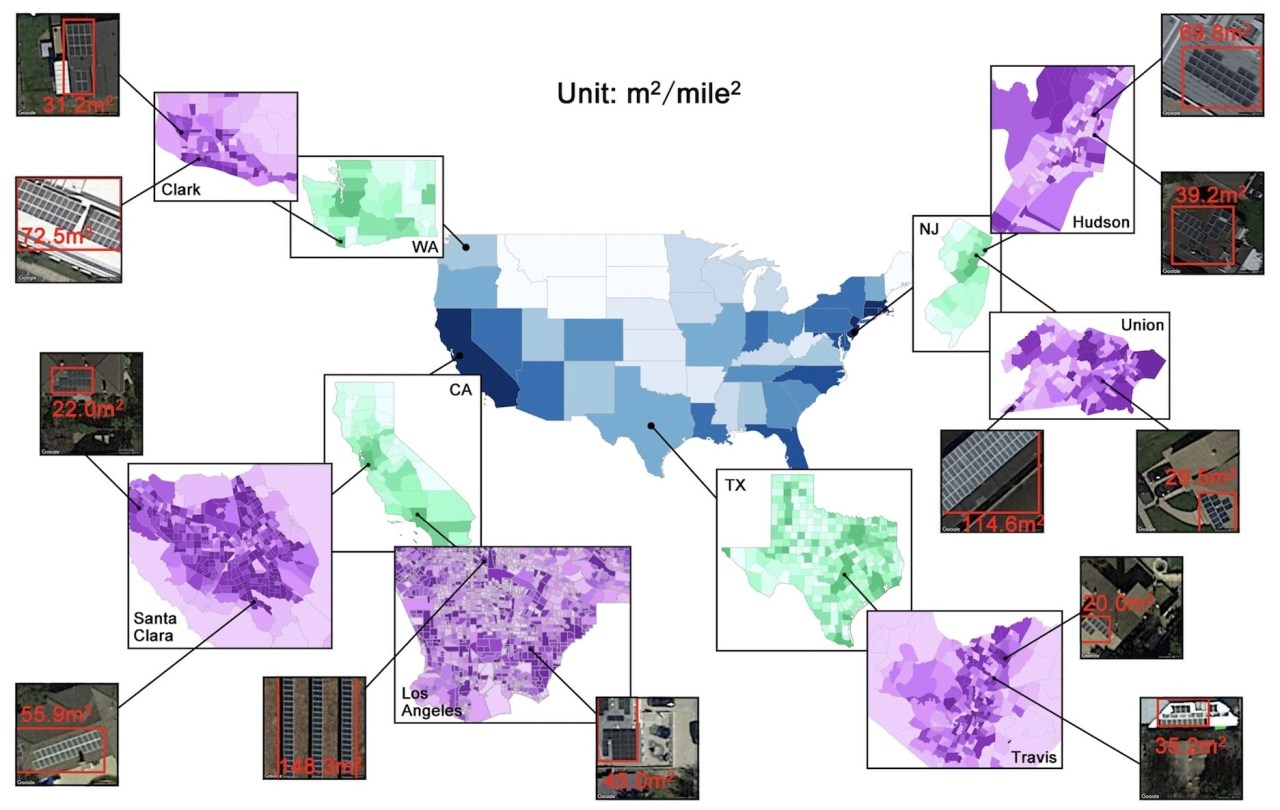
The quest for renewable energy has become a focal point for nations worldwide, but how do we truly understand the landscape of solar energy installations? While solar panels are recognized as a key player in this transition, a surprising reality persists: comprehensive tracking of these installations remains elusive. Fortunately, innovative projects like DeepSolar have emerged, harnessing the power of machine learning to map solar panels across the United States, paving the way for informed policy decisions and business strategies.
Revolutionizing Solar Data Collection
In 2019, Stanford engineers Arun Majumdar and Ram Rajagopal established a groundbreaking approach to collect solar installation data via satellite imagery. Their project sought to address the inadequacies of existing methods, which varied from regulated to voluntary initiatives but lacked the robustness required for national-level insights.
Machine Learning Comes to the Rescue
Machine learning is renowned for its prowess in image recognition. The DeepSolar team capitalized on this technology by designing a model specifically trained to identify solar panels from thousands of satellite images. By employing an image recognition agent, they were able to discern the presence of solar installations and parse out their dimensions effectively. This model yielded an impressive accuracy of around 90%, outperforming previous attempts by a significant margin, especially when assessing the scale of solar installations.
Exploring the Findings: What the Data Reveals
- Comprehensive Coverage: The DeepSolar model processed over a billion image tiles, covering a substantial portion of the lower 48 states. It found a staggering 1.47 million solar installations, more than any previous efforts.
- State and Regional Insights: Thanks to the detailed data collected, users can analyze solar installation density against various metrics, including household income, sunny days per year, and voting preferences. This multi-dimensional view aids potential investors in identifying lucrative markets.
- Micro-Trends: Intriguingly, data indicated that residential solar installations, although predominant, represented only a fraction of the total solar surface area. Regions with higher populations per square mile exhibited greater installation density, pointing to the critical relationship between community demographics and solar adoption.
- Emerging Patterns: The analysis revealed an inflection point in solar panel adoption when areas receive more than 4.5 kWh/m²/day of solar radiation, suggesting that geographical and weather factors play vital roles in determining installation rates.
Open Source Collaboration for Greater Impact
Recognizing the need for transparency and wider collaboration, the DeepSolar team has made their data available in an open-source format. This initiative seeks to engage others in both academia and industry for further research and potential innovations. By fostering participation, they hope to expedite advancements in solar technology and deployment, ensuring that beneficial changes occur promptly.
Looking Ahead: Expanding Horizons
The future of solar panel mapping is bright, and the work of the DeepSolar project serves as a vital springboard for growth in this sector. As they continue to gather more data and refine their methodologies, the potential for this information to impact solar energy policies and initiatives across the globe is immense. Plans to expand beyond the U.S. are already underway, promising to yield priceless insights into solar energy shifts worldwide.
Conclusion: Towards a Sustainable Tomorrow
The intersection of machine learning and renewable energy holds immense promise in not just predicting but actively shaping the future landscape of solar installations. With tools like DeepSolar paving the way, we stand at the brink of a solar revolution that can lead to more informed decision-making and a significant increase in renewable energy reliance. At fxis.ai, we believe that such advancements are crucial for the future of AI, as they enable more comprehensive and effective solutions. Our team is continually exploring new methodologies to push the envelope in artificial intelligence, ensuring that our clients benefit from the latest technological innovations. For more insights, updates, or to collaborate on AI development projects, stay connected with fxis.ai.