
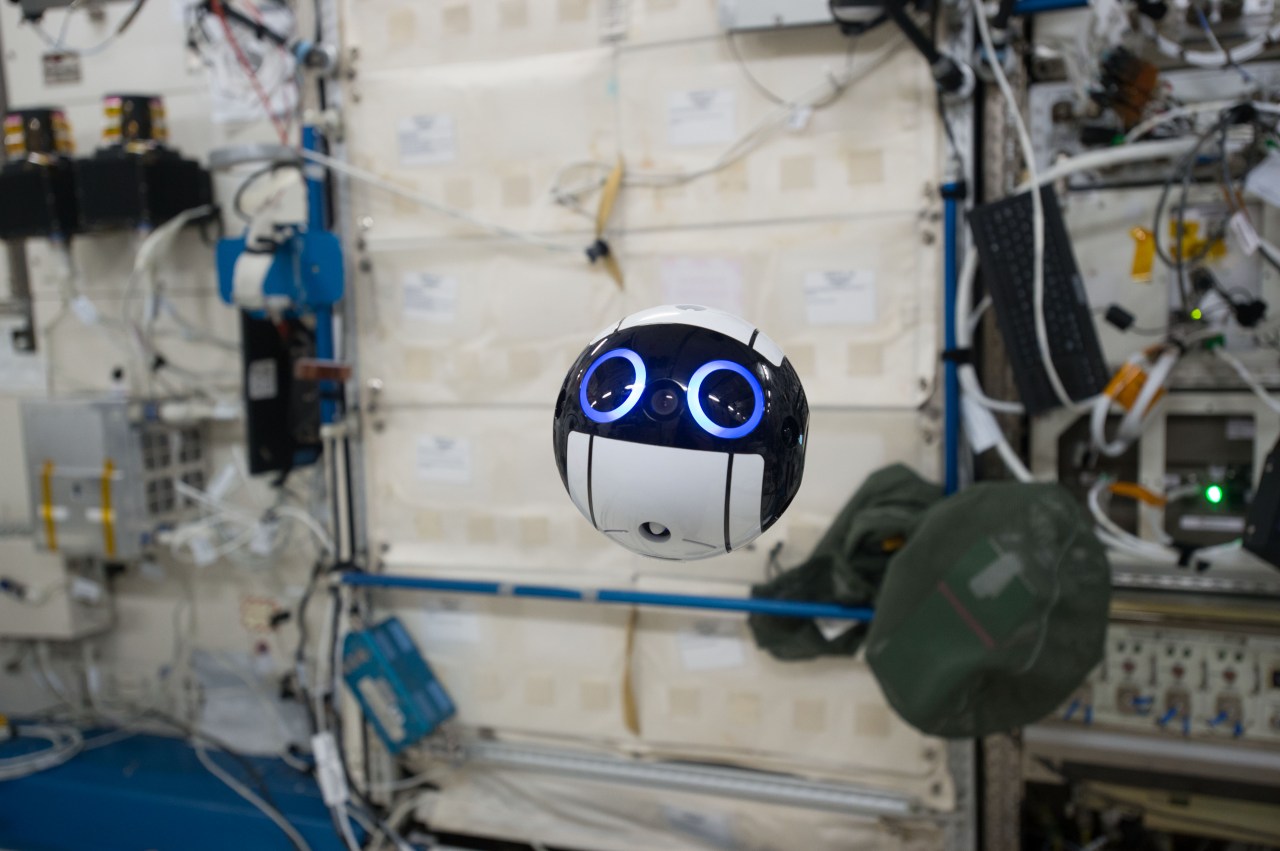
When we think of space exploration, visions of advanced technology and engineering marvels instantly come to mind. However, the JEM Internal Ball Camera, affectionately nicknamed “Int-Ball,” has added a delightful twist to this narrative. This charming little robot, operated by the Japan Aerospace Exploration Agency (JAXA), was launched to the International Space Station (ISS) on June 4, 2017, and serves a purpose that marries functionality with a true sense of wonder.
The Evolution of Space Imagery
In an age where imagery plays a pivotal role in scientific documentation, Int-Ball stands as a game changer. Traditionally, astronauts aboard the ISS would spend approximately 10% of their time capturing photos and videos—a significant resource allocation considering their manifold responsibilities. Enter Int-Ball, a 3D-printed autonomous drone designed to take this burden off their shoulders.
This delightful device provides scientists on Earth the capability to remotely obtain high-quality visuals, allowing them to monitor experiments in real time. As intriguing as its functionality is, the design advantages offered by a microgravity environment elevate Int-Ball to a level of innovation rarely seen.
How Int-Ball Works
Equipped with an array of actuators, rotational sensors, and even electromagnetic brakes, Int-Ball executes autonomous flight across various ISS environments. Its ability to capture images from multiple angles dynamically enhances the quality and versatility of the information being relayed back to JAXA and the crew aboard the ISS.
- Full Autonomy: Int-Ball navigates through the station independently, ensuring minimal astronaut oversight is needed.
- Real-time Data Transfer: Collected media can be instantly shared with researchers on Earth, allowing for immediacy in analysis and feedback.
- Future Potential: JAXA is exploring the potential use of similar technologies in other applications, including satellites.
Impact on Astronaut Operations
The implications of Int-Ball extend beyond mere photography. By alleviating the time commitment that wonky cameras usually demand of astronauts, the Int-Ball enhances onboard productivity, allowing crew members to focus on vital experiments that can yield benefits for Earth and space research alike.
Moreover, the initiative highlights Japan’s commitment to advancing space technology and its potential applications. By exploring the tech in different realms, such as satellites, JAXA emphasizes the importance of interdisciplinary research in fostering innovation.
Int-Ball: Cuteness Meets Utility
Fun and adorable as Int-Ball might be, its mission is serious and far-reaching. The evolution of robotics in space has the potential to transform how we operate in a microgravity environment. As astronauts face challenges that elevate physical fatigue, Int-Ball’s technology symbolizes a turning point—ushering in a new era of greater efficiency and reduced operational risk.
In Conclusion
As we continue to make strides in space exploration, initiatives like Int-Ball not only fuel our scientific endeavors but also embody the makeshift charm that characterizes our quest for knowledge. Innovative projects like these remind us that science can be both rigorous and heartwarming. In a world where technology is usually viewed through a lens of complexity, Int-Ball shines brightly as a symbol of how robotics can enhance our exploration of the great unknown.
At **fxis.ai**, we believe that such advancements are crucial for the future of AI, as they enable more comprehensive and effective solutions. Our team is continually exploring new methodologies to push the envelope in artificial intelligence, ensuring that our clients benefit from the latest technological innovations.
For more insights, updates, or to collaborate on AI development projects, stay connected with **fxis.ai**.