
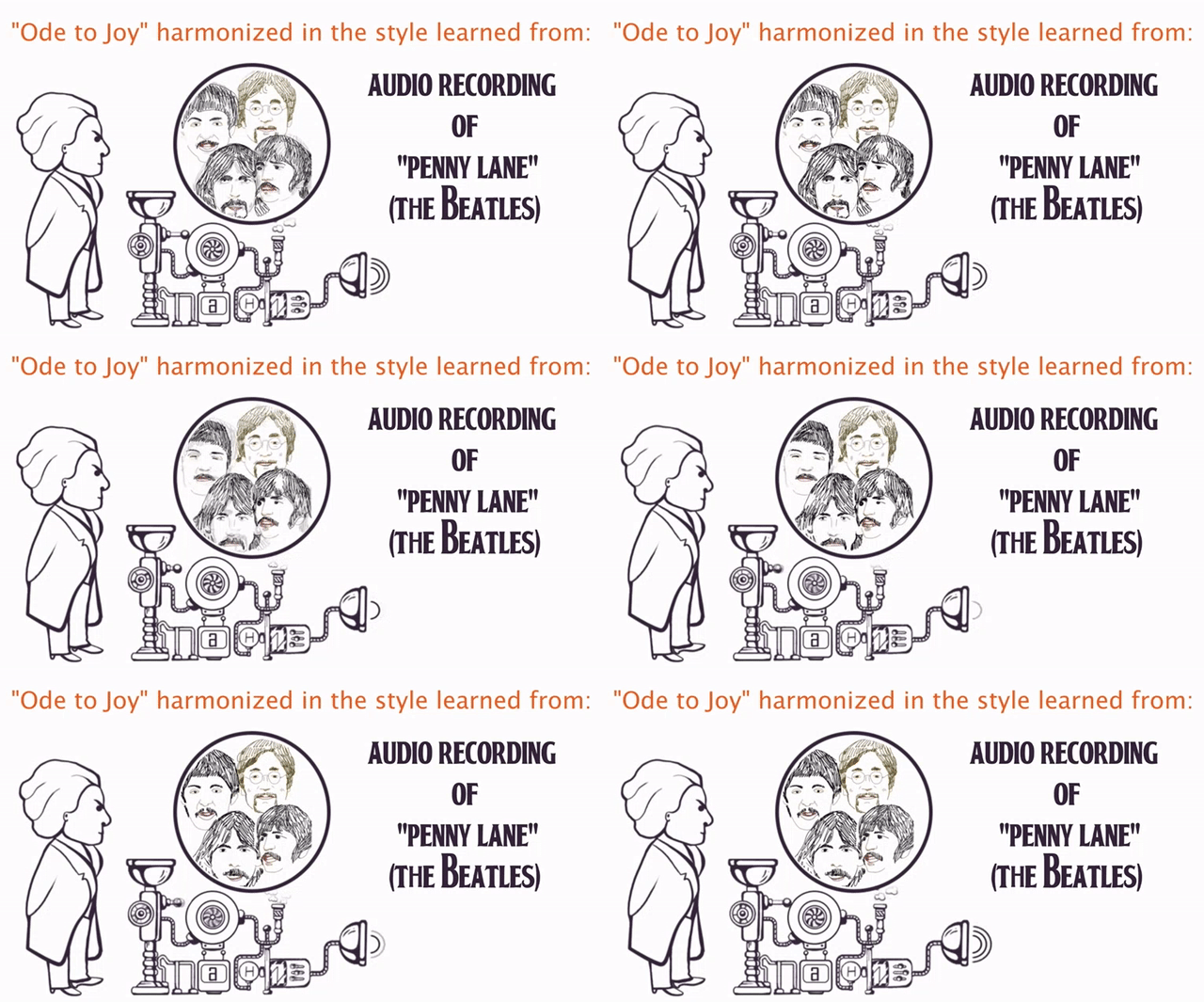
In a swirling dance of classical melodies and contemporary beats, artificial intelligence is taking on one of history’s greatest composers: Beethoven. The thrilling collaboration between music and technology has led to fascinating breakthroughs that are reshaping how we conceive music creation. A shining example comes from the Sony Computer Science Laboratory (CSL) in Paris, where a bold challenge sparked a project as ambitious as it is innovative.
A Modern Challenge: Re-orchestrating Beethoven
Tasked with reimagining the iconic “Ode to Joy” from Beethoven’s Ninth Symphony, the researchers at Sony’s CSL sought to infuse this classical piece with the vibrant flair of modern music styles. Using a technique called the max entropy approach in machine learning, the team set about teaching a computer to dissect and recognize the essential characteristics of various genres.
Imagine Beethoven being resurrected in the realms of Electronic Dance Music (EDM), infused with the rhythmic strumming of Brazilian guitar, or even channeling the captivating melody of The Beatles’ “Penny Lane.” It’s a delightful transcendence, merging traditional orchestration with the flair of current musical trends.
The AI Learning Process: From Bach to Beat
The remarkable transformation from a classical master to a modern-day soundscape begins with extensive training. The AI system absorbs the nuances of different music styles—everything from the syncopated beats of EDM to the fluid melodies characteristic of The Beatles. This multifaceted approach enables the AI to develop a deeper understanding of how melodies can shift and evolve across genres.
- Core Feature Recognition: By identifying the core features of various musical styles, AI can better appreciate how these elements can interplay with classical compositions.
- Creative Interpretation: With learning algorithms that enable creative reinterpretation, AI has the potential to approach songs like “Ode to Joy” with a fresh perspective.
- Memorable Melodies: The ultimate goal is to compose original pieces that resonate with audiences, over time potentially leading to memorable hits akin to popular songs on today’s radio waves.
The Future of AI in Music Composition
What we are witnessing is just the tip of the iceberg. The ambitious exploration conducted by Sony’s CSL holds the promise of revolutionizing how we think about music composition in the future. If successful, initiatives like this could herald a new form of collaboration between humans and intelligent systems—a relationship where machines not only create but also complement human artistry.
As we look toward the horizon, the idea of cyBerthoven—a whimsical creation of a Beethoven-like AI composer—doesn’t seem so far-fetched. The prospect of uniquely crafted soundscapes that combine the wisdom of past maestros with the innovations of modern music brings a thrilling excitement to music lovers.
Conclusion: Harmonizing Human and AI Creativity
As AI ventures into realms previously dominated by human creativity, the fusion of diverse music styles offers not just exciting sound experiences but also a profound understanding of music as a universal language. The groundbreaking work done by Sony’s CSL opens doors to endless possibilities, inviting both musicians and technologists to dream of new forms of artistic expression.
At fxis.ai, we believe that such advancements are crucial for the future of AI, as they enable more comprehensive and effective solutions. Our team is continually exploring new methodologies to push the envelope in artificial intelligence, ensuring that our clients benefit from the latest technological innovations.
For more insights, updates, or to collaborate on AI development projects, stay connected with fxis.ai.