
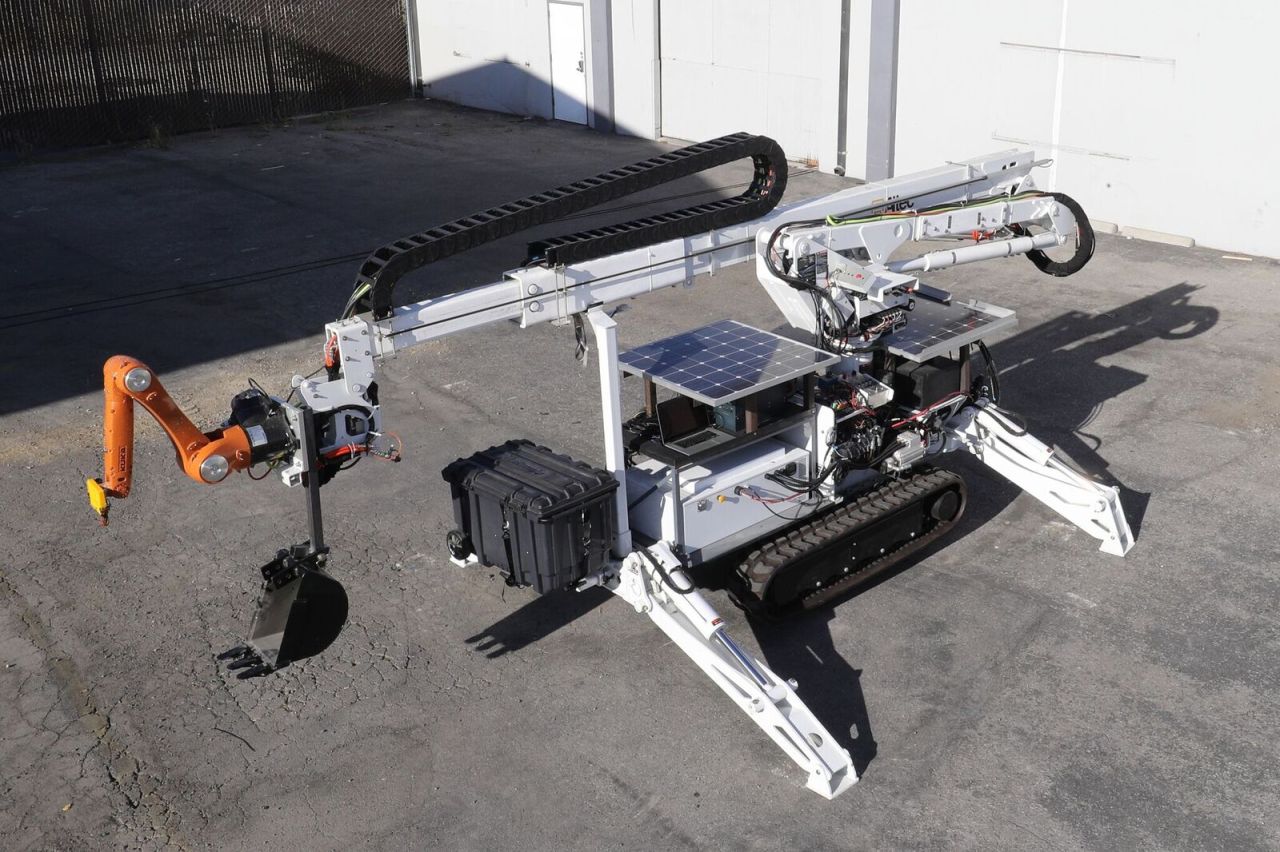
Imagine a future where constructing a home, whether on Earth or even Mars, takes less than a day. The prospect seems surreal, but MIT’s Digital Construction Platform is making it a tangible reality. This innovative mobile 3D printer, with its unique design and versatile capabilities, promises to revolutionize the way we approach construction. In this post, we’ll explore its features, implications for construction, and potential applications beyond our planet.
The Genesis of the Digital Construction Platform
Since its inception in 2011, MIT’s team has dedicated significant research into developing a robust and efficient mobile 3D printing system. Unlike traditional 3D printers that fabricate objects layer by layer within a confined space, this groundbreaking platform relies on a long robotic arm and cutting-edge technology to achieve a larger build area. The outcome? A structure printed in one cohesive motion.
Technical Marvel: How It Works
The Digital Construction Platform consists of:
- A nozzle mounted on robotic arms for precise construction.
- A rover-like vehicle that operates on tank treads, enabling mobility across varied terrains.
- Metal tanks for storing printing materials such as foam and concrete.
In a recent demonstration, the system constructed a 12-foot-high dome in just under 14 hours. The speed and efficiency of this platform mark a significant advancement in construction techniques, particularly for remote or challenging environments.
Eco-Friendly and Autonomous Building
With a vision for the future that emphasizes autonomy and environmental sustainability, the team aims to develop a system that not only constructs structures but does so using its own energy. As Steven Keating, one of the project’s leads, mentioned, envisioning the machine as a self-sufficient robotic entity capable of harnessing energy sources—like solar power—opens exciting possibilities.
Key elements of this vision include:
- Using local materials for construction, reducing the need for transporting resources across long distances.
- Implementing intelligent sensors to adapt designs based on environmental factors such as light and weather conditions.
- Exploring biological materials, like cyanobacteria, to create living walls that can respond and adapt to their surroundings.
The Significance of a Versatile Platform
The careful choice of terminology by the MIT team—referring to their creation as a “platform” rather than just a 3D printer—holds significance. Beyond printing, the platform aims to include other construction-related functions such as milling and digging, merging multiple technologies into a single functional unit.
Potential Applications and Future Directions
While the ambitious goals of the Digital Construction Platform may seem drawn from the pages of a science fiction novel, Keating is optimistic about its implementation in real-world scenarios within the next few years. He anticipates that structures will be built using this technology, paving the way for further advancements in construction practices globally.
Moreover, the implications for extraterrestrial habitats are profound. As humanity looks towards Mars and Moon colonies, having self-sufficient and autonomous building systems could be the key to establishing sustainable living among the stars.
Conclusion: Paving the Way for Future Construction
MIT’s Digital Construction Platform stands at the forefront of a new era in construction, pushing the boundaries of what technology can achieve. Its capability to print structures quickly and efficiently not only transforms our approach to building here on Earth but also holds promise for future habitation beyond our planet. This innovation is a testament to the limitless possibilities of engineering and design, and it’s just the beginning.
At fxis.ai, we believe that such advancements are crucial for the future of AI, as they enable more comprehensive and effective solutions. Our team is continually exploring new methodologies to push the envelope in artificial intelligence, ensuring that our clients benefit from the latest technological innovations.
For more insights, updates, or to collaborate on AI development projects, stay connected with fxis.ai.