
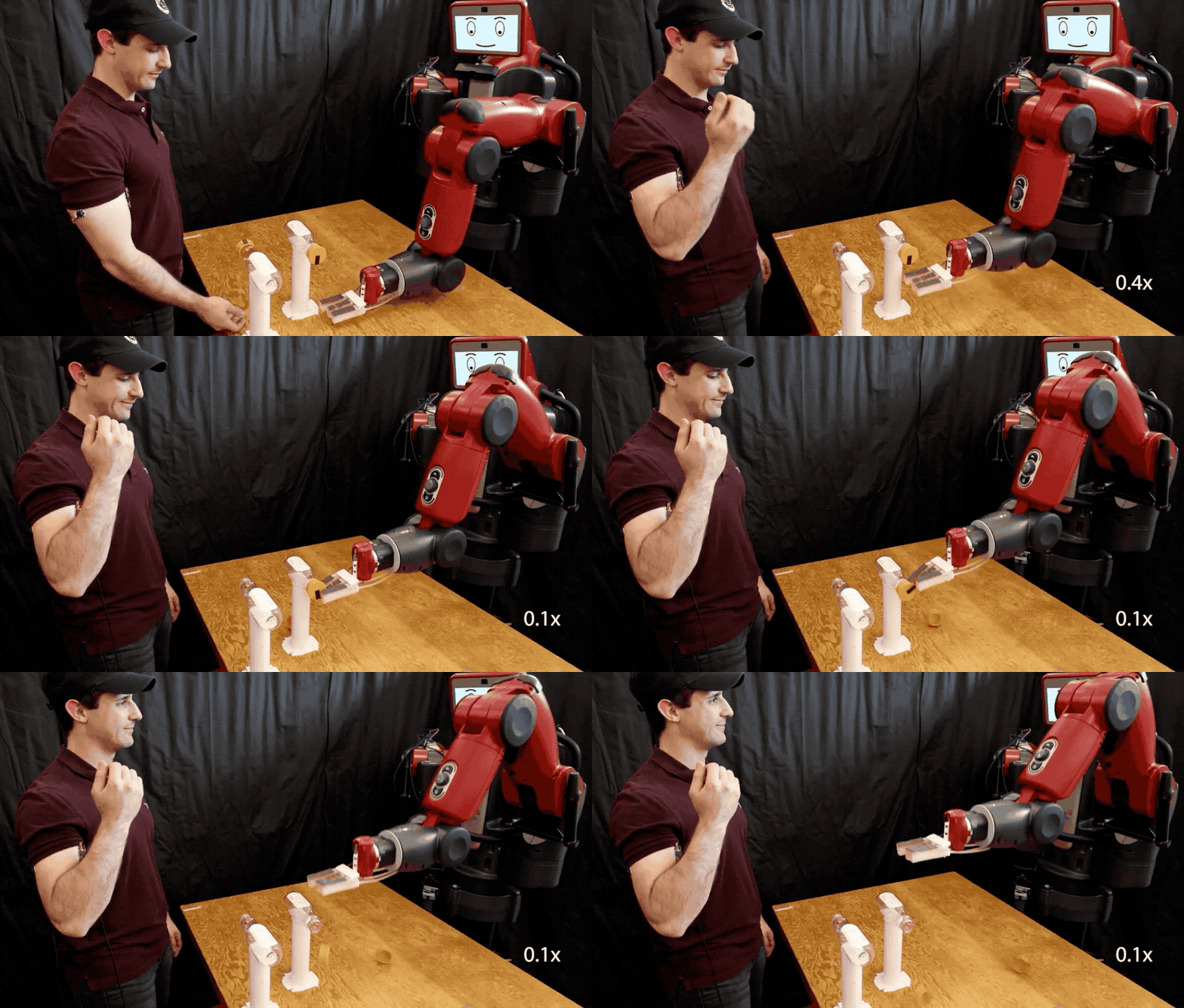
In the ever-evolving landscape of robotics, innovation knows no bounds. Among the pioneering projects emerging from the renowned Massachusetts Institute of Technology (MIT) is a fascinating contraption called RoboRaise. This remarkable bot ingeniously mirrors human actions by merely observing movements through the lens of a video camera. What started as an experiment in mimicry has blossomed into a versatile tool with intriguing real-world applications—making it much more than a simple party trick.
The Mechanics Behind RoboRaise
At its core, RoboRaise is a mechanical wonder designed at MIT’s Computer Science and Artificial Intelligence Lab (CSAIL). By employing sophisticated algorithms and machine learning techniques, RoboRaise can analyze its human counterpart’s muscle movements, specifically focusing on the bicep’s activity. This unique capability enables the robot to predict and replicate actions with precision.
- Soft Robotics: RoboRaise utilizes a soft robotic hand that allows it to interact delicately with various objects, emulating human dexterity. This quality is pivotal for tasks that require gentleness, like lifting fragile items.
- Real-time Feedback: The integration of advanced sensors enables the robot to adapt its grip and apply appropriate force, ensuring that objects are manipulated safely without risk of damage.
Cap-tivating Achievements: The Bottle Cap Challenge
The latest demonstration of RoboRaise’s capability involves mastering the popular Bottle Cap Challenge, which took social media by storm. The challenge entails using incredible motor skills to kick the cap off a bottle without taking down the bottle itself. While RoboRaise may lack the ability to kick as it is essentially an arm, it showcases its dexterity in an equally impressive manner.
By precisely twisting and spinning the bottle cap off while keeping the bottle secure, RoboRaise not only completed the challenge but did so with a flair that left spectators in awe. The self-satisfied grin displayed on its screen serves as evidence of the robot’s triumph, highlighting the progress made in the field of robotic mimicry.
Plugging into Practical Applications
The ramifications of RoboRaise extend far beyond a viral video. Its technology holds potential for various applications in our daily lives:
- Physical Assistance: Robots like RoboRaise could assist individuals in physically demanding tasks such as lifting heavy objects or performing intricate tasks that require a steady hand, thus improving ergonomics and safety.
- Rehabilitation: In therapeutic contexts, human-mirroring robots can provide patients with guidance in movements, allowing for tailored rehabilitation programs that foster recovery.
- Education and Training: RoboRaise could function as a teaching assistant in technical education settings, aiding students in acquiring practical skills with real-time demonstrations.
The Road Ahead for Human-Mirroring Robotics
The exciting advancements presented by RoboRaise exemplify how robotics can bridge the gap between technology and human physical capabilities. Innovations like this give us a glimpse into a future where human-mirroring robots can complement our efforts, enhancing efficiency and productivity.
At fxis.ai, we believe that such advancements are crucial for the future of AI, as they enable more comprehensive and effective solutions. Our team is continually exploring new methodologies to push the envelope in artificial intelligence, ensuring that our clients benefit from the latest technological innovations.
Conclusion
MIT’s RoboRaise is not just another robotic experiment; it embodies the spirit of innovation and the relentless pursuit of progress. As it continues to develop, the implications of this technology will undoubtedly become more profound and far-reaching. Picture a world where human actions are effortlessly mirrored by intelligent machines—transforming the way we interact with our environment. Call it the dawn of a new era for robotics. For more insights, updates, or to collaborate on AI development projects, stay connected with fxis.ai.