
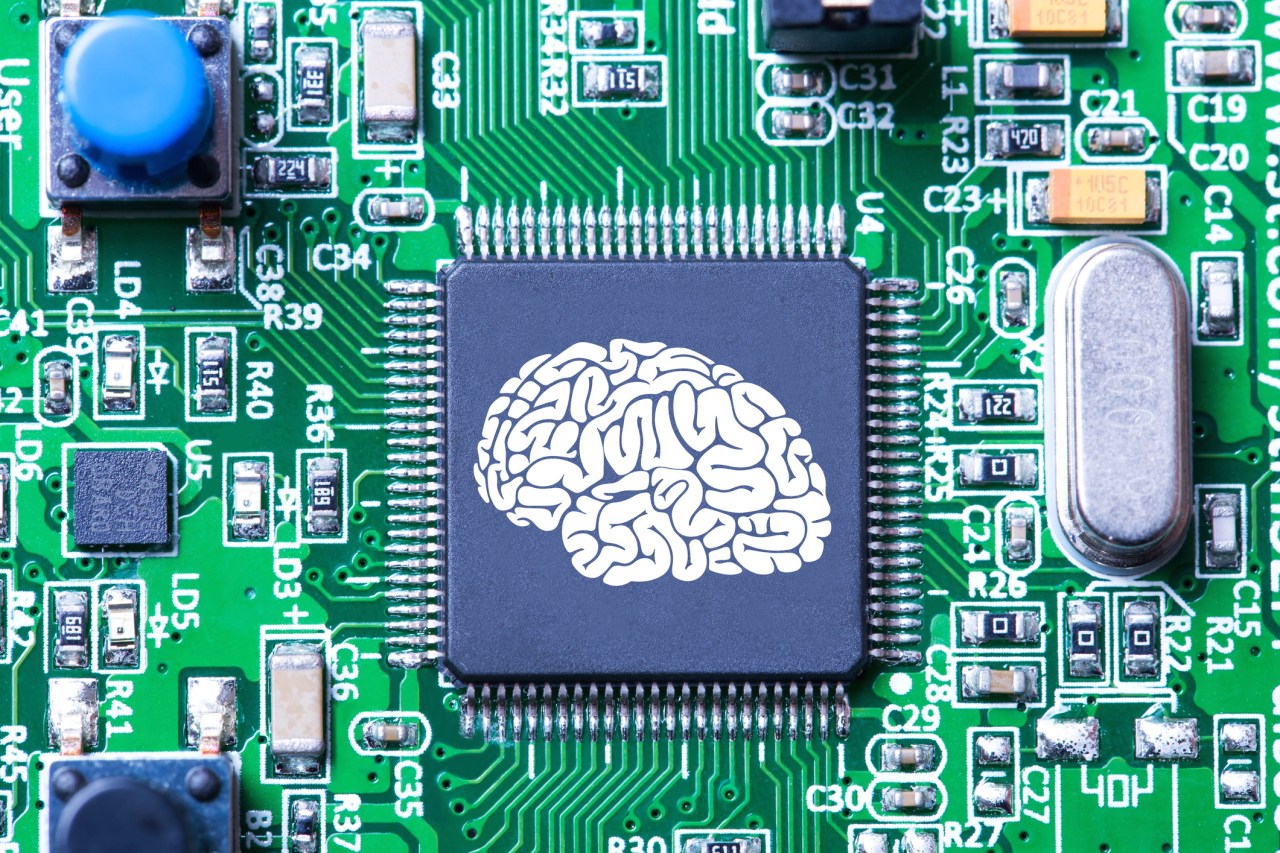
In a world increasingly driven by artificial intelligence, the need for compact and efficient computing solutions has never been more pressing. Researchers at MIT have recently unveiled a groundbreaking advancement in this arena: a minuscule chip designed to mimic the functions of an artificial brain. This chip, which houses a plethora of artificial synapses known as memristors, has the potential to revolutionize how we think about AI processing on mobile devices.
Understanding Memristors: The Building Blocks of a New Era
At the heart of this innovative technology are memristors — components that not only simulate the behavior of real brain synapses but also outperform previous iterations in multiple aspects. What sets memristors apart from traditional transistors is their ability to operate across a spectrum of values rather than just binary 0s and 1s. This characteristic aligns more closely with how our brains process information, offering a glimpse into a future where machines can think more like us.
From Metallurgy to Memory: Innovation through Alloys
The research team borrowed principles from metallurgy for this ambitious project. Just as metallurgists create alloys to enhance the properties of metals, the MIT researchers combined silver with copper to manufacture a pathway that enhances ion transfer properties. This fundamental tweak allows the chip to maintain high efficiency and reliability while processing and storing information.
Powerful and Compact: The Chip’s Capabilities
- Image Recall: This chip can recall high-resolution images multiple times with impressive fidelity.
- Inference Tasks: It can perform complex tasks such as enhancing image details or applying effects like blurriness on command, surpassing the capabilities of earlier memristor designs.
- Localized Processing: Unlike existing systems that rely on massive GPU clusters, these chips can conduct local processing, paving the way for advanced AI applications without the need for data center connectivity.
The Path Ahead: Supercomputing in Your Pocket
While the technology is still in its infancy, the vision for future applications is audacious. Imagine a world where artificial brain processors are integrated into everyday devices — smartphones, cameras, wearables — allowing complex computations that we currently associate with supercomputers. The combination of compact size and low power consumption holds promise for an era of portable devices truly powered by artificial intelligence.
Conclusion: A Glimpse into the Future of AI
The research conducted at MIT represents a significant milestone in miniaturizing AI computations. The ability to integrate powerful brain-inspired circuits into small devices not only enhances functionality but also makes these features more accessible. As this technology matures, we can expect a myriad of innovative applications that push the boundaries of what we once considered possible.
At fxis.ai, we believe that such advancements are crucial for the future of AI, as they enable more comprehensive and effective solutions. Our team is continually exploring new methodologies to push the envelope in artificial intelligence, ensuring that our clients benefit from the latest technological innovations.
For more insights, updates, or to collaborate on AI development projects, stay connected with fxis.ai.