
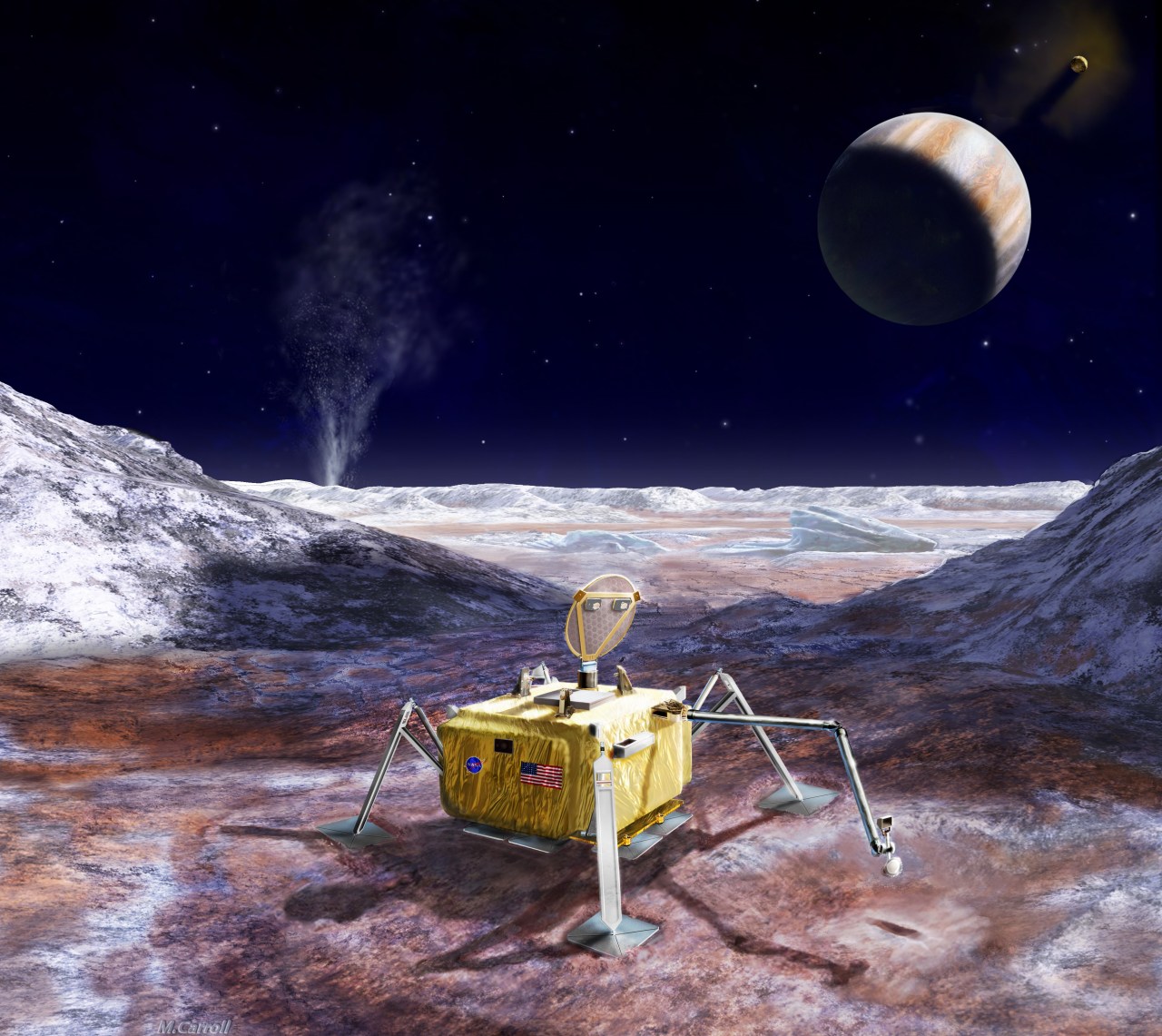
As we gaze into the vastness of our solar system, one celestial body stands out with intrigue and possibilities: Jupiter’s icy moon, Europa. Not only does it captivate the imagination of astronomers and scientists alike, but it also harbors the tantalizing prospect of extraterrestrial life. With its subsurface ocean and tectonic activity, Europa is a prime candidate for exploration. NASA has recently put forth an illuminating report detailing the objectives of an ambitious mission to this enigmatic moon. Join us as we delve deeper into what the Europa lander mission envisions and the groundbreaking science it hopes to unlock.
A Mission with a Purpose
The forthcoming mission to Europa is not just an aimless jaunt; rather, it is carefully crafted with three primary objectives that form the backbone of its exploration strategy:
- Search for Evidence of Life: Europa’s ocean beneath its icy crust could be a cradle for life. The mission intends to seek out biosignatures that may provide clues about the type of life that could exist on this moon.
- Assess Habitability: While temperatures on Europa are far from inviting, the presence of liquid water plays a crucial role in determining if it can support life. The mission will dive deep into understanding its potential habitability.
- Characterize Surface and Subsurface: Insight into Europa’s geological and environmental conditions provides essential data for future missions. Understanding the surface and subsurface will pave the way for more sophisticated explorations.
Innovative Instrumentation for Bold Discoveries
The report outlines various cutting-edge instruments required to meet these goals. Some might sound like they are straight out of a sci-fi novel, and that’s because many haven’t yet been fully realized—pushing the boundaries of current technology. Here are some anticipated instruments:
- Mass Spectrometer: To analyze the molecular composition of surface materials.
- Ice Penetrating Radar: To explore beneath the icy crust.
- Thermal Imager: To identify any signs of warmth that might indicate active geysers or hydrothermal vents.
Designing the Lander
Visualize a brief and sturdy spacecraft; that’s the concept behind the Europa lander. Unlike its illustrious predecessors like Curiosity, which have navigated Martian terrain for years, this lander is designed to function for a limited time—potentially only a few weeks. This is primarily due to the extreme radiation environment near Jupiter, which can wreak havoc on delicate electronics.
The aesthetic allure of the artist’s rendition, brought to life by the talented Michael Carroll, may look like it belongs on the cover of a sensational pulp sci-fi magazine. Yet, it serves as a potent reminder of the thrilling frontiers that await us.
In Conclusion: A Leap Toward the Unknown
The Europa lander mission represents a cornerstone of humanity’s quest for understanding life beyond Earth. With the potential for groundbreaking discoveries lurking beneath the icy surface of Europa, every detail meticulously planned in this mission is crucial for its success. As we stand at the precipice of new knowledge, one cannot help but feel a sense of wonder and excitement for what lies ahead.
At fxis.ai, we believe that such advancements are crucial for the future of AI, as they enable more comprehensive and effective solutions. Our team is continually exploring new methodologies to push the envelope in artificial intelligence, ensuring that our clients benefit from the latest technological innovations.
For more insights, updates, or to collaborate on AI development projects, stay connected with fxis.ai.