
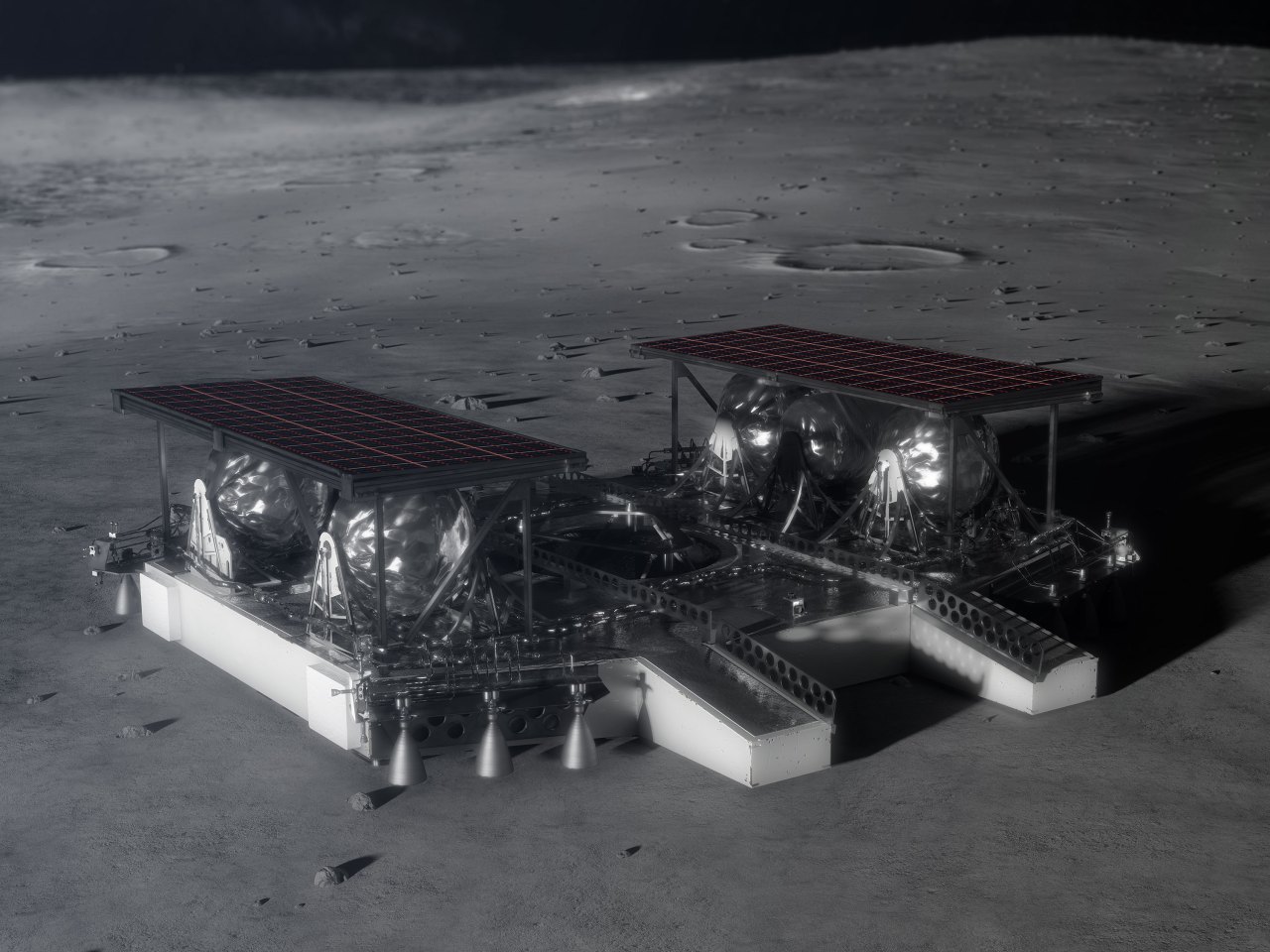
As humanity sets its sights on establishing a sustained presence on the Moon, embracing innovations that simplify lander technologies becomes vital. NASA’s newly introduced space pallet concept promises a pragmatic approach to lunar exploration, aiming to balance reliability and cost-effectiveness. In a bold step away from traditional high-performance designs, this concept could revolutionize the way rovers reach the lunar surface.
The Vision Behind the Space Pallet
The idea behind the space pallet is anchored in practicality. NASA’s researchers have recognized that frequent landings on the Moon will be essential for long-term endeavors, such as resource exploration and habitation. The framework is designed to deliver up to 300 kilograms of cargo, which can encompass not just rovers but various scientific payloads tailored for multiple missions.
A Simplified Approach
While past lunar landers were complex and costly, the space pallet embodies a shift towards simplicity. Resembling traditional pallets used in shipping, this concept may utilize off-the-shelf components, thus streamlining logistics and manufacturing. With an emphasis on “good enough” solutions, NASA has managed to prioritize mission success without unnecessary complexities.
- Cost-Effectiveness: By allowing some trade-offs in performance and material costs, the space pallet aims for budget-friendly missions that can be deployed more frequently.
- Focus on Reliability: Achieving effective landings will be paramount, and the design ensures that essential survival functionalities are maintained.
- Adoption of Emerging Technologies: Innovations like Terrain Relative Navigation (TRN) are being integrated to improve landing precision, ensuring that each rover touches down smoothly while facing the perfect angle toward the Sun.
The Role of the VIPER Rover
Slated for a 2022 mission, NASA’s VIPER (Volatiles Investigating Polar Exploration Rover) will serve as a crucial asset in exploring lunar resources, particularly water. The synergy between the space pallet and the VIPER mission exemplifies NASA’s ambition to leverage simple yet effective equipment to serve humanity’s needs in deep space exploration. Efficient utilization of the pallet lander ensures that every cognitive investment translates into practical missions.
Launching into a New Era
The launch mechanism for the space pallet involves using commercial vehicles, such as the Falcon 9 rocket with a Dragon capsule, to ferry it into a trans-lunar injection trajectory. This approach enhances cost-effectiveness and offers a flexible launch schedule. Ultimately, the fusion of commercial capabilities with NASA’s innovative designs sets the stage for a plethora of upcoming reputable lunar missions.
Conclusion: The Future is Bright with Space Pallets
The space pallet concept speaks to an era of increased accessibility in space exploration. With a design focused on simplicity, durability, and affordability, NASA is poised to achieve its goal of consistently landing on the Moon and facilitating groundbreaking scientific discoveries. This innovation lays the groundwork for future missions, significantly impacting how we approach lunar exploration and paving the way for humans to become a multi-planetary species.
At fxis.ai, we believe that such advancements are crucial for the future of AI, as they enable more comprehensive and effective solutions. Our team is continually exploring new methodologies to push the envelope in artificial intelligence, ensuring that our clients benefit from the latest technological innovations.
For more insights, updates, or to collaborate on AI development projects, stay connected with fxis.ai.