
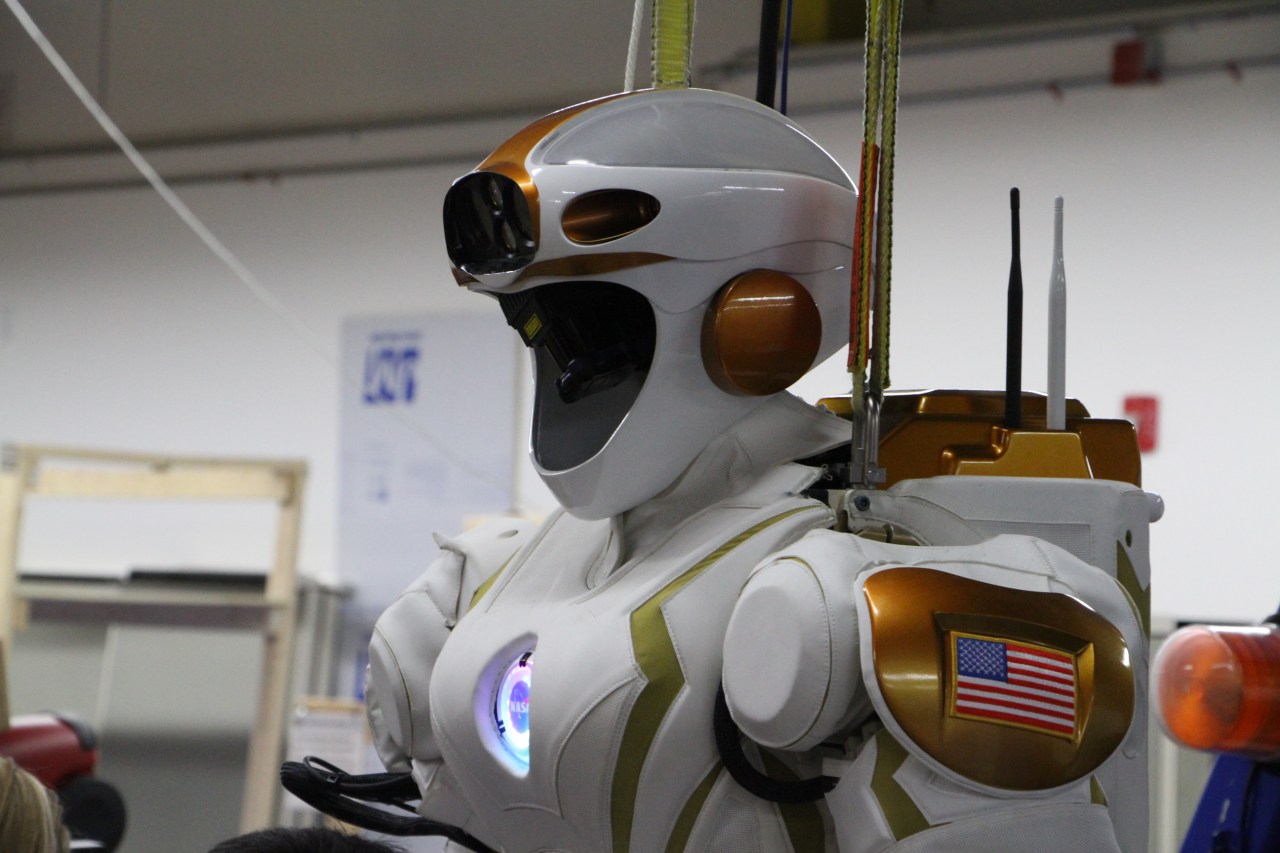
In the quest for human colonization of Mars, the road forward may well be shaped by robotics and artificial intelligence. One of the remarkable embodiments of this journey is NASA’s Valkyrie robot, officially known as R5. Although Valkyrie may remain on Earth, its contributions in research, testing, and future technological developments play a pivotal role in setting the stage for potential life on the Red Planet. Join us as we delve into the world of this humanoid robot, exploring its design, capabilities, and what it means for future Mars settlers.
The Humanoid Design: Why Valkyrie?
The design rationale behind Valkyrie appears rooted in common sense. The robot stands at an impressive six feet tall and weighs in at 290 pounds, mimicking a human shape. Unlike other robotic designs, the human-like form reflects a sophisticated understanding of its operating environment, such as spacecraft which are engineered with human dimensions in mind. As Murphy Wonsick, a PhD student at Northeastern University, points out, “We built this environment for us, so why wouldn’t a robot that looks like us work the best?” This insightful perspective sets the stage for creating robots that effectively navigate and interact with human-centric spaces.
Collaboration at Its Best
NASA has cleverly partnered with educational institutions like Northeastern University and MIT to maximize Valkyrie’s potential. This collaboration provides students access to cutting-edge technology while NASA benefits from the innovative spirit and fresh ideas brought forth by the academic community. As part of the Space Robotics Challenge, students focus on developing high-level capabilities, enabling Valkyrie to make autonomous decisions, navigate terrains, and complete essential tasks—a skillset crucial for exploring hostile environments on Mars.
Simulating Martian Challenges
The NERVE (New England Robotics Validation and Experimentation) Center offers an advanced platform for testing Valkyrie’s capabilities under simulated Martian conditions. The center boasts obstacle courses that mimic the rugged terrains that future robots might encounter. Indeed, while Valkyrie’s current resting place is reminiscent of a science-fiction narrative, the research happening there is robust and full of potential.
- Advanced Vision Systems: Valkyrie is equipped with a complex 3D vision system to enhance spatial awareness.
- Bipedal Locomotion: The robot’s movement is being meticulously developed to handle various terrains.
- Task Completion: Future missions envision Valkyrie repairing habitats, deploying solar panels, and maintaining vital communication systems.
The Space Robotics Challenge: A Launching Pad for Future Innovation
As Valkyrie gears up for the upcoming Space Robotics Challenge, excitement brews among the teams competing for the $1 million prize. The scenarios put forth in the competition, such as attending to a damaged habitat on Mars, underscore the significance of robotics in prospective human missions. Although Valkyrie will most likely never venture beyond warehouse walls, the ingenuity behind its programming and simulations ensures that it is paving a path toward human exploration of our celestial neighbor.
The Bigger Picture: Why It Matters
The journey of Valkyrie extends beyond mere robotic capabilities; it embodies humanity’s relentless pursuit of space exploration. From research collaborations to hardware innovations, every step taken with Valkyrie signals our readiness to confront the unknown. If robots like Valkyrie can acclimate to Martian landscapes, they will serve as essential tools, not just for exploration but crucial to the sustainability of human life beyond Earth.
Conclusion: Robots as Pioneers
As NASA’s Valkyrie remains tethered to its Massachusetts warehouse, the significance of its work continues to grow. This remarkable robot is a catalyst for advancements that one day might enable humanity to thrive on Mars. Through collaborations, careful simulations, and unyielding visions of the future, Valkyrie stands as a testament to what humankind can achieve in the field of robotics. Ultimately, the work done today is irrevocably tied to the missions of tomorrow, and the journey has only just begun.
At **[fxis.ai](https://fxis.ai/edu)**, we believe that such advancements are crucial for the future of AI, as they enable more comprehensive and effective solutions. Our team is continually exploring new methodologies to push the envelope in artificial intelligence, ensuring that our clients benefit from the latest technological innovations. For more insights, updates, or to collaborate on AI development projects, stay connected with **[fxis.ai](https://fxis.ai/edu)**.