
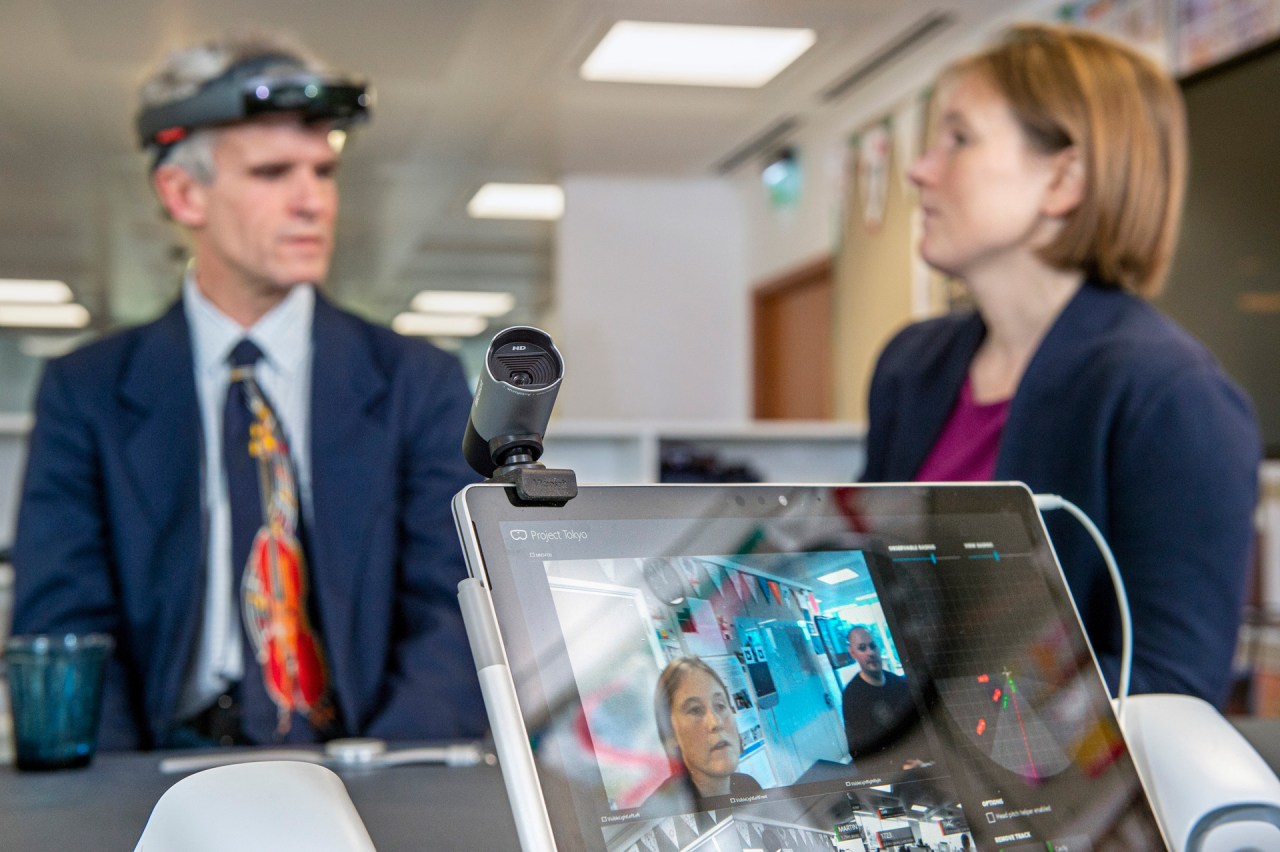
Growing up presents a myriad of challenges, and for children with vision impairment, those challenges extend beyond academic hurdles. Social interaction, which primarily relies on visual cues, can be daunting for these kids. However, thanks to innovative projects like Microsoft’s Project Tokyo, augmented reality is stepping in to bridge communication gaps, enabling visually impaired children to interpret the social world around them more effectively.
Understanding the Social Dilemma
Children with blindness or low vision encounter unique obstacles when it comes to socializing. While they may not visibly recognize these barriers, their inability to see others may result in missing vital nonverbal cues that sighted peers effortlessly pick up. This absence of visual input can hinder their ability to engage in conversation and form connections.
Research has indicated that social understanding is intricately woven into our interactions. Ed Cutrell, a researcher at Microsoft, points out that “we, as humans, have this very nuanced and elaborate sense of social understanding.” For children who are blind, many of these innate social cues would remain undetected, making meaningful interactions difficult. Yet, empowering them to recognize these cues can lead to improved social experiences.
Enter Project Tokyo: A Groundbreaking Solution
Project Tokyo represents a pioneering effort from Microsoft aimed at leveraging technology—specifically AI and AR—to address challenges faced by those with disabilities. Rather than merely developing tech for tech’s sake, Project Tokyo emerged from the insights gathered during community workshops with people living with vision impairments. This feedback-oriented approach ensured that solutions would meet real-world needs.
The centerpiece of this initiative is a modified version of the HoloLens, designed to omit the traditional lens and focus on delivering contextual cues via a custom software stack. Users wear the device like a headband, accessing sophisticated imaging technologies that identify people and objects in their vicinity.
Empowering Children: A Case Study
A particularly compelling case that showcases the potential of this project revolves around a 12-year-old named Theo. Theo’s journey with the system enabled him to gain practical social skills typically taken for granted by sighted individuals. For example, he learned the importance of body language, realizing that turning his head toward a person signaled his engagement. Additionally, he developed techniques to scan his environment, helping him stay informed about nearby individuals, a far cry from resting his head on a table during interactions.
The Importance of User-Centric Design
While Project Tokyo’s efforts represent significant progress, it’s clear that there’s still room for growth. The prototype’s bulkiness and weight raise concerns about long-term wearability. Moreover, different users have varying social needs, which raises important questions about how to tailor these technologies to meet diverse requirements.
Looking to the Future
The larger conversation surrounding Project Tokyo highlights the need for developers and researchers to prioritize inclusivity when designing AI systems and technological advancements. Engaging with those who experience these challenges first-hand—like the community of children with vision impairment—is essential for creating truly effective solutions.
As technology continues to evolve, innovative projects such as this signal a hopeful future for improving social navigation for those with disabilities. We must strive to equip children not only with the tools for communication but also the confidence to thrive in a visual-centric world.
Conclusion
In conclusion, the modified HoloLens initiative fosters empowerment, marking a significant step forward in creating inclusive environments for children with vision impairment. By integrating advanced technology like augmented reality with insightful community engagement, Microsoft is paving the way for a brighter, more connected future. At **[fxis.ai](https://fxis.ai/edu)**, we believe that such advancements are crucial for the future of AI, as they enable more comprehensive and effective solutions. Our team is continually exploring new methodologies to push the envelope in artificial intelligence, ensuring that our clients benefit from the latest technological innovations. For more insights, updates, or to collaborate on AI development projects, stay connected with **[fxis.ai](https://fxis.ai/edu)**.