
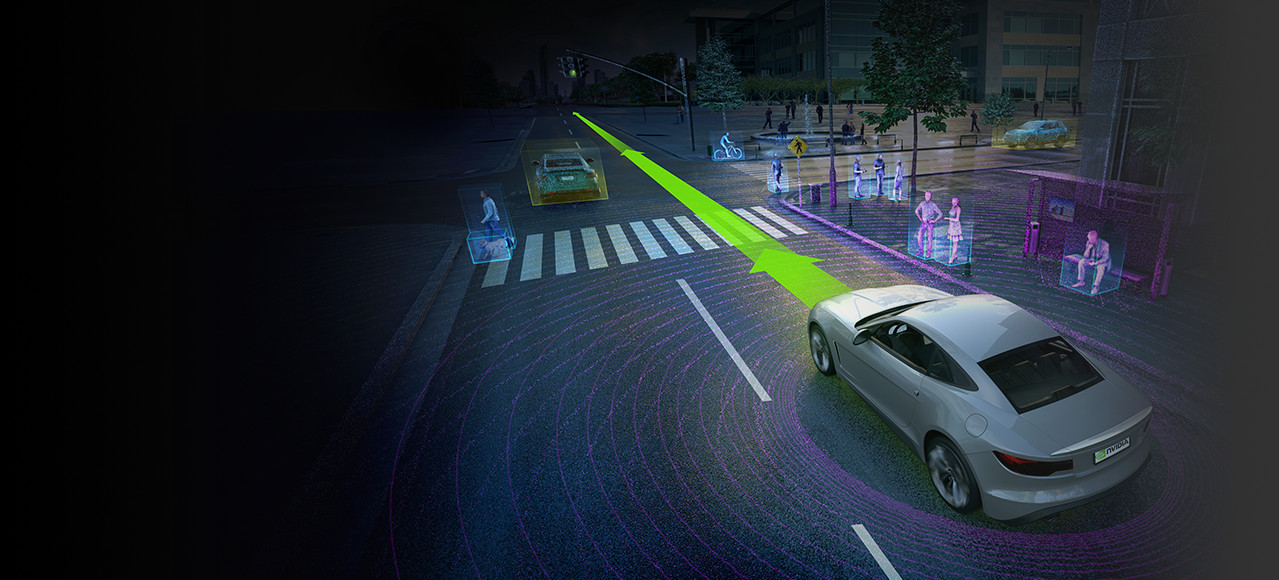
In the ever-evolving realm of artificial intelligence and automotive technologies, Nvidia has once again made waves at the Consumer Electronics Show (CES) with the unveiling of AutoSIM. This groundbreaking simulation environment is poised to reshape how self-driving vehicles learn and adapt, setting new standards for virtual testing. With its innovative layers and vast virtual landscapes, AutoSIM opens up a world of possibilities for developers and engineers alike.
What is AutoSIM?
AutoSIM represents a sophisticated blend of artificial intelligence and virtual reality, akin to the multi-layered dreamscapes depicted in the film “Inception.” However, instead of exploring dreams, users welcome the opportunity to immerse themselves in a universe brimming with lifelike simulations. By leveraging powerful Nvidia DGX GPU-based supercomputers, AutoSIM creates a series of interconnected virtual cities where autonomous vehicles can navigate through realistic urban environments.
The Power of Simulation
One of the key benefits of using AutoSIM is its ability to conduct extensive testing. Traditional road testing is time-consuming and fraught with real-world challenges. In contrast, AutoSIM allows for accelerated development cycles as thousands of virtual vehicles can operate simultaneously across multiple dimensions. Here’s what makes this technology so revolutionary:
- Virtualized Environments: AutoSIM harnesses augmented reality software to craft diverse settings that mimic actual roads, complete with pedestrians, cyclists, and animals, all interacting with virtual vehicles.
- Endless Scenarios: Developers can run countless simulations in a fraction of the time it would take to conduct physical tests, allowing them to encounter various weather conditions, traffic situations, and unforeseen obstacles in a controlled virtual setting.
- Real-time Feedback: Engineers can analyze vehicle performance on-the-fly, gathering data and insights that help enhance the driving algorithms and safety features of their autonomous systems.
The Role of AI and Machine Learning
The real magic of AutoSIM lies in its use of virtualized AI agents that operate within these expansive simulations. By integrating machine learning techniques, the system can improve the performance of self-driving cars. Each virtual vehicle uses Nvidia’s Drive automation platform to process information, make decisions, and learn from interactions with the simulated environment. As Nvidia CEO Jensen Huang aptly pointed out, “We’re essentially going to have thousands of virtual universes where all of these virtual cars are driving around.”
Augmented Reality in Testing
The immersive aspect of AutoSIM is further enhanced by the incorporation of augmented reality technologies. Leveraging devices like the Vive head-mounted VR display, developers can “wormhole” into these simulations, observing and testing features like Nvidia’s Drive AR in-car platform directly from the virtual space. This synergy between simulation and augmented reality provides a unique vantage point to witness the autonomous technology in action.
Conclusion: Driving Towards the Future
Nvidia’s AutoSIM marks a significant leap forward in the realm of self-driving car technology. By enabling exhaustive simulations in richly designed virtual environments, automakers and developers can accelerate their testing processes, paving the way for safer and more efficient autonomous systems. As this technology continues to develop, it will undoubtedly be a game-changer in the quest for fully autonomous vehicles.
At fxis.ai, we believe that such advancements are crucial for the future of AI, as they enable more comprehensive and effective solutions. Our team is continually exploring new methodologies to push the envelope in artificial intelligence, ensuring that our clients benefit from the latest technological innovations. For more insights, updates, or to collaborate on AI development projects, stay connected with fxis.ai.