
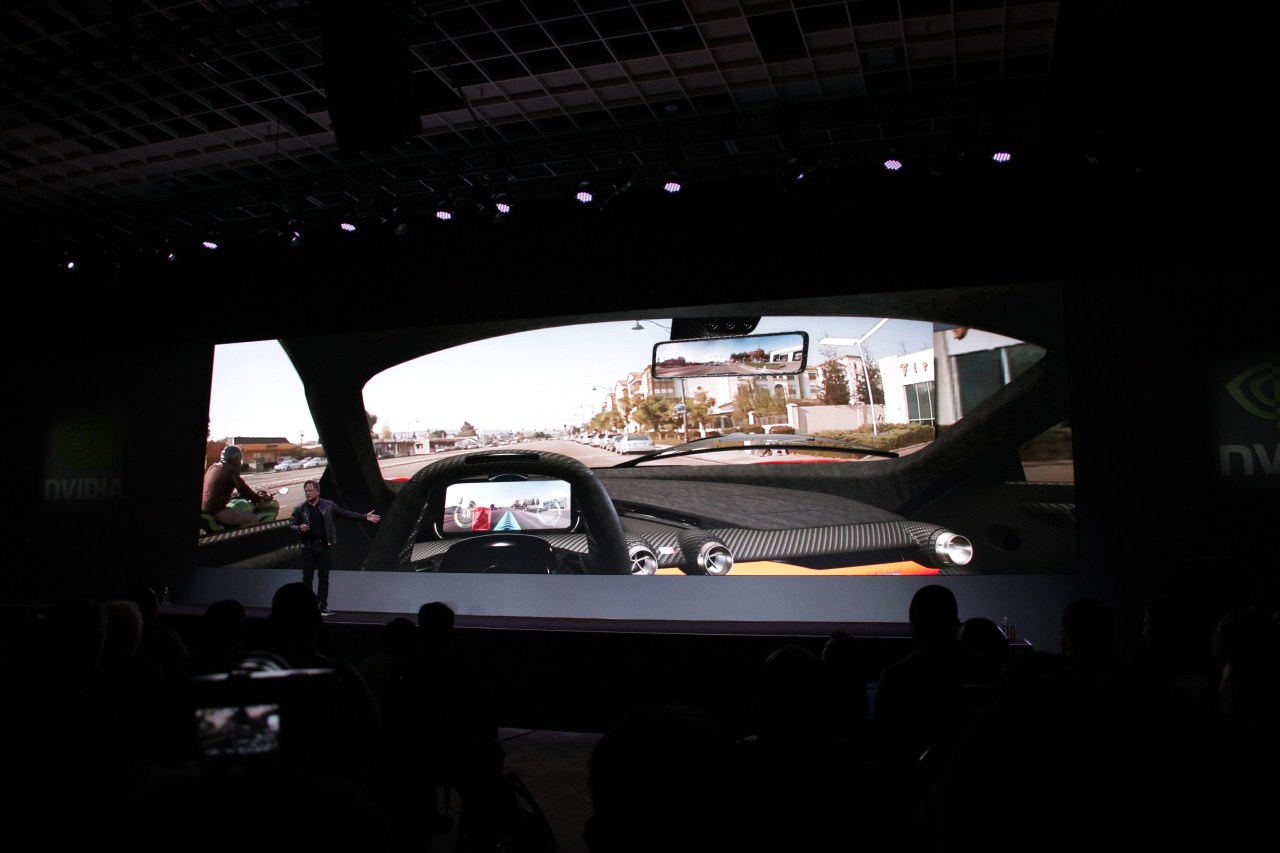
The race to develop safe and effective autonomous vehicles is in full swing, and technology giants are constantly pushing the envelope to ensure that self-driving cars can navigate securely and efficiently. One of the most significant advancements in this space comes from Nvidia, a company recognized for its innovative work in AI and graphics processing. In a groundbreaking move, Nvidia has introduced a simulated test system named Drive Constellation, which combines state-of-the-art virtual environments and AI processing to transform the way we validate self-driving solutions.
What is Drive Constellation?
At its core, Drive Constellation is a sophisticated, two-server setup designed for testing autonomous driving systems in simulated conditions. Leveraging Nvidia’s AutoSIM environment initially revealed at CES, this system turns the traditional car testing paradigm on its head by allowing developers to test their vehicles in virtually simulated scenarios that mimic real-world conditions—without ever turning a wheel.
How Does It Work?
The process involves running two servers simultaneously. One server operates Nvidia’s Drive Sim software, which replicates the sensory experiences of an autonomous vehicle on the road. This includes high-fidelity visual captures, as well as accurate data from virtual LiDAR, radar systems, and more. The second server is powered by Nvidia’s Drive Pegasus AI, which acts as the “brain” of the vehicle, interpreting the data from the first server as if it were real-time information coming directly from the vehicle’s sensors.
- Hyper-realistic Simulation: With Drive Sim, developers can recreate scenarios such as driving under intense sunlight or during heavy rain—conditions that are critical yet often infrequently encountered in real life.
- Endless Scenarios: The beauty of the Drive Constellation system lies in its ability to handle billions of virtual driving miles, providing the opportunity to program and test for edge cases. These rare but potentially catastrophic scenarios can be anticipated and addressed effectively.
- Real-Time Feedback: Nvidia’s hardware-in-the-loop cycle operates at an impressive rate of 30 exchanges per second, allowing for rapid feedback and adjustments throughout the testing process.
The Importance of Edge Case Simulation
Edge cases—situations that could lead to unexpected outcomes in real-world driving—pose one of the greatest challenges for developers of autonomous systems. Traditional road testing inherently limits the ability to replicate these scenarios due to their rarity. Software simulation fills this gap brilliantly: it allows for the preparation and training of AI models in meticulously controlled environments. Being able to foresee and program for these anomalies is essential for enhancing the safety and reliability of autonomous vehicles.
Potential Impact and Future Availability
Nvidia plans to roll out Drive Constellation to select partners for early testing in the third quarter, with a broader commercial launch following soon after. The potential benefits of this technology extend beyond just software performance; improved simulation could lead to fewer accidents on real roads by ensuring that the AI systems are thoroughly tested under a multitude of conditions before they ever interact with human drivers.
Conclusion
With the introduction of Drive Constellation, Nvidia is paving the way for a new era of autonomous vehicle development. By emphasizing the significance of virtual environments to validate complex driving scenarios, the company is not only enhancing the testing process but also increasing the potential for safer roads in the future. At fxis.ai, we believe that such advancements are crucial for the future of AI, as they enable more comprehensive and effective solutions. Our team is continually exploring new methodologies to push the envelope in artificial intelligence, ensuring that our clients benefit from the latest technological innovations.
For more insights, updates, or to collaborate on AI development projects, stay connected with fxis.ai.