
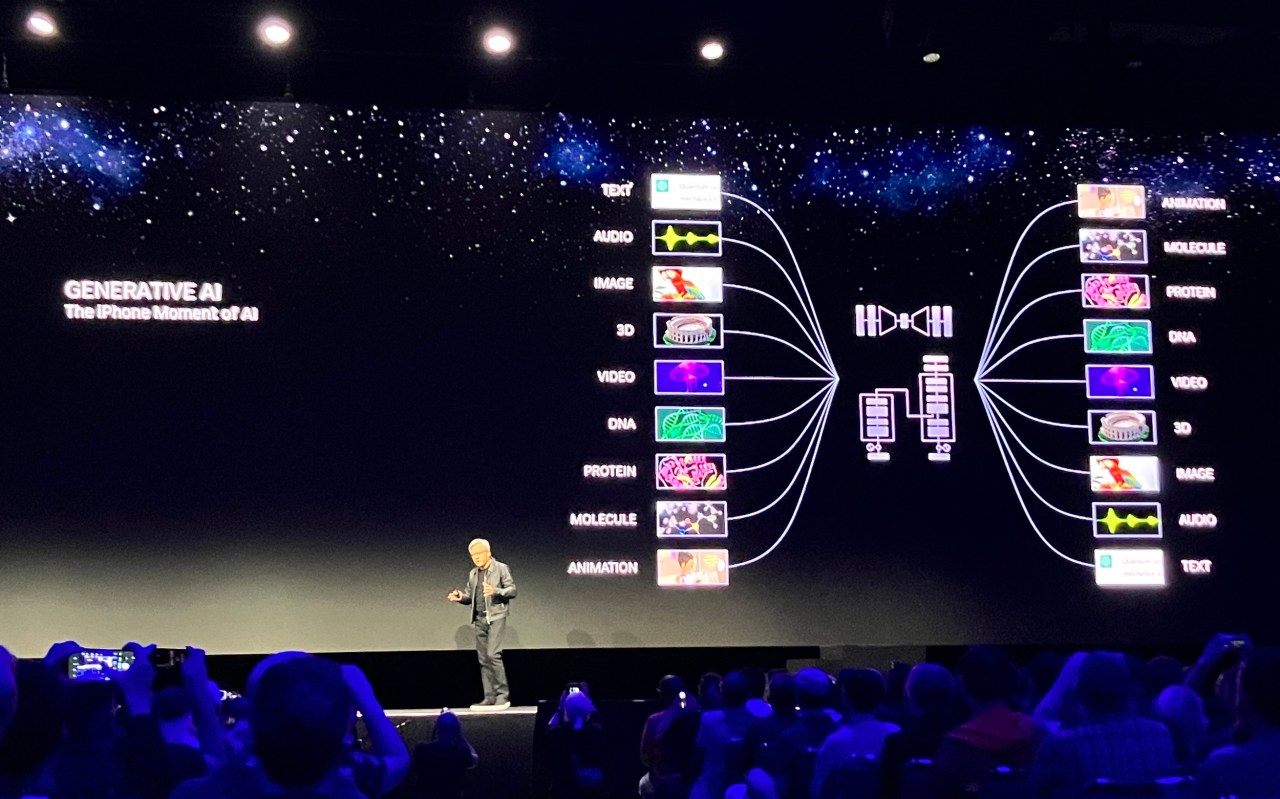
In a stunning revelation at SIGGRAPH, Nvidia CEO Jensen Huang illuminated a timeline that reshaped not just his company, but also the broader landscape of technology. Looking back to 2018, he noted a pivotal decision to “bet the farm” on artificial intelligence, a risk that few recognized at the time would be monumental in redefining various industries. This bold move, which included embracing AI-powered image processing and pushing the boundaries of graphics rendering, was not merely a stroke of luck; it was a calculated gamble that has begun to pay dividends.
Transforming the Gaming and AI Landscape
When discussing the evolution of Nvidia’s technology, Huang pointed out the stagnation of traditional rasterization techniques used for rendering 3D graphics. He proclaimed, “2018 was a ‘bet the company’ moment,” which prompted Nvidia to completely overhaul its hardware and software infrastructure. This move led to the innovation of Ray Tracing Technology (RTX) and Deep Learning Super Sampling (DLSS) — tools that have revolutionized the way graphics are rendered in gaming.
Yet the impact of Nvidia’s engineering prowess extended far beyond the realm of gaming. The infrastructure put into place was ideally suited to support the burgeoning demands of the machine learning community. Huang explained that the sophistication of AI models and the vast computations required to train them necessitated a specialized hardware architecture. Nvidia’s H100 GPU, designed for extensive AI operations, became a vital resource, showcasing how AI development was ultimately constrained by computing power rather than ambition.
The Rise of Natural Language in Technology
Looking forward, Huang sees a landscape where artificial intelligence and natural language interfaces become integral to diverse sectors, including manufacturing and automotive industries. He spoke enthusiastically about a future where “Human” becomes the primary programming language, reflecting a shift towards more intuitive interactions between people and machines.
Envisioning a factory environment entirely optimized by software and robotics, Huang stated, “It’s robotically designed robots building robots.” This imagery not only paints a picture of efficiency but also suggests a future where automated systems create new automated systems — a concept that could destabilize traditional manufacturing paradigms.
Investing in AI Infrastructure of Tomorrow
While Huang’s vision may seem optimistic, he emphasized a pressing reality: the need for the latest computing resources. The emergence of newer hardware, like the GH200 computing unit, presents an opportunity for organizations to invest more strategically. With its ability to perform tasks with significantly lower costs and energy requirements compared to outdated CPU-centric models, making the switch to cutting-edge hardware is both a logical and financially sound decision.
In a humorous moment, Huang referenced the idea that “the more you buy, the more you save,” a fitting remark that resonated with the SIGGRAPH audience while reflecting a savvy approach to economic expansion in an AI-driven era.
Conclusion: A Bright Future Amidst Challenges
While Huang’s portrayal of Nvidia’s trajectory was largely unclouded by challenges such as regulatory hurdles or the often fluctuating trajectory of AI technologies, his message was clear: the future is an AI-infused reality. As Nvidia lays the groundwork for industries that will ultimately thrive on LLMs and AI technologies, it is evident that investment in modern computing resources will be crucial for thriving in this new ecosystem.
At fxis.ai, we believe that such advancements are crucial for the future of AI, as they enable more comprehensive and effective solutions. Our team is continually exploring new methodologies to push the envelope in artificial intelligence, ensuring that our clients benefit from the latest technological innovations. For more insights, updates, or to collaborate on AI development projects, stay connected with fxis.ai.