
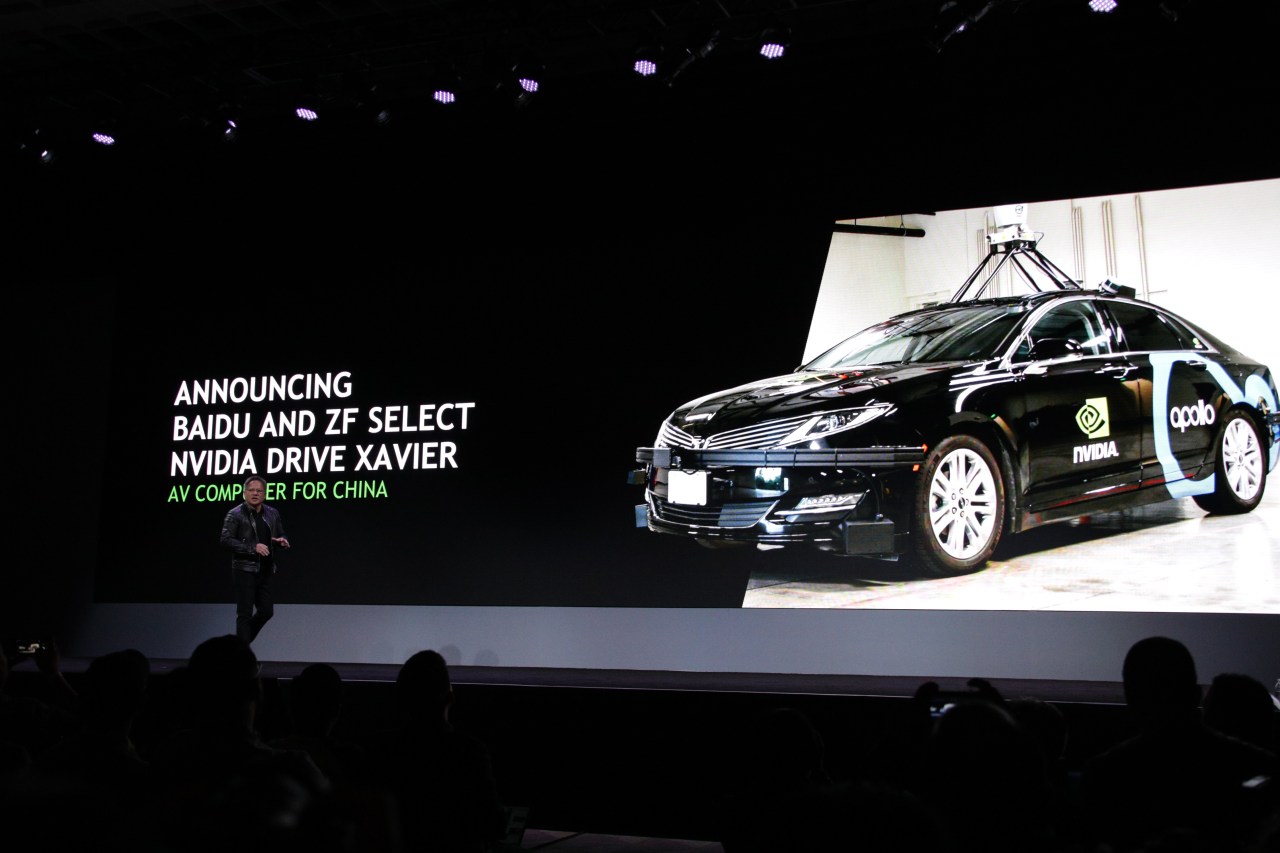
In the fast-evolving world of autonomous vehicles (AV), partnerships are crucial for innovation and deployment. A landmark announcement made during CES 2018 showcased a significant collaboration between Nvidia, Baidu, and ZF. This union aimed to leverage Nvidia’s cutting-edge Drive Xavier platform to propel the development and implementation of self-driving technology across various markets, particularly focusing on the massive Chinese automotive sector.
The Power of Collaboration
Nvidia’s Drive Xavier, renowned for its sophisticated autonomous computing capabilities, stands at the forefront of AI-powered driving solutions. By teaming up with Baidu, a titan in the internet technology space, and ZF, a leading automotive supplier, Nvidia positioned itself as a key player in the self-driving race. Here’s why this partnership is monumental:
- Access to a Growing Market: China’s auto market is the largest and fastest-growing globally. Partnering with Baidu allows Nvidia to tap into this lucrative market, ensuring that their technology meets the demand for AV solutions in one of the world’s most populous countries.
- Safety First: ZF’s expertise in Advanced Driver Assistance Systems (ADAS) creates a comprehensive safety net around the autonomous driving suite. This collaboration aims to address safety concerns associated with self-driving vehicles while laying the groundwork for eventual full autonomy.
- Open Platform Approach: Baidu’s Apollo project emphasizes an open-source platform, fostering collaboration among various stakeholders, including automakers, suppliers, and tech companies. This approach encourages innovation and collective problem-solving within the self-driving ecosystem.
Innovations on Display
With Baidu showcasing its latest autonomous vehicle prototypes at CES 2018, the world caught a glimpse of what the future might hold. These prototypes, enhanced with Nvidia technology, are not merely concepts; they represent a vision of an interconnected, technologically advanced transportation system. The integration of AI technology aims to facilitate seamless navigation through complex environments while ensuring passenger safety.
Beyond the Hype: Real-World Applications
The partnership between Nvidia, Baidu, and ZF is not just about showcasing futuristic concepts—it’s about actionable strategies that will be critical in real-world applications:
- Testing and Development: With access to diverse data and environments, Baidu is likely to accelerate the testing phases of its AVs using Nvidia’s robust technology, refining algorithms and ensuring reliability.
- Extending Ecosystem Compatibility: The open nature of the Apollo project invites a multitude of software and hardware developers to contribute, widening the scope of innovations compatible with Nvidia’s platform.
- Enhanced Customer Experience: Integrating Nvidia’s expertise in AI will allow for the development of intuitive user interfaces, predictive maintenance, and personalized services for passengers, marking a significant upgrade in customer experience in the AV domain.
Conclusion: Shaping the Future of Autonomous Driving
Nvidia, Baidu, and ZF’s collaboration stands as a beacon of optimism for the future of autonomous vehicles. Their combined efforts not only promise advancements in technology but also address pressing safety and operational concerns in the self-driving sphere. As we keep our eyes on future developments, the evolution of this partnership will be a significant narrative in the unfolding story of electric and autonomous driving.
At fxis.ai, we believe that such advancements are crucial for the future of AI, as they enable more comprehensive and effective solutions. Our team is continually exploring new methodologies to push the envelope in artificial intelligence, ensuring that our clients benefit from the latest technological innovations. For more insights, updates, or to collaborate on AI development projects, stay connected with fxis.ai.