
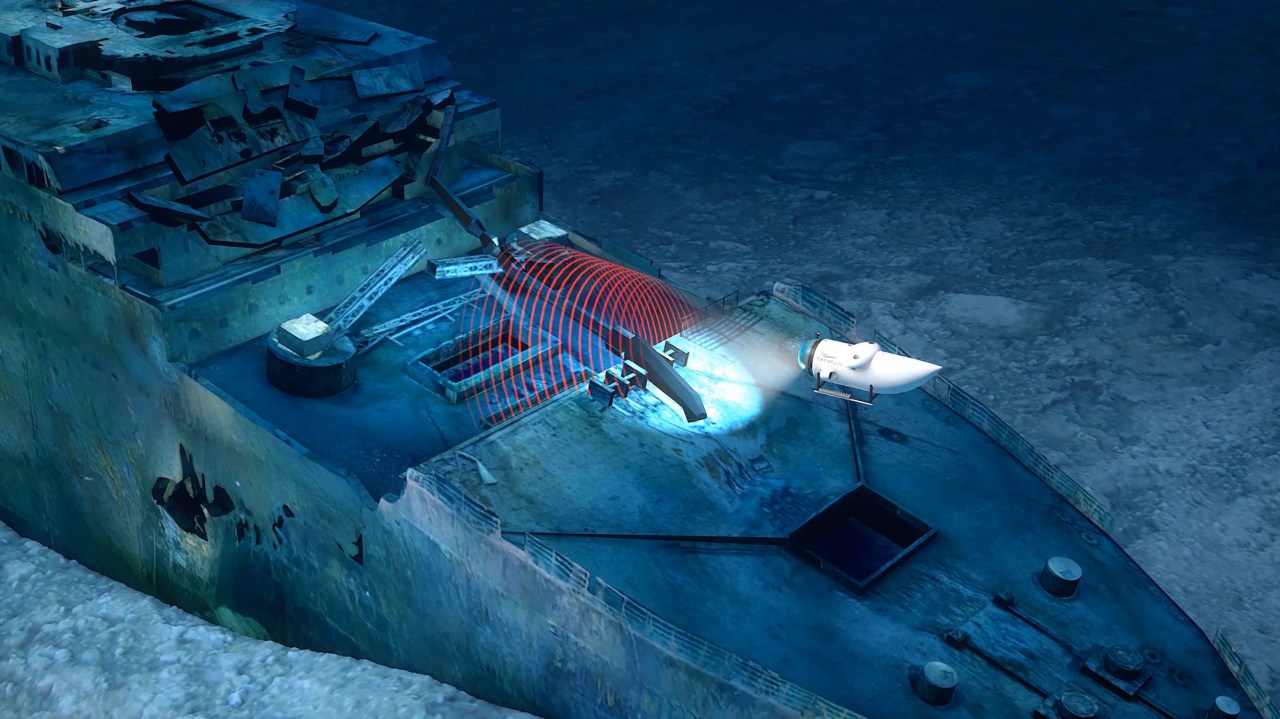
In an ambitious move to merge cutting-edge technology with an iconic piece of history, Seattle-based OceanGate Inc. announced plans for an expedition to conduct a detailed 3D scan of the R.M.S. Titanic, one of the world’s most famous shipwrecks. Scheduled for May 2018, this unprecedented mission promises to offer new insights into not only the state of the Titanic itself but also the broader implications related to underwater research and historical preservation.
The Rarity of Titanic Expeditions
Historically, fewer than 200 people have laid eyes on the Titanic since its fateful sinking in April 1912, making visits to the wreck rarer than climbing Mount Everest or traveling to space. As OceanGate prepares for its upcoming journey, the world watches closely, as this marks the first serious approach to the wreck since 2005. With advancements in imaging and navigation technologies, there is a renewed excitement about what high-definition captures might reveal about this sunken treasure.
Scientific Exploration Meets Technological Innovation
Stockton Rush, CEO and co-founder of OceanGate, emphasized that the expedition is not merely about documenting history. “Understanding the decay rates of metals in deep-sea environments is crucial,” he elaborated. As OceanGate partners with the Advanced Imaging and Visualization Laboratory (AIVL) at Woods Hole Oceanographic Institution, experts in optical laser scanning and sonar will collaborate to create comprehensive images of the wreck.
- Optical Laser Scanning: Captures high-resolution images of the Titanic’s structures.
- Sonar Techniques: Offers insights into the ship’s overall condition.
- Photogrammetry: Combines multiple images to create detailed 3D models.
The long-term goal is to deploy remotely-operated vehicles (ROVs) inside the Titanic, potentially livestreaming videos or producing virtual reality content to engage audiences globally.
The Cyclops 2: Pioneering Submersible Technology
At the heart of this expedition is OceanGate’s latest innovation, the Cyclops 2. This state-of-the-art manned submersible is designed primarily from carbon fiber and titanium, allowing it to endure the extreme pressures found in the deep sea. Capable of carrying five specialized individuals, Cyclops 2 is poised to not only explore but also conduct critical research that could redefine underwater exploration.
Perhaps the most compelling aspect of the Cyclops 2 is its economic and historical relevance. OceanGate structured the ticket prices for this once-in-a-lifetime experience to reflect the inflation-adjusted cost of a first-class ticket on the Titanic’s maiden voyage. At $105,129, it’s a nostalgic nod to the past while funding future explorations. All available positions for the 2018 journey have already sold out, generating significant revenue and showcasing the public’s interest in deep-sea exploration.
Navigating the Deep
The expedition is not without its challenges. The Titanic wreck lies approximately 380 nautical miles off the coast of St. John’s in Newfoundland. OceanGate must account for various logistical factors, including commissioning appropriate vessels, selecting aircraft for transporting passengers, and meticulously monitoring weather conditions. Rush acknowledged the degree of complexity involved in navigating the unique currents found at the wreck site compared to those on the descent.
Setting the Stage for Future Discoveries
As OceanGate prepares for what may become a defining moment in maritime exploration, it embraces a spirit of innovation and responsibility. The company will not only be testing the Cyclops 2 this November but is also engaging in a broader discussion about the implications of underwater technology and historical exploration.
At fxis.ai, we believe that such advancements are crucial for the future of AI, as they enable more comprehensive and effective solutions. Our team is continually exploring new methodologies to push the envelope in artificial intelligence, ensuring that our clients benefit from the latest technological innovations.
Conclusion
As OceanGate embarks on its expedition, the combination of technological innovation and historical exploration opens up new possibilities for our understanding of the Titanic and similar underwater sites. The collaboration with scientific institutions signals a promising future where technology and preservation efforts can work together to unlock secrets hidden beneath the waves.
For more insights, updates, or to collaborate on AI development projects, stay connected with fxis.ai.