
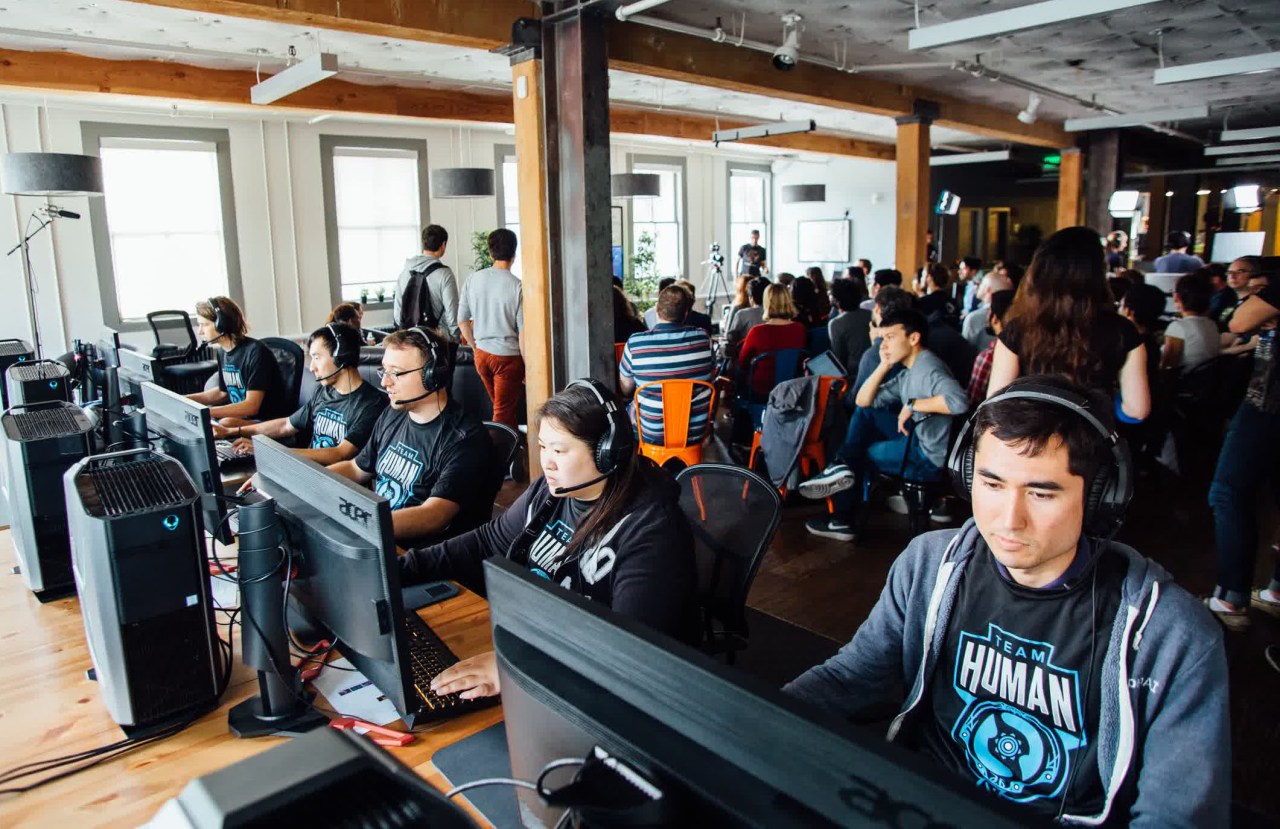
The world of artificial intelligence (AI) has made significant strides in recent years, with applications stretching beyond academic curiosity into competitive arenas. With the likes of Google’s AlphaGo and IBM’s Deep Blue paving the way, OpenAI has entered the stage with a new contender in the showdown of tech versus humanity: the popular online game Dota 2. Armed with a groundbreaking team of neural nets dubbed “OpenAI Five,” this venture aims to demonstrate the capabilities of AI while pushing the envelope in gaming and beyond.
Redefining Competitive Play
At its core, Dota 2 is a game that thrives on real-time decision-making, requiring players to exhibit tactical thinking, teamwork, and skill in a highly dynamic setting. Unlike the turn-based mechanics of chess or Go, Dota 2 presents a unique challenge where a player’s actions must be executed swiftly and effectively. OpenAI is not just tinkering with an already established gameplay model; it is adapting its AI to understand and navigate the complexities of teamwork and real-time strategy.
The Power of Collaboration
OpenAI’s approach differs significantly from traditional AI models that often focus on individual challenges. OpenAI Five operates as a cohesive unit, with each of its five neural nets working collaboratively to analyze approximately 80,000 frames of gameplay per match. This unprecedented scale of simultaneous processing—utilizing over 124,000 cores on Google Cloud—offers real-time responses that match or even surpass human players in specific scenarios. The sheer computational power behind OpenAI Five invites awe and intrigue, highlighting the potential of AI in domains where speed and teamwork are critically intertwined.
Training: A Marathon of Gaming
What sets OpenAI apart from its predecessors in the AI gaming landscape is the scale of its training regimen. Imagine a system playing 180 years’ worth of Dota 2 games against itself each day. This staggering volume of play develops not only the AI’s understanding of game mechanics but also its ability to adapt and learn from countless scenarios. Although currently bound by certain restrictions to level the playing field, this intensive training gives OpenAI Five a competitive edge, showcasing the need for balance when pitting AI against skilled human players.
Struggles in the Arena
Despite its advancements, OpenAI acknowledges that its neural nets have yet to conquer all aspects of the game. Factors such as strategy selection, character abilities, and in-match adaptability are still under refinement. Notably, OpenAI has proactively imposed rules to ensure fair competition during its matches. These limitations aim to sharpen AI’s capabilities while maintaining an equitable challenge, underscoring the intelligence behind the AI’s coding and the human-designed regulations guiding its interaction with players.
Future Prospects and Community Engagement
Preparing for its upcoming participation in the Dota 2 esports world championship, OpenAI plans to host a Twitch-streamed tournament, allowing not just competitive play but also a platform for enthusiastic players and spectators to witness AI in action. Such events foster a community around AI technologies, inviting discourse about the implications of having AI competitors in traditional human domains.
Conclusion: The Uncharted Path Ahead
The excitement surrounding OpenAI Five is not just about winning or losing; it reflects our journey into uncharted territories of AI capabilities and potential. Although witnessing AI’s prowess in games like Dota 2 may feel like a leap toward generalized intelligence, it serves a higher purpose: illuminating the conversation about how we can safely advance technology for a collective benefit. As we delve into realms where AI performances seem almost unbeatable, it is crucial to remember the designers and theorists driving these innovations.
At fxis.ai, we believe that such advancements are crucial for the future of AI, as they enable more comprehensive and effective solutions. Our team is continually exploring new methodologies to push the envelope in artificial intelligence, ensuring that our clients benefit from the latest technological innovations. For more insights, updates, or to collaborate on AI development projects, stay connected with fxis.ai.