
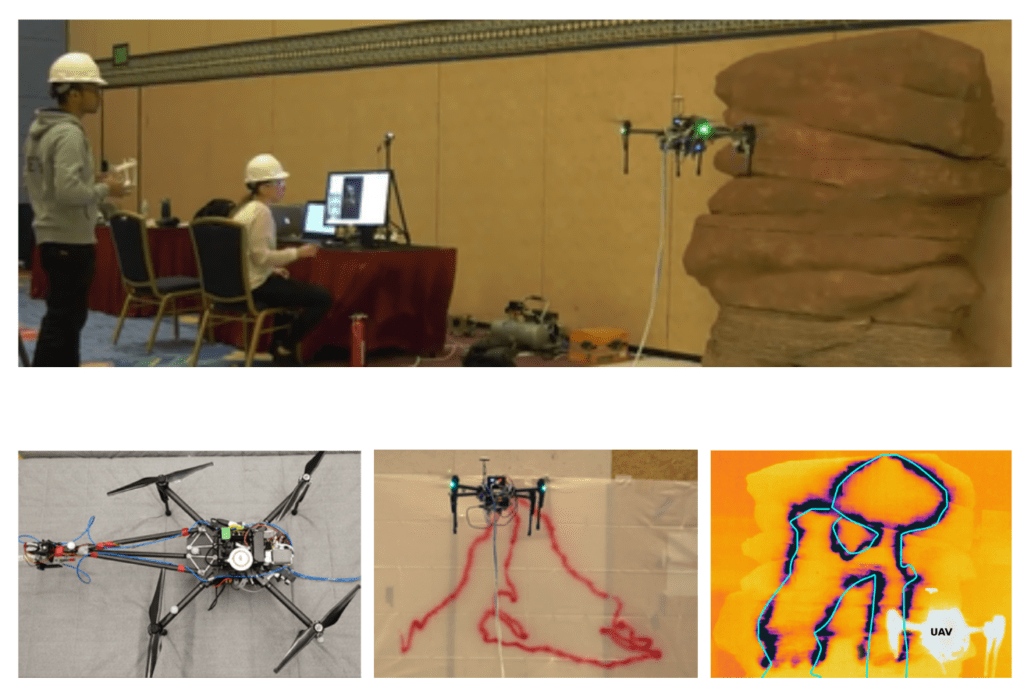
Imagine a world where the risk and danger of tagging hard-to-reach spots are eliminated, all thanks to cutting-edge technology. An innovative collaboration between ETH Zurich and Disney Research has birthed an autonomous spray-painting drone that promises to revolutionize the way we think about art and advertising. This 21st-century marvel not only aims to assist budding taggers in achieving those coveted spots but also opens doors for commercial and public art projects.
A Leap Forward for Drone Technology
The notion of using drones for painting may initially seem like a whimsical concept, a far-off dream reserved for artists with futuristic tools at their disposal. However, this exciting project proves that such applications are not only feasible but also practical. By removing the need for scaffolding in painting, the drone can directly tackle vertical surfaces, significantly streamlining the process.
The Innovations Behind the Drone
At its core, the drone utilizes a modified DJI Matrice 1002 model equipped with a specialized spray assembly and a sophisticated sensing rig. Notably, the digital spray system is designed with a pan-and-tilt mechanism, enabling it to execute precise details—ensuring that not just broad strokes, but defined line work is achievable.
- Wired Power Source: The drone operates using a wired power connection, which minimizes the limitations posed by battery life and weight from carrying paint.
- 3D Surface Scanning: Prior to painting, the drone scans the intended surface to create a 3D mesh, allowing it to tailor its movements and ensure accuracy.
- Map Tracking: The drone continually references the 3D map as it paints, adjusting its position to avoid any discrepancies.
Potential Applications and Implications
While the technology is still in its infancy, the implications are notable. Not only does it have the potential to redefine street art and tagging, but commercial enterprises can also reap the benefits. Think about how this technology could expedite the process of painting large murals, billboards, or even building façades.
Moreover, this drone can be invaluable in scenarios where precision is essential, allowing skilled painters to focus on intricate details and enhancing the overall aesthetic of the art or advertisement.
Challenges Ahead
However, deploying such advanced mechanisms is not without challenges. The intricacies of engineering and controlling the drone effectively in real-world conditions must be addressed. While current technology enables broad strokes and basic designs, the dream of drawing intricate masterpieces is still a goal for the future.
Conclusion: A New Era of Creativity
The autonomous spray-painting drone represents a significant convergence of technology and creativity, providing artists, taggers, and businesses with new tools to express their visions. Although still in the foundational phase, the potential for these drones to transform painting and artistic expression cannot be overstated. As technology continues to evolve, we may witness a dramatic shift in how we interact with art in our urban landscapes.
At fxis.ai, we believe that such advancements are crucial for the future of AI, as they enable more comprehensive and effective solutions. Our team is continually exploring new methodologies to push the envelope in artificial intelligence, ensuring that our clients benefit from the latest technological innovations.
For more insights, updates, or to collaborate on AI development projects, stay connected with fxis.ai.