
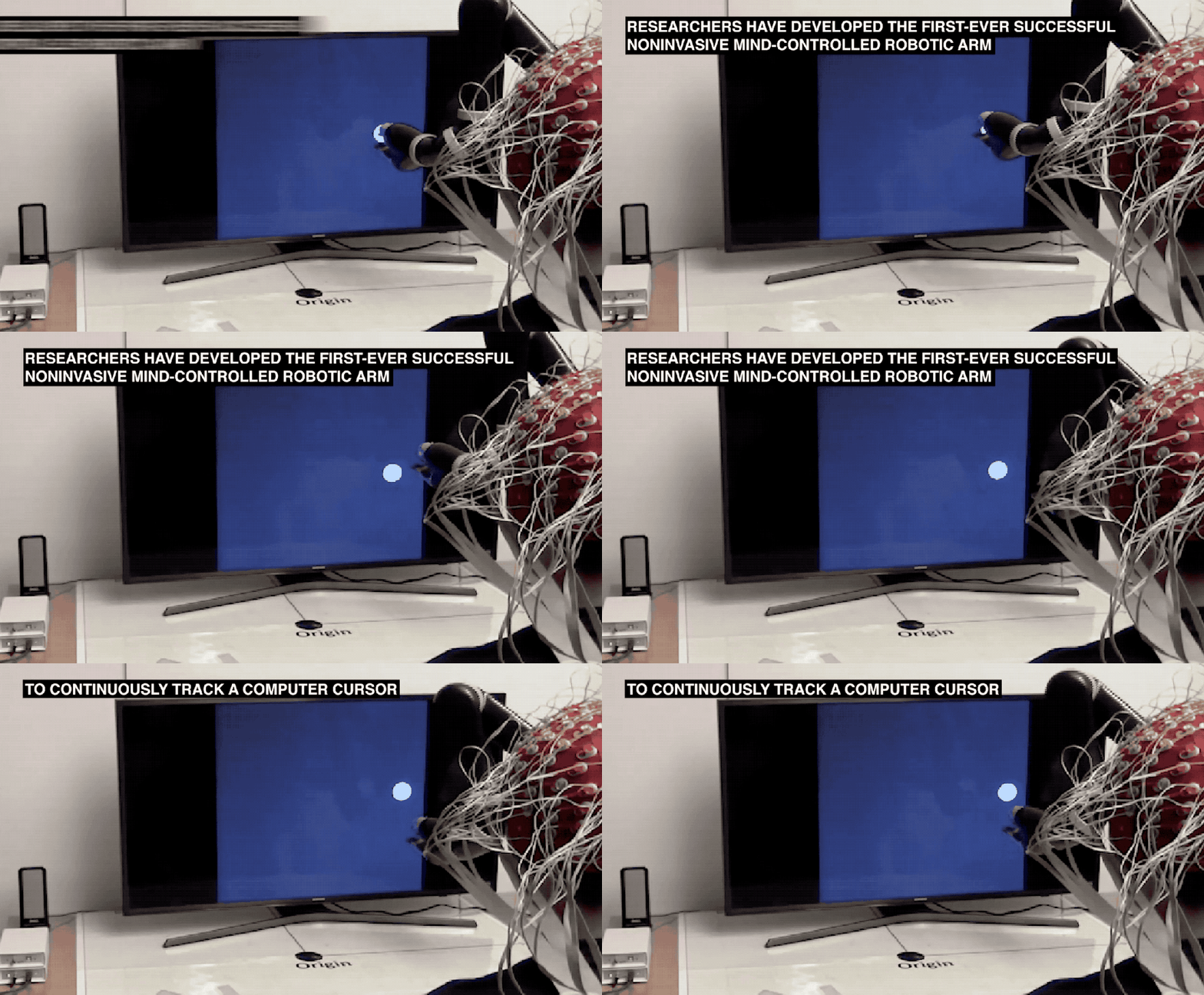
Imagine a world where your thoughts translate directly into actions, bypassing physical limitations and enabling motion through sheer mental focus. Recent research from Carnegie Mellon University (CMU) and the University of Minnesota is turning this dream into reality by creating the first mind-controlled robot arm that operates without any invasive surgical procedures. This breakthrough offers new hope for individuals with movement disorders and can revolutionize how we interface with machines.
The Groundbreaking Development of Noninvasive BCI
Brain-computer interfaces (BCI) have historically relied on expensive and invasive brain implants to capture signals from within the skull. This model has its complications, including the risk of surgery, exorbitant costs, and questions regarding long-term safety. The collaborative effort between researchers at CMU and the University of Minnesota marks a significant leap forward by developing a system that successfully utilizes external sensors placed on the user’s skin. What sets this research apart is its ability to capture high-quality brain signals using innovative sensing and machine learning methodologies.
How It Works
- External Sensors: The system employs noninvasive electrodes that read brain activity from the surface, avoiding the need for surgical implants.
- Enhanced Signal Processing: Advanced algorithms filter out the “noise” typically associated with noninvasive brain wave readings, allowing the system to focus on meaningful signals.
- Real-time Control: During tests, users were able to move a robotic arm accurately to track a cursor on the screen, showcasing significant degrees of motor control.
Applications and Implications
The implications of this research extend far beyond simple demonstrations of technology. Individuals grappling with paralysis or other movement-related challenges could find newfound independence and control through this interface. The versatility and potential applications for mind-controlled technology are vast:
- Assistive Technologies: Providing enhanced tools for those with disabilities to control devices and enhance daily living.
- Virtual Reality: Enabling an immersive experience through thought-controlled interactions within virtual environments.
- Teleoperation: Enhancing remote operations in hazardous environments, offering risks and maximizing efficacy.
Charting the Future: Upcoming Clinical Trials
The CMU and University of Minnesota team intends to begin clinical trials soon, potentially bringing this innovative technology to patients. This approach marks a crucial step in verifying its effectiveness in real-world applications, and could serve as a catalyst for further advancements in the domain of BCI.
Conclusion: A New Era of Control and Independence
The development of a mind-controlled robot arm with noninvasive technology could fundamentally change lives. It stands as a testament to what collaborative research in neuroscience and engineering can achieve, paving the way for innovative solutions that prioritize user accessibility and safety. As we build on these advancements, the realization of seamless interfaces between humans and machines grows ever closer, inspiring hope and possibilities for countless individuals.
At fxis.ai, we believe that such advancements are crucial for the future of AI, as they enable more comprehensive and effective solutions. Our team is continually exploring new methodologies to push the envelope in artificial intelligence, ensuring that our clients benefit from the latest technological innovations. For more insights, updates, or to collaborate on AI development projects, stay connected with fxis.ai.