
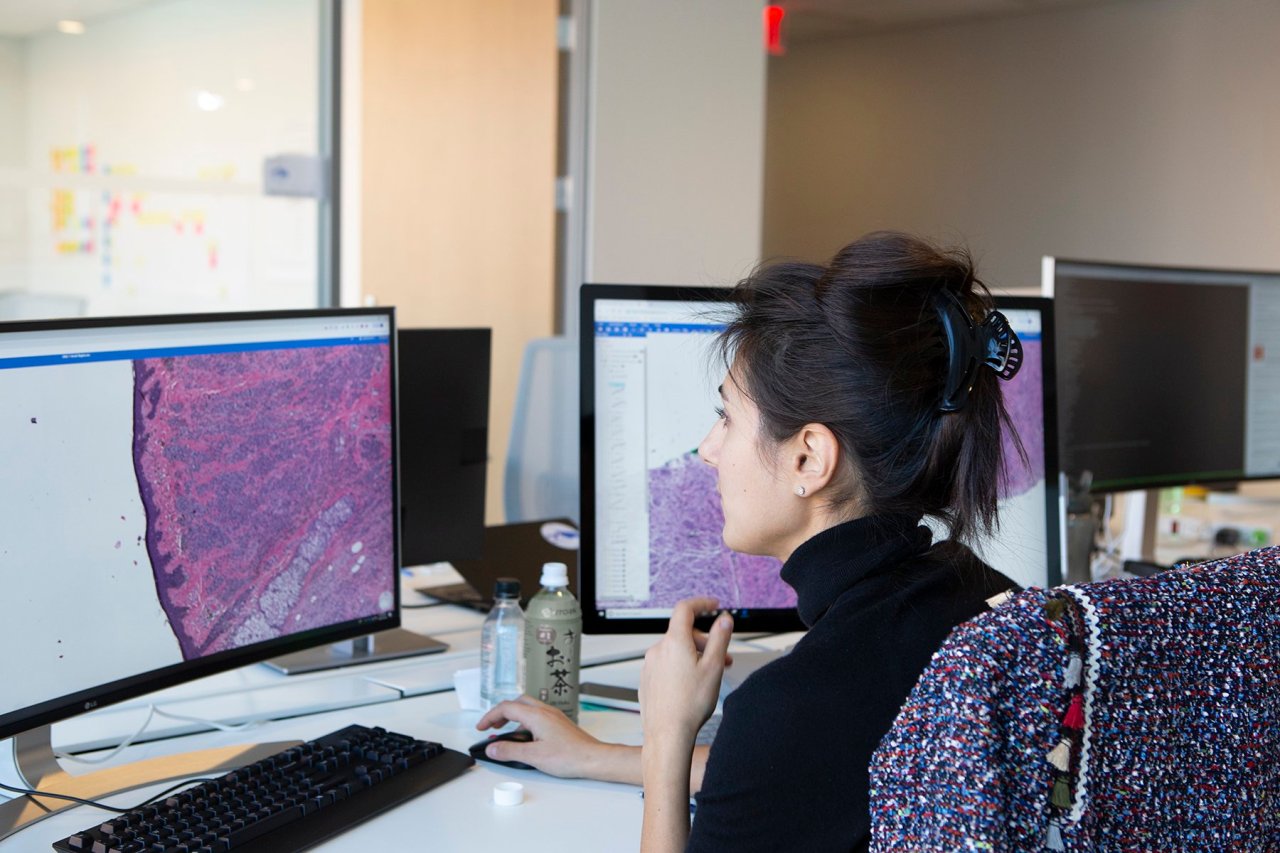
Artificial intelligence has been making waves in various medical fields, and the realm of pathology is no exception. A recent publication in the esteemed journal *Nature Medicine* showcases groundbreaking research from Paige, a startup in medical technology, in collaboration with the Memorial Sloan Kettering Cancer Center (MSK). This innovative AI-powered detection system claims to identify prostate cancer, skin cancer, and breast cancer with remarkable precision, heralding a new era for cancer diagnostics.
Transformative Technology: How Paige is Changing Diagnostics
What sets Paige apart is its clinical-grade accuracy, achieving “near-perfect accuracy” in test conditions. By leveraging a dataset comprised of nearly 45,000 slide images from over 15,000 patients across 44 countries, the system employs deep learning algorithms that dramatically enhance diagnostic capabilities. Unlike traditional AI systems that require meticulous curation of training data, Paige’s technology operates efficiently with broader, less tailored datasets. This innovation not only speeds up the data collection process but also significantly reduces costs and time—a crucial advantage in a field where timely diagnoses can save lives.
Collaboration and Resources: A Winning Combination
- Expert Partnership: Collaborating with MSK puts Paige in league with some of the most esteemed researchers in the field. Dr. Thomas Fuchs, a leader in computational pathology and co-founder of Paige, is at the helm of this exciting endeavor.
- Data Accessibility: With access to one of the world’s largest repositories of pathology slides, the partnership fuels the development of a robust AI model capable of generalizing across a wide spectrum of cancer diagnoses.
- Funding the Future: The $25 million Series A funding secured by Paige not only reflects confidence in their technology but also ensures that they have the financial backing to bring these innovations to market.
Broader Implications of AI in Pathology
Paige’s approach serves as a paradigm shift, suggesting that the traditional methods of curating training datasets may not be as necessary as previously thought. The ability to use larger, less curated datasets opens up pathways for AI applications that can adapt and refine themselves over time. The potential to diagnose a wider range of cancers more accurately is a game-changer, paving the way for personalized medicine and improved treatment outcomes.
The Road Ahead: From Research to Reality
For Paige, commercializing this technology is the next significant step. The insights gleaned from their publication are already under review by the FDA for different applications—a testament to the potential versatility of their diagnostic tools. As the healthcare industry navigates the complexities of integrating AI, Paige stands ready to bring critical advancements to market, ultimately leading to improved patient care and outcomes.
Conclusion
The strides made by Paige in AI-driven pathology not only demonstrate the power of technology in healthcare but also usher in an era of hope for patients battling cancer. Enhanced accuracy and efficiency in diagnostics equip healthcare providers with the tools they need to make informed decisions swiftly. The ongoing journey of Paige is one to watch as it exemplifies the convergence of technology and medicine, transforming how we perceive and tackle cancer.
At **[fxis.ai](https://fxis.ai/edu)**, we believe that such advancements are crucial for the future of AI, as they enable more comprehensive and effective solutions. Our team is continually exploring new methodologies to push the envelope in artificial intelligence, ensuring that our clients benefit from the latest technological innovations. For more insights, updates, or to collaborate on AI development projects, stay connected with **[fxis.ai](https://fxis.ai/edu)**.