
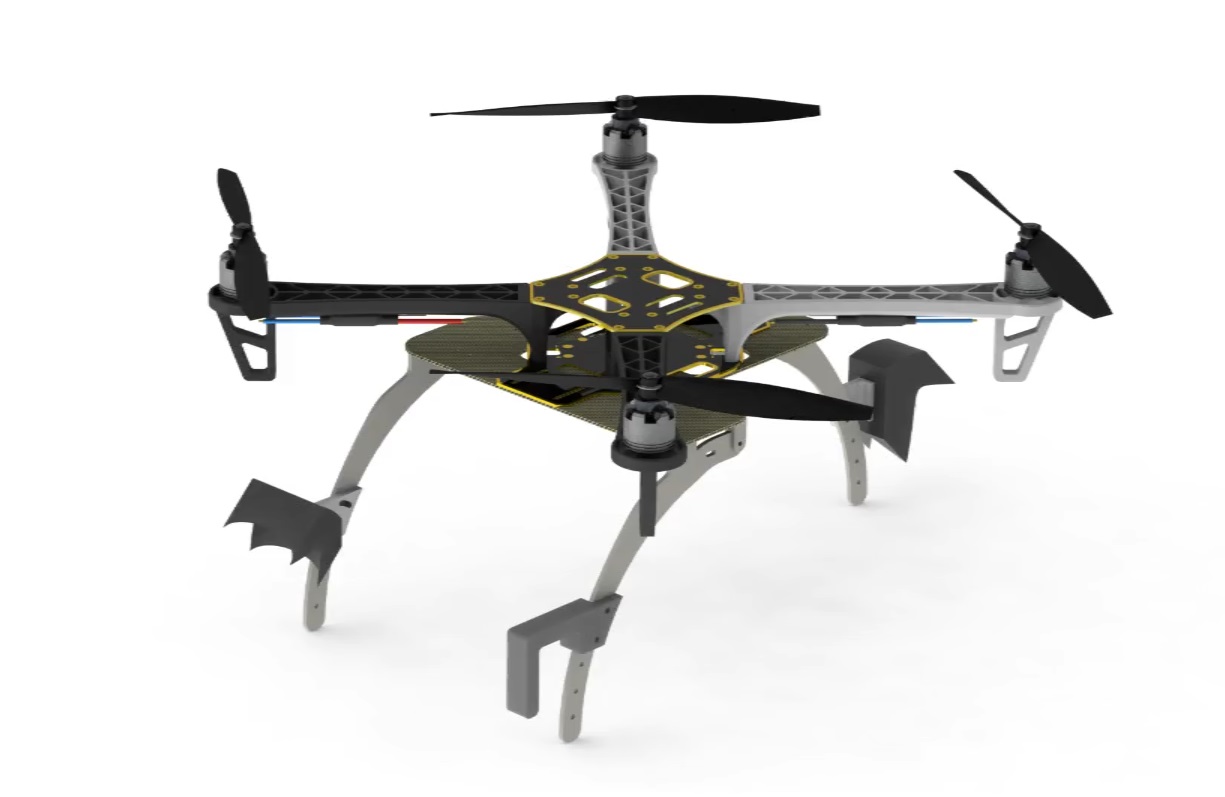
As technology continues to evolve, the versatility of drones is becoming increasingly evident. These flying machines have transformed various fields, yet they face a critical limitation: battery life. Imagine a drone that not only flies but can also take a break, much like a bird resting on a branch. Thanks to innovative engineering inspired by nature, this dream is becoming a reality with the advent of perching drones equipped with specially designed claws.
Understanding the Concept of Perching
Perching, as defined by a multinational research team, refers to the ability of Unmanned Aerial Vehicles (UAVs) to rest on surfaces without expending energy on flight. Drawing inspiration from birds and bats, these perching mechanisms aim to conserve battery power and extend flight durations by allowing drones to “park” themselves on various structures.
Mechanisms Inspired by Nature
The research team, comprising experts from institutions like Yale and the Hong Kong University of Science and Technology, understands that many flying animals possess uniquely adapted claws or feet that allow them to grip firmly onto surfaces. These adaptations reduce the need for continuous lift, enabling the animals to rest while maintaining their stability. The challenge was to replicate this functionality in drones.
Innovative Claw Design
- Modularized Landing Gear: The team developed a gripper-based landing gear that could adapt to various surfaces, vastly improving the range of operational capabilities of drones.
- 3D-Printed Components: By utilizing specially shaped static modules and a large gripper, the team eliminated the need for complex articulation mechanisms without sacrificing functionality.
- Environmental Interaction: Equipped with depth-aware sensors like lidar, these drones can assess their surroundings, recognizing suitable resting surfaces and matching them to a pre-existing library of objects.
Applications of Perching Drones
The practicality of perching drones extends beyond mere novelty. In professional and military contexts, the ability to conserve energy while being partially or fully stationary presents several advantages:
- Prolonged surveillance missions without the drain of constant flight.
- Energy-efficient monitoring of remote or challenging terrains where landing might be impractical.
- Reduced wear on mechanical components, leading to enhanced longevity of UAVs.
The Future of Drone Technology
Early prototypes indicate that the perching functionality is not just a theoretical concept but a viable solution for increasing drone efficiency. Key challenges remain, such as surface recognition and landing precision, but progress is rapid. With ongoing enhancements, it is plausible that perching capabilities will soon become standard features for a range of UAVs.
Conclusion
The integration of biological principles into drone technology exemplifies how observing nature can inspire groundbreaking innovations. As drones evolve to incorporate perching capabilities, they promise to enhance functionalities across various applications, making them an invaluable asset in both commercial and defense sectors.
At fxis.ai, we believe that such advancements are crucial for the future of AI, as they enable more comprehensive and effective solutions. Our team is continually exploring new methodologies to push the envelope in artificial intelligence, ensuring that our clients benefit from the latest technological innovations. For more insights, updates, or to collaborate on AI development projects, stay connected with fxis.ai.