
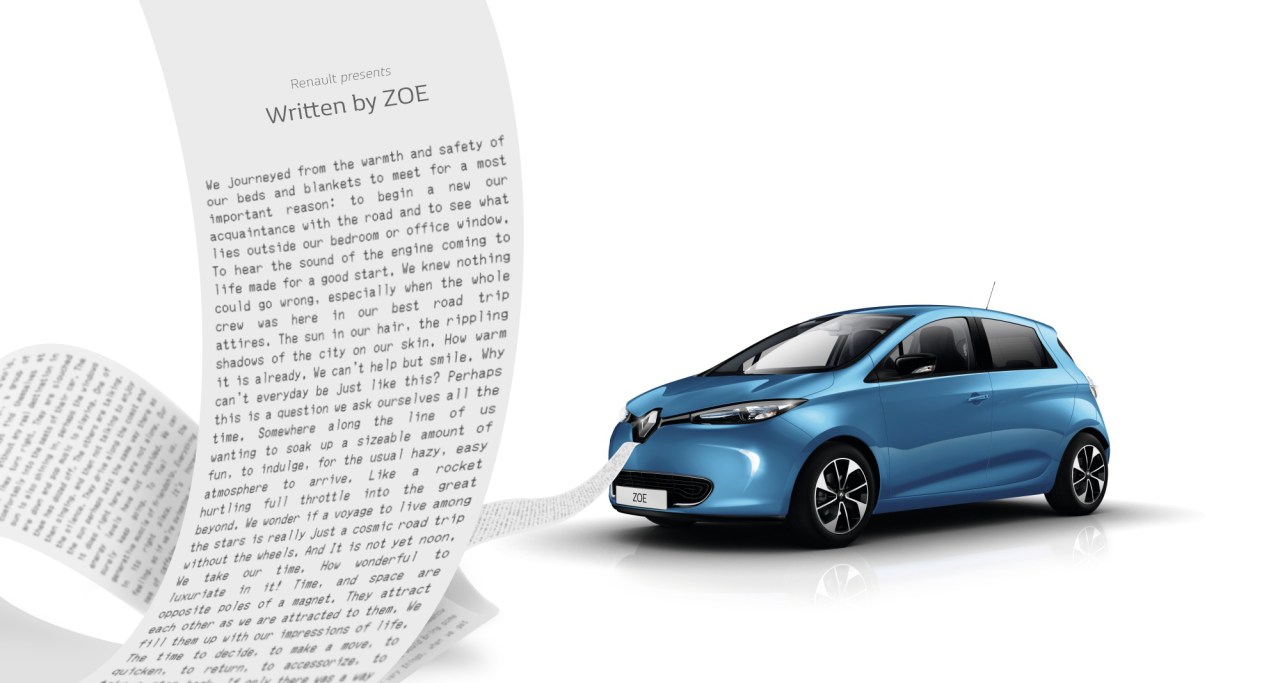
Welcome to the fascinating intersection of literature and technology, where an all-electric automobile has taken to the pages of fan fiction. Enter the Renault ZOE, not just your average electric vehicle, but an AI-driven storyteller creating an homage to Jack Kerouac’s “On the Road”. Celebrating the sixtieth anniversary of this much-loved novel, the ZOE transcends its traditional role and dives into creative artistry, demonstrating the evolving capabilities of electric vehicles in a remarkable way.
A Novel Concept: From Range Anxiety to Storytelling
The brainchild behind this quirky project aims to alleviate consumer apprehensions regarding electric vehicles—commonly known as range anxiety. By showcasing that the Renault ZOE can travel 400 km (approximately 250 miles) on a single charge while generating its own narrative, the car not only tackles concerns about battery life but also turns the journey into a storytelling adventure.
Harnessing AI for Creative Expression
Central to this venture is the AI’s innovative ability to analyze and emulate Kerouac’s writing style. Using the Watson API, the ZOE digests the novel, focusing on language usage, emotional context, and social signals, which serves as the groundwork for its unique storytelling capabilities. The ZOE crafts narratives that are informed by real-time driving data, merging experiences and environments that are specific to each driver’s journey.
Real-time Data Meets Fiction
- Driving Dynamics: The ZOE is equipped with a plethora of sensors, gathering vital data such as speed, acceleration, braking, and weather conditions.
- Geographic Context: The vehicle’s GPS functionality provides the backdrop for personalized storytelling, transforming mundane routes into dramatic landscapes filled with literary flair.
- Interactive Storytelling: Utilizing text-to-speech technology akin to that of Amazon Alexa, the stories are narrated in real-time, allowing drivers and passengers to experience the tale as it unfolds.
Unique Stories for Every Drive
Every journey in the ZOE results in a freshly penned story that reflects the driver’s individual experience. Not only does this personalize the driving experience, but it also integrates creative expression into a technology-centric lifestyle. When the journey concludes, drivers are treated to a thermal-printed script of their narrative, elevating even a simple drive into a memorable literary event.
The Quirkiness of AI Hipster Culture
While one might question the practicality of an electric car that doubles as a novelist, it clearly illustrates how technology can be used in innovative ways to captivate audiences. Think about it: a car that not only gets you from point A to point B but also entertains you with whimsical tales—what’s not to love about that? It embodies the spirit of modern hipster culture, merging nostalgia for classic literature with cutting-edge AI technology.
Conclusion: The Future of Storytelling and EVs
The Renault ZOE stands as a testament to how far electric vehicles have come, transforming the perception of cars from mere machines into relatable companions with stories to tell. As we drive towards a more sustainable future, it’s essential to remember that innovative solutions and memorable experiences can indeed coexist. This audacious project invites us to imagine the possibilities of a world where technology collaborates with creativity, inspiring future developments in both AI and electric vehicles.
At **[fxis.ai](https://fxis.ai/edu)**, we believe that such advancements are crucial for the future of AI, as they enable more comprehensive and effective solutions. Our team is continually exploring new methodologies to push the envelope in artificial intelligence, ensuring that our clients benefit from the latest technological innovations.
For more insights, updates, or to collaborate on AI development projects, stay connected with **[fxis.ai](https://fxis.ai/edu)**.