
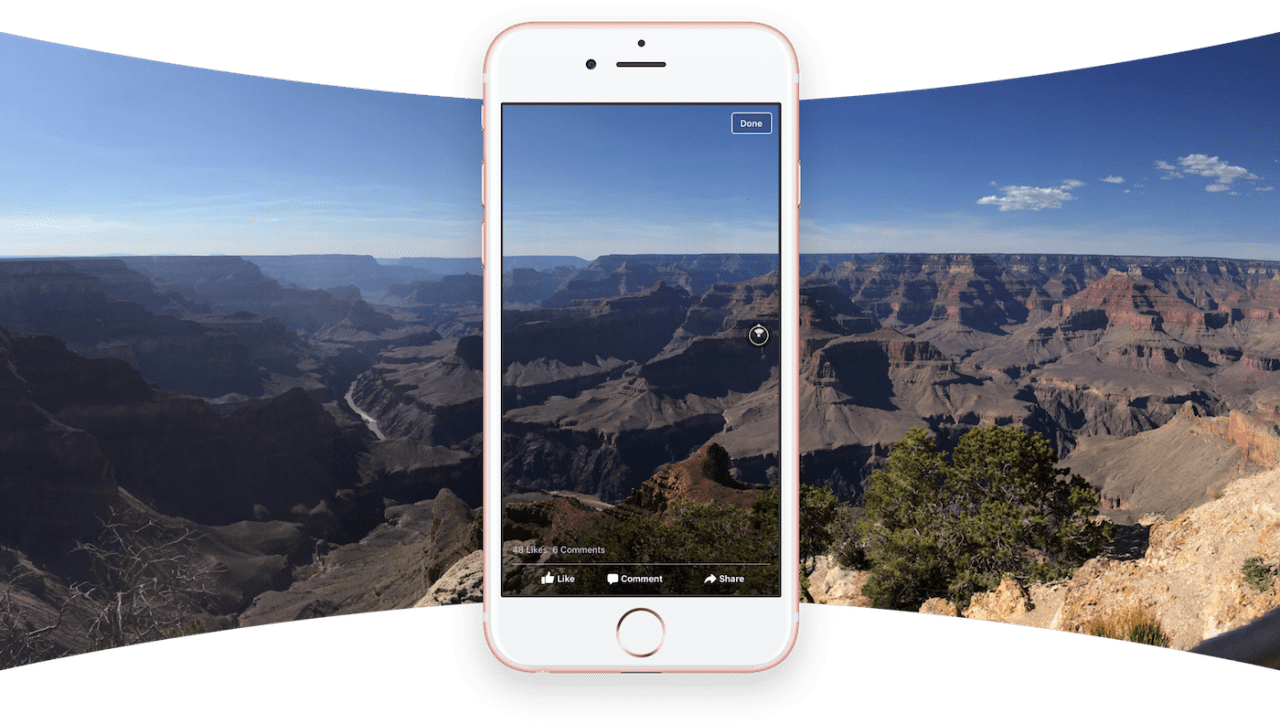
Imagine snapping a glorious panoramic view, only to discover that your captured moment is crooked, distorting the beauty of your 360° photo. This common dilemma has plagued many an unsuspecting photographer, but thanks to Facebook’s computational photography team, that struggle may soon be a thing of the past. At their recent Scale conference in San Jose, the team unveiled a groundbreaking initiative aimed at correcting those pesky tilted 360° photos using artificial intelligence.
The Challenge of Crooked Photos
We’ve all been there. Whether it’s due to shaky hands, an awkward angle, or simply the rush to capture a moment, crooked pictures are an unfortunate reality. While conventional leveling tools can salvage some of these images, they have limitations. Traditionally, computer vision techniques identify straight lines that converge at a vanishing point to correct angles. However, what happens when your photo lacks sufficient parallel lines or structured elements for reference?
The Neural Network Solution
Enter Facebook’s innovative deep learning approach, a departure from established methods. Matt Uyttendaele, a research scientist behind the project, explained that the team opted to leverage a neural net, specifically AlexNet, to tackle this issue. This method hinges on a cornerstone of artificial intelligence: pattern recognition. By training the network on images labeled with tilt and roll information, the team set out to teach the system how to recognize misaligned photos.
Building the Dataset
One might assume that training a neural network is a straightforward task, but the data acquisition proved to be an extraordinary challenge. The team needed a rich dataset of non-rotated images to sharpen the model’s predictive accuracy. They meticulously crafted a collection of 500,000 images and artificially rotated them to simulate a variety of potential errors. This robust dataset became the foundation for the project, leading to the development of a cutting-edge model poised to redefine 360° photography.
The Future of 360° Image Correction
Although the feature has not yet been launched, the anticipation surrounding its release is palpable. Users can expect to have the ability to easily correct their photographs in just a few clicks once Facebook finalizes how the opt-in mechanism will function. The fundamental goal is to streamline the photo correction process, allowing users to focus on their creativity rather than on technical shortcomings.
The Broader Implications
This initiative isn’t just about fixing crooked photos; it represents a broader shift in how we approach computational photography. By leveraging deep learning, tools that were once manual and time-consuming are being automated, enabling photographers and content creators to enhance their work with minimal effort. This evolution in technology is pivotal, as it allows more individuals to engage with the art of photography without the intimidation of technical hurdles.
Conclusion
With advancements like this on the horizon, it’s evident that artificial intelligence is becoming an indispensable ally in photography. Facebook’s commitment to enhancing user experiences through intelligent image correction can fundamentally alter how we capture and share our world. As we wait eagerly for the arrival of this feature, one thing remains clear: the future of photography is bright, and technology is breathing new life into our creative endeavors.
At **[fxis.ai](https://fxis.ai/edu)**, we believe that such advancements are crucial for the future of AI, as they enable more comprehensive and effective solutions. Our team is continually exploring new methodologies to push the envelope in artificial intelligence, ensuring that our clients benefit from the latest technological innovations.
For more insights, updates, or to collaborate on AI development projects, stay connected with **[fxis.ai](https://fxis.ai/edu)**.