
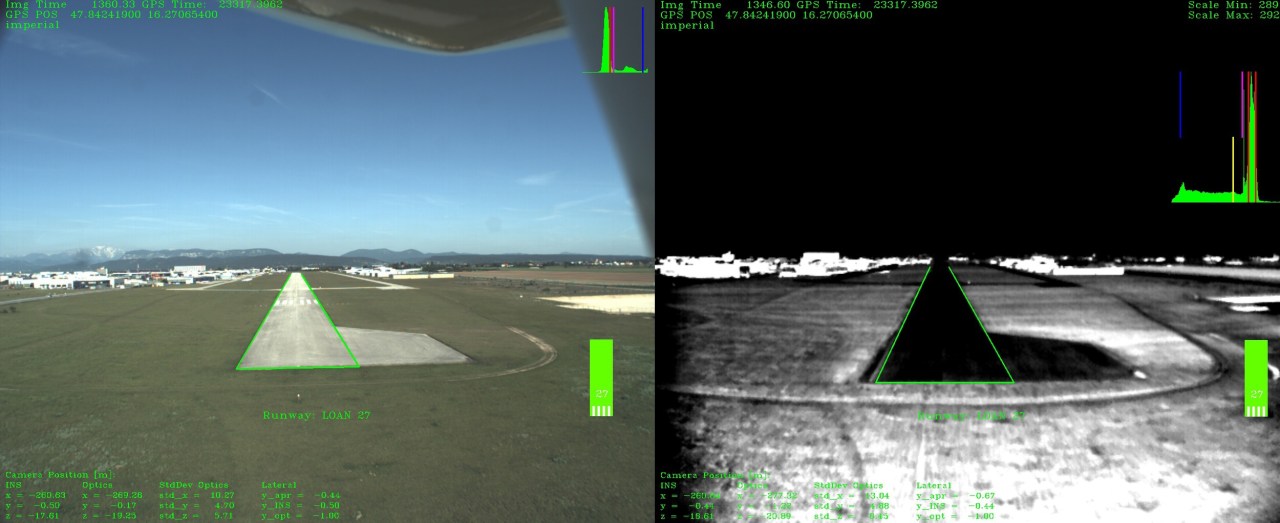
As we soar into a new age of technology, intelligent systems are rapidly transforming how we approach long-standing challenges across industries. One standout example is the groundbreaking research by the team at Technische Universität München (TUM), which has achieved a monumental step in aviation: a small aircraft that can autonomously land itself. Gone are the days where reliance on ground-based navigation systems dictated an aircraft’s safe descent. This innovation could redefine air travel, enhancing safety measures and expanding possibilities for the aviation sector.
Understanding the Traditional Autoland Systems
To appreciate this revolutionary achievement, it’s essential to dissect how traditional autopilot and autoland systems operate. Full-size aircraft often depend on the Instrument Landing System (ILS)—a network of ground-based radio signals that assists pilots during landing, even in poor visibility conditions. While these systems have been reliable, they are not genuinely autonomous. Instead of letting the aircraft fly itself, pilots act as overseers, utilizing the autopilot as a navigation assistant.
- Reliance on ILS: Though termed ‘automatic’, most landings use ILS, which presents a limitation, especially at smaller airports that lack such technology.
- Limited Autonomy: The systems often serve to augment pilot decision-making as opposed to eliminating the need for human intervention entirely.
A New Horizon: The Autonomous Landing System
The development by TUM is a game changer. Their pioneering system, known as C2Land, allows aircraft to leverage visual information for navigation, replicating how pilots locate runways. This is achieved through a combination of innovative technology:
- High-tech Cameras: The aircraft is outfitted with advanced visible-light and infrared cameras. These allow real-time runway detection from considerable distances.
- Computer Vision Processing: C2Land utilizes a sophisticated computer vision processor capable of analyzing camera data to facilitate safe landings, even when traditional navigation systems aren’t available.
Testimony from the Skies
During testing, the team used a Diamond DA42 aircraft, with the pilot maintaining a passive role throughout the journey. As the aircraft approached the runway, it automatically adjusted its altitude and trajectory to achieve a flawless landing, precisely on the centerline of the runway. These results give credence to the potential of enhanced aircraft safety which could ultimately save lives—not just at major airports but also at smaller airstrips where options for emergency landings are limited.
Looking Ahead: The Future of Autonomous Flight
Despite the promising nature of this technology, it is crucial to recognize that the current system is still in experimental phases. Certification from aviation authorities remains necessary before widespread deployment can occur. Nonetheless, the advantages are poised to be manifold:
- Improved Safety: In unpredictable weather conditions—such as heavy fog—autonomous systems can outperform human pilots, who are limited by visibility.
- Broader Accessibility: Smaller airports and regions lacking ILS infrastructure could soon benefit from automated landings, reshaping the flight landscape.
- Enhanced Efficiency: Even as a support system for current technologies, C2Land could streamline operations, reducing workload on pilots and improving landing precision.
Conclusion: A Leap Towards Safer Skies
The strides made by TUM researchers signify more than technical achievement—they represent a paradigm shift in aviation technology. As we stand on the cusp of a new era in autonomous flight, it is clear that the implications for safety, efficiency, and accessibility are profound. The journey is only beginning, but with committed advancements, we can envision a future where air travel is safer and more reliable than ever.
At fxis.ai, we believe that such advancements are crucial for the future of AI, as they enable more comprehensive and effective solutions. Our team is continually exploring new methodologies to push the envelope in artificial intelligence, ensuring that our clients benefit from the latest technological innovations. For more insights, updates, or to collaborate on AI development projects, stay connected with fxis.ai.