
Augmented Reality (AR) has become the buzzword in technology circles, with major companies clamoring to showcase its consumer-facing applications. However, beneath the glitzy exterior lies a foundational struggle that needs to be addressed. Enter Jido Maps, a startup from Y Combinator that is not just joining the race but redefining how we interact with AR. Their vision? A ‘save button’ for persistent AR worlds, allowing users to return to their digital experiences seamlessly.
The Challenge of Persistence in AR
Current AR technologies often falter when it comes to persistence—essentially, the ability of the technology to remember user interactions in a physical space. Jido Maps aims to bridge this gap by providing a robust backend solution that enhances user experience without getting bogged down by complex point clouds. Their innovative approach highlights the significance of understanding spatial relationships and object permanence in AR experiences.
Understanding Jido’s Unique Approach
Jido Maps has attracted significant attention and funding, recently closing a $2.1 million seed round led by Khosla Ventures. The essence of their technology lies in its ability to remember the last state of an AR session. For example, imagine placing a digital banana on a table. With Jido’s technology, that virtual banana can remain in the same spot when you return, thus removing the hassle of resetting AR experiences.
- Focus on Semantic Data: Instead of merely mapping points in space, Jido takes a higher-level approach. They strive to understand not just the positioning of objects but also their relationships and the spatial structures of environments.
- Ignoring Dynamic Changes: By focusing on static elements, Jido’s system can effectively ignore moving people or objects, ensuring the integrity of the AR experience remains intact—even in busy environments.
Engaging the Developer Community
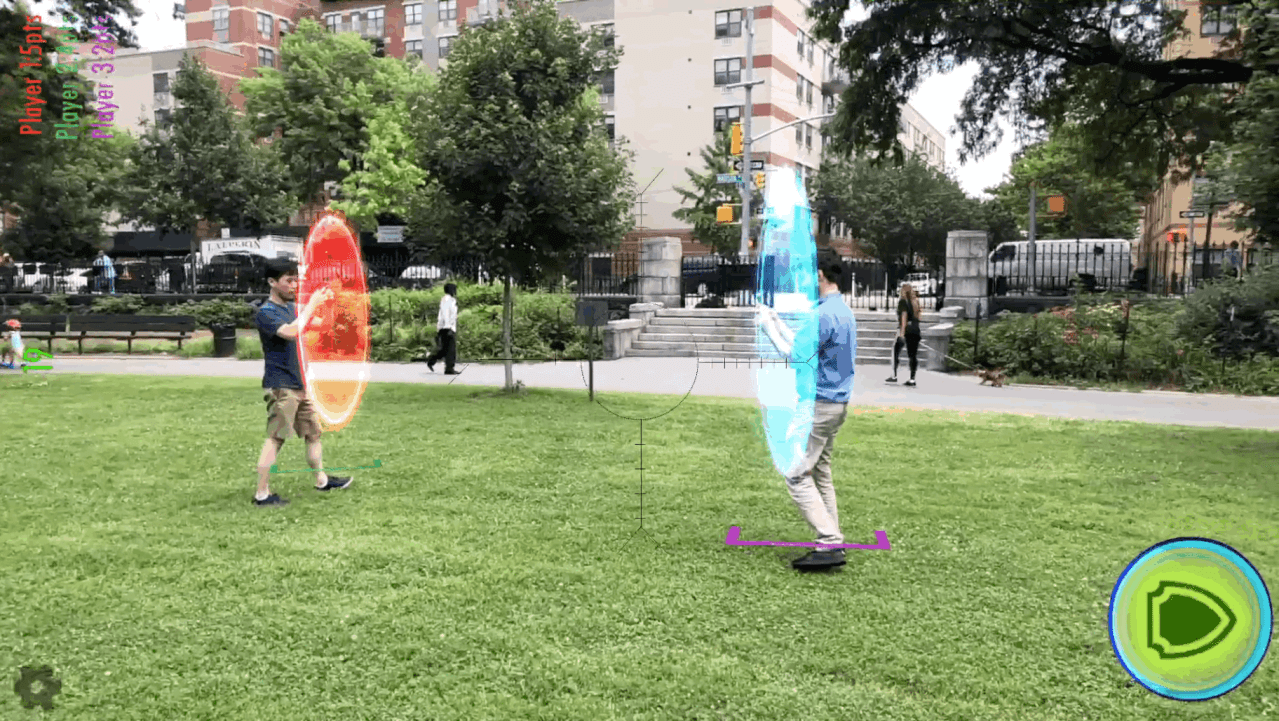
One of Jido’s priorities is to get developers onboard with their lightweight API, which allows for seamless integration of AR features into applications. They encourage creativity through a multiplayer setup that builds the mesh while users interact, negating the need for extensive pre-scanning. A great example is the game QuasAR by Happy Giant, which offers users a fun multiplayer laser tag experience leveraging Jido’s technology.
The Future of AR: A Collective Effort
As AR technology continues to evolve, the need for a foundation that supports persistent, meaningful experiences becomes more crucial. Jido Maps is at the forefront of these advancements, envisioning a world where AR can feel as integrated into our reality as the objects around us. Their unwavering commitment to understanding space and user interactions could very well pave the way for the next generation of AR applications.
Conclusion: A New Era for Augmented Reality
Jido Maps is setting a new standard for what AR can achieve. By focusing on persistence, spatial awareness, and engaging developers, they are not just improving existing systems but are also expanding the possibilities within the augmented realm. The implications for gaming, education, and various other sectors are profound. The future of AR lies in the hands of such innovators, and we can’t wait to witness its evolution firsthand.
At fxis.ai, we believe that such advancements are crucial for the future of AI, as they enable more comprehensive and effective solutions. Our team is continually exploring new methodologies to push the envelope in artificial intelligence, ensuring that our clients benefit from the latest technological innovations. For more insights, updates, or to collaborate on AI development projects, stay connected with fxis.ai.