
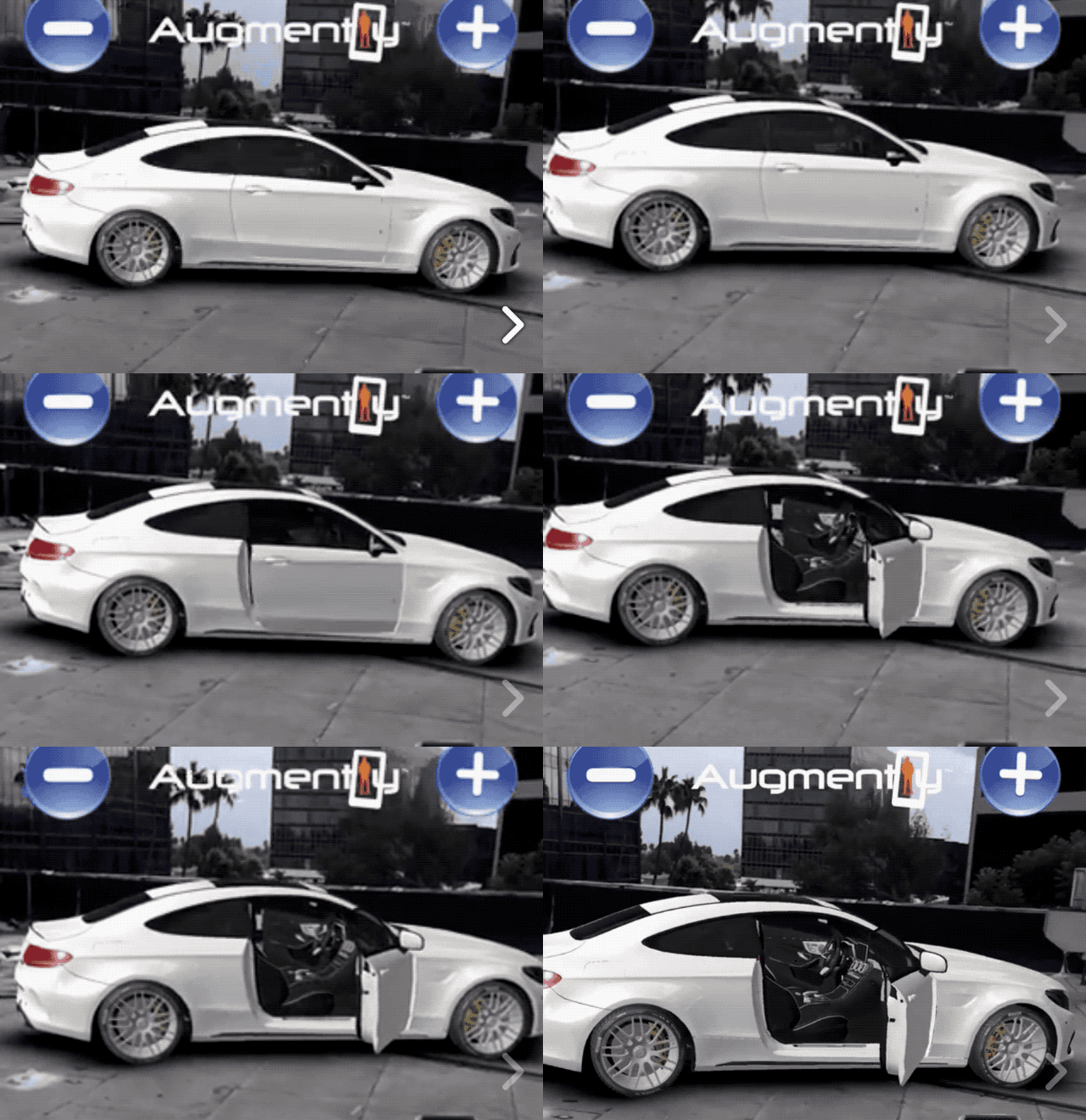
As technology continues to evolve, the automotive industry stands on the brink of a transformation driven by augmented reality (AR). With Apple’s introduction of ARKit in iOS 11, the prospects for virtual car showrooms have expanded greatly. This innovative platform not only provides developers with the tools needed to create immersive AR experiences but also opens the door to revolutionary changes in the way customers interact with cars before making a purchase.
Why ARKit is a Game Changer
The launch of ARKit made it dramatically easier for developers to create high-quality augmented reality applications. With its intuitive interface and powerful functionalities, ARKit allows users to visualize life-sized 3D models of cars directly in their environment using just their iPhones. Imagine wandering around your living room and being able to place a virtual Mercedes sedan in front of you, examine its design from different angles, and even change its color with a simple tap. This scenario is not just a dream but a reality made possible by ARKit.
The Virtual Showroom Experience
- Enhanced Interactivity: Developers like Augmently have already showcased the potential of ARKit through their realistic 3D models. Customers can interact with interiors, explore features, and get a feel for the car without stepping into a dealership.
- Accessibility: Unlike traditional setups, which often require specialized hardware, ARKit makes these experiences available to anyone with an iOS device. This democratization of technology could significantly shift consumer behavior.
- Reducing Dependency on Physical Showrooms: Virtual showrooms powered by AR could lessen the need for vast physical locations, ultimately lowering costs for dealerships and manufacturers.
The Shift Towards Online Car Sales
The car sales process is undergoing a seismic shift, much of it fueled by the rise of online marketplaces and changing consumer demands. Many startups, including Tesla, have successfully adopted an online-only model, allowing customers to order cars from the comfort of their homes. Traditional dealerships are adapting as well, experimenting with ARKit to make the online showcase of vehicles not just functional but also engaging.
In an era where convenience is paramount, integrating AR capabilities could streamline the buying process, making virtual testing and exploration a seamless part of the consumer experience.
Prospects and Future Applications
As we continue to find innovative ways of leveraging AR technology, the automotive sector stands to gain significantly. Features could evolve into full-fledged virtual reality experiences, such as:
- Personalized Test Drives: Imagine a scenario where users can take virtual test drives through their familiar surroundings rather than on a traditional test route.
- AR Consultations: Car salespeople could assist customers in real-time through AR, helping them visualize what different customization options would look like.
- Integration with AI: Incorporating AI could personalize user experiences further, making tailored recommendations based on individual preferences and driving habits.
Conclusion
Apple’s ARKit has not just introduced a new tool for developers, but it set the stage for a radical transformation in how the automotive industry approaches sales and customer engagement. As virtual experiences enhance car purchasing and interactions, it is clear that the future of automotive sales will likely become increasingly digitized, paving the way for better efficiency and customer satisfaction.
At fxis.ai, we believe that such advancements are crucial for the future of AI, as they enable more comprehensive and effective solutions. Our team is continually exploring new methodologies to push the envelope in artificial intelligence, ensuring that our clients benefit from the latest technological innovations.
For more insights, updates, or to collaborate on AI development projects, stay connected with fxis.ai.