
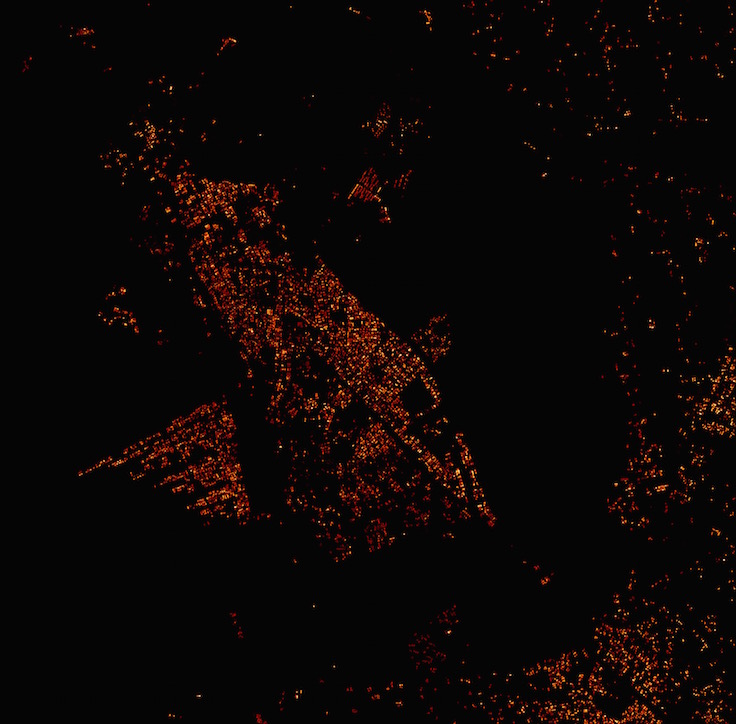
In our increasingly interconnected world, understanding where people live and how to reach them is essential—not just for businesses but for efforts aimed at societal improvement. Facebook is pioneering an ambitious project that converges artificial intelligence with detailed mapping techniques, ultimately aiming to connect everyone on the globe. This innovative endeavor utilizes highly detailed satellite imagery and advanced machine learning algorithms to create the most precise population map to date.
The Need for Precision in Mapping
As Jay Parikh, Facebook’s global head of engineering and infrastructure, and Yael Maguire, the director of the Connectivity Lab, emphasize, existing population maps simply do not meet the high standards necessary for effective connectivity solutions. Traditional mapping sources, like those from Columbia University, offer a resolution of approximately 1 kilometer, which, while useful, can be misleading—especially in rural areas where population density and settlements can vary substantially.
- Current projections cannot accurately inform connectivity strategies.
- Understanding human settlement patterns is critical for directing resources and services.
- Facebook aims to target these gaps to create tailored solutions for diverse regions.
How Facebook is Tapping into AI
To tackle this issue, Facebook’s Connectivity Lab teamed up with the AI team and data science experts to analyze around 21.6 million square kilometers of imagery from 20 countries. By processing a staggering 14.6 billion images, Facebook’s algorithms were trained to identify signs of human habitation effectively. This meticulous process involved feeding the machine-learning model vast amounts of data, allowing it to autonomously discern which images depicted human settlements.
The approach, while technically challenging, is important for broader implications. High-resolution mappings can enable Facebook to more effectively deploy their Internet infrastructure, whether through drones, satellites, or other means. Technologies like these become fundamental in accessing underserved populations across vast regions.
Potential Applications and Global Contributions
The insights gleaned from this population mapping are not only pivotal for Facebook but also have the potential to benefit multiple sectors. Think of public health, urban planning, and disaster relief operations—all these fields can gain from understanding where the population lives and what their needs might be. With real-time data, organizations can better allocate resources and plan interventions with pinpoint accuracy.
Facebook’s commitment to sharing this information is evident in their collaboration with Columbia University, focusing on making this substantial dataset available for various analyses, inviting feedback from the global community. As Maguire points out, while the primary motivation is connectivity, the potential applications for this data could be vastly diverse.
Conclusion
Facebook’s ambitious foray into detailed population mapping using AI stands as a testament to the future of connectivity. By harnessing advanced technologies to understand human geography more clearly, the company illustrates how the realms of artificial intelligence and social responsibility can intersect. As they seek to facilitate global connectivity, one can only imagine the transformative impact this data—and similar applications in AI—will have on communities worldwide.
At fxis.ai, we believe that such advancements are crucial for the future of AI, as they enable more comprehensive and effective solutions. Our team is continually exploring new methodologies to push the envelope in artificial intelligence, ensuring that our clients benefit from the latest technological innovations.
For more insights, updates, or to collaborate on AI development projects, stay connected with fxis.ai.