
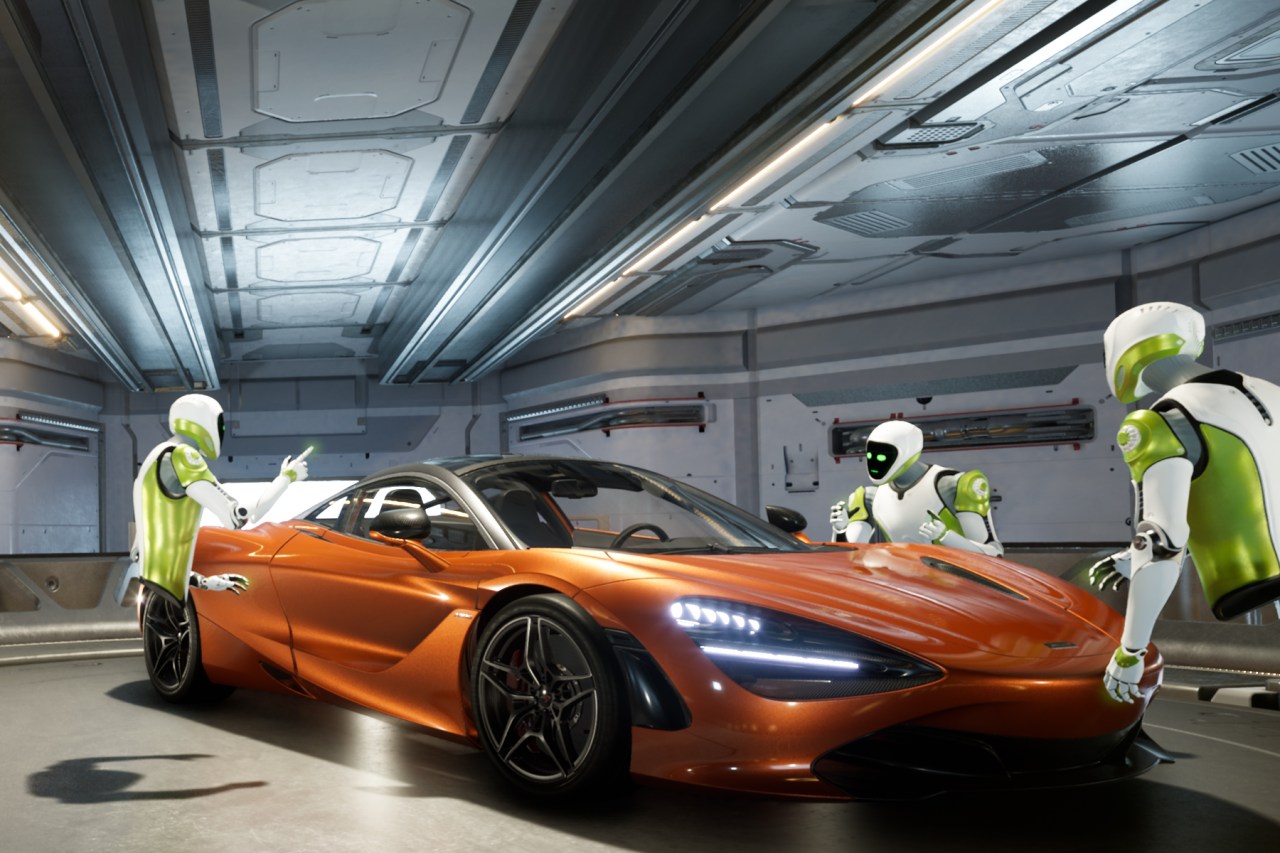
In a world that increasingly values creativity and innovation, the demand for tools that elevate collaboration among designers, architects, and engineers is more vital than ever. Enter Nvidia’s Holodeck, a platform that pushes the boundaries of conventional design processes through groundbreaking virtual reality (VR) technology. But what exactly does the Holodeck bring to the table? Let’s delve into how this virtual space is not just a piece of technology but a game changer for creative collaboration.
The Essence of Nvidia’s Holodeck
Nvidia’s Holodeck is not merely a fantasy space reminiscent of Star Trek; it stands as a sophisticated photorealistic VR platform that transforms design workflows. This intelligent virtual reality environment allows users to:
- Collaborate in lifelike virtual settings.
- Manipulate highly detailed models in a setting that adheres to simulated real-world physics.
- Prototype and iterate on designs to accelerate the time-to-market for products.
With this innovative platform, Nvidia is redefining the fabric of design interactions by enabling engineers and designers to visualize their creations in a real-world context. The capability to conduct revisions seamlessly within a virtual construct sets the stage for shorter design cycles.
AI-Ready Features for Enhanced Collaboration
What makes the Holodeck particularly compelling is its AI-ready infrastructure. Designers can create virtual agents programmed to engage with their prototypes. This means real-world conditions can be simulated, allowing users to anticipate how products will function in practical scenarios, involving operational personnel and incidental interactions. Imagine testing a car’s safety features within a holistic virtual environment before ever assembling a physical prototype—this is the future of design.
Success Stories and Early Adoption
It’s not just theory; Nvidia’s Holodeck has already garnered praise from industry leaders. Notable architects, engineers from NASA, and avant-garde designers have expressed enthusiasm since participating in pre-release testing. Their insights are invaluable as Nvidia opens the platform to a wider audience for early access. The goal? Refining the Holodeck experience further based on real-world feedback.
The Broader Implications of Collaborative VR
While the Holodeck is already making waves in sectors like automotive design, its potential does not end there. Industries such as architecture, healthcare, and urban planning stand to gain immensely from the collaborative capabilities it offers. Imagine a team of city planners working together in the Holodeck to visualize urban layouts while assessing environmental impacts. The possibilities are endless.
Conclusion: The Future of Design Collaboration Awaits
Nvidia’s Holodeck heralds a new era where creative collaboration knows no bounds. By combining advanced graphics capabilities with artificial intelligence, it not only enhances the design process but also encourages innovative thinking and problem-solving. The integration of such pioneering technology into everyday design practices signals a transformative shift that is likely to redefine industries globally. At fxis.ai, we believe that such advancements are crucial for the future of AI, as they enable more comprehensive and effective solutions. Our team is continually exploring new methodologies to push the envelope in artificial intelligence, ensuring that our clients benefit from the latest technological innovations.
For more insights, updates, or to collaborate on AI development projects, stay connected with fxis.ai.