
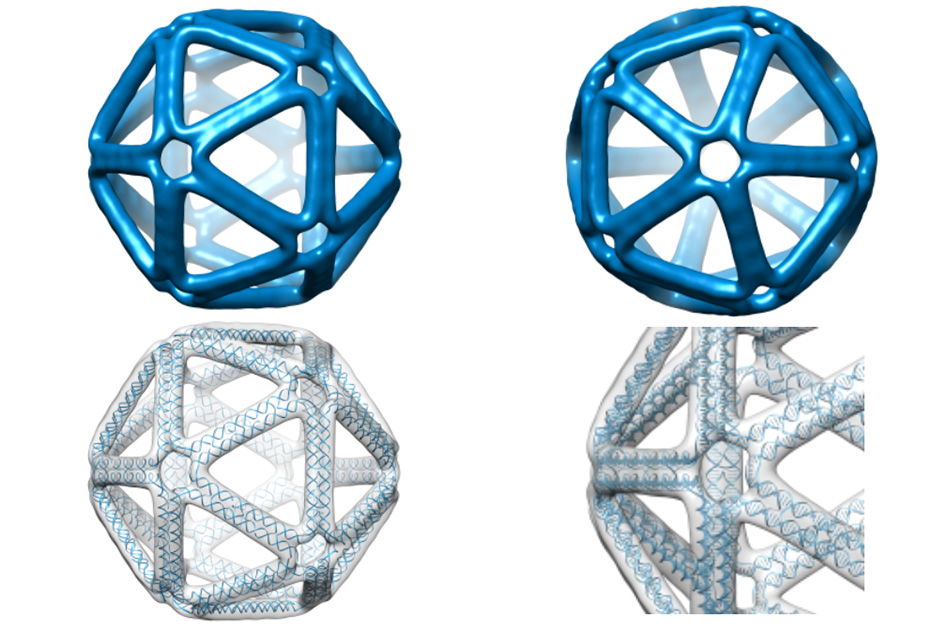
The world of molecular design has often been relegated to the experts, those with years of study in biochemistry and genetic engineering. However, a groundbreaking development promises to seamlessly integrate creativity with science, much like how 3D printing transformed the manufacturing landscape. Imagine constructing intricate nanoscale structures using DNA without needing advanced degrees or technical expertise—thanks to a remarkable algorithm, this dream is now a reality.
The Power of DNA: Beyond the Double Helix
DNA is not merely a blueprint for life; it is a versatile medium that lends itself to creativity at the molecular level. While 3D printing allows for the construction of tangible objects at a relatively large scale, DNA origami enables designers to engineer structures at the nanometer scale. From dodecahedrons to spirals, DNA can be manipulated to form detailed geometric shapes through the careful arrangement of its building blocks: adenine (A), thymine (T), guanine (G), and cytosine (C).
- Medical Applications: These DNA structures can encapsulate medical tools like CRISPR-Cas9, enhancing gene editing.
- Drug Delivery: Custom DNA shapes can be designed to deliver medication precisely where needed in the body.
- Data Storage: The potential for DNA as a data storage medium opens up avenues for storing vast amounts of information in a minuscule footprint.
Introducing DAEDALUS: The Game-Changing Algorithm
Researchers from MIT, Arizona State University, and Baylor University have created DAEDALUS (DNA Origami Sequence Design Algorithm for User-defined Structures), which reverses the traditional process of DNA origami design. Instead of requiring an expert to painstakingly outline the necessary DNA sequences for complex shapes, DAEDALUS allows users to specify a desired 3D shape, and the algorithm takes over.
This innovative tool determines the exact sequence of bases required to form the DNA scaffold that will twist and bend into the specified shape. By only requiring the user to provide a closed surface design, DAEDALUS democratizes the art of DNA origami, making it accessible to anyone with an idea.
The Bright Future Ahead
The implications of this technology are vast. With DNA origami becoming more accessible, we can anticipate a flurry of creativity in applications beyond medicine and genetics:
- Environmental Solutions: Customized DNA structures could be engineered for environmental cleanup, capturing pollutants at the molecular level.
- Nanotechnology: Future innovations may include nanobots programmed to perform a variety of functions, from monitoring health markers to delivering targeted therapies.
- Art and Design: Artists could leverage this technology to create genuine biological artworks, pushing boundaries between art and science.
Conclusion: A New Era of Molecular Design
The advent of DAEDALUS marks a transformative moment for DNA origami, enabling a broader range of participants to harness the potential of molecular design. As technologies like these take root, we move closer to a future where the intersection of creativity and science is not just a privileged domain but an accessible playground for all.
At fxis.ai, we believe that such advancements are crucial for the future of AI, as they enable more comprehensive and effective solutions. Our team is continually exploring new methodologies to push the envelope in artificial intelligence, ensuring that our clients benefit from the latest technological innovations. For more insights, updates, or to collaborate on AI development projects, stay connected with fxis.ai.