
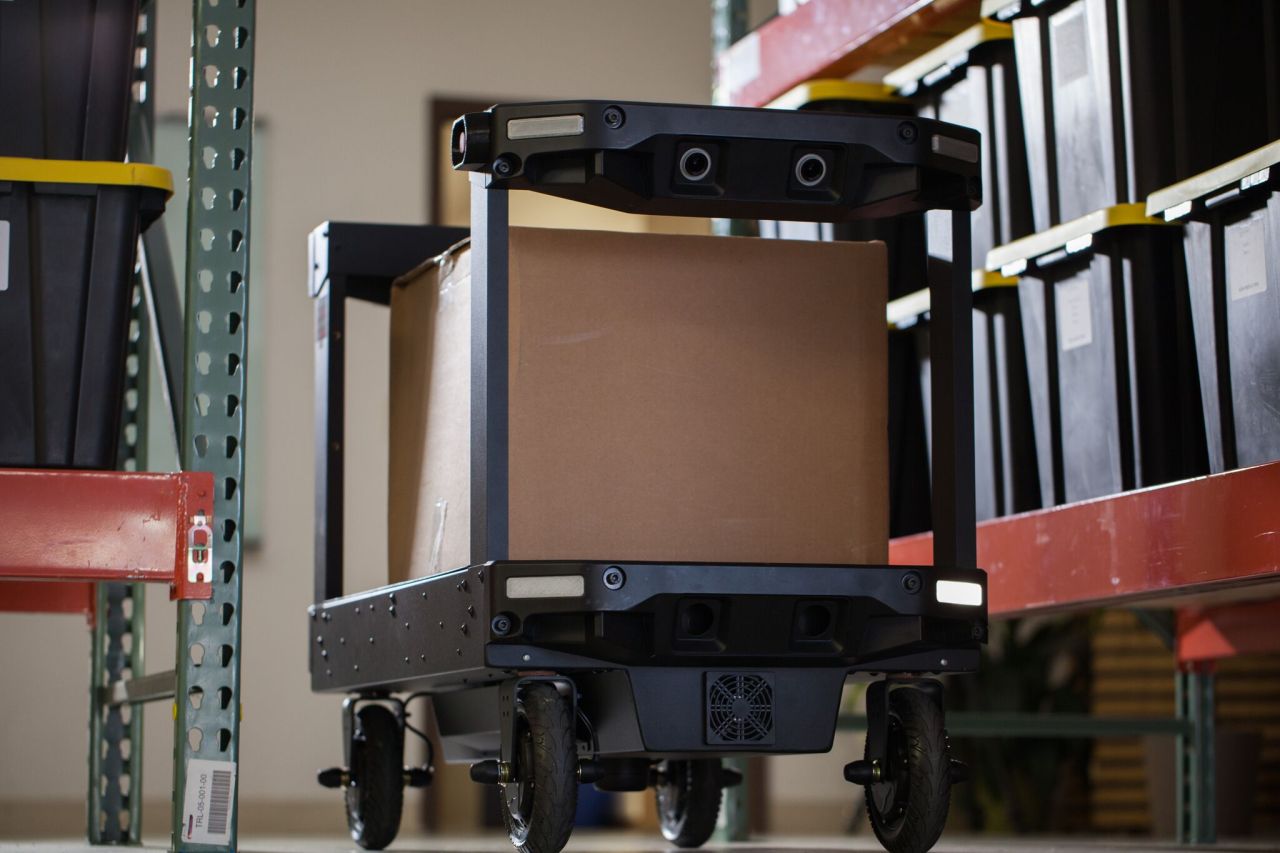
The landscape of manufacturing is undergoing a seismic shift, largely driven by advancements in automation technology. Among the key players in this transformation is Boulder-based startup Canvas, which is determined to challenge traditional concepts of fixed costs associated with factory infrastructure. With the introduction of their autonomous cart, Canvas is redefining how goods navigate the chaotic environments of modern factories.
Transforming Movement: From Infrastructure to Innovation
Historically, factories relied heavily on conveyor belts to transport goods from one location to another. While effective, this system bound manufacturing processes to rigid infrastructures that require costly and time-consuming adjustments when changes are needed. Canvas has set out to eradicate these limitations by creating an autonomous cart that can adapt seamlessly to the fluctuating demands of a production line.
Jonathan McQueen, the CEO of Canvas, emphasizes the versatility of their cart, stating, “It can be used for delivering parts from inbound inventory to the manufacturing line or delivering finished goods to a warehouse.” This adaptability opens the door for manufacturers to optimize their operations without being tied to physical structures.
The Challenge of Autonomous Movement
Designing an effective autonomous cart is no small feat. Many existing autonomous bots excel in outdoor settings or static indoor environments. Canvas’s innovation lies in its ability to navigate unpredictable factory floors without relying on constant connectivity. Two key technological breakthroughs enable this capability:
- Advanced Computer Vision: Canvas has developed a sophisticated computer vision system powered by a specialized 3D camera. Unlike traditional 2D LiDAR systems, this technology generates intricate real-time 3D maps, allowing the cart to identify and react to complex environmental factors, such as obstacles and varying floor conditions.
- Collaborative Fleet Communication: A unique feature of Canvas carts is their ability to communicate with one another. When multiple carts operate within a factory, they can share mapping data, which enhances their operational efficiency and flexibility. This collective intelligence is key to navigating the dynamic factory landscape.
Seamless User Experience
The user interface for interacting with the Canvas cart is as intuitive as it is functional. Factory employees can operate the carts through a web application, allowing them to easily designate pick-up and drop-off locations. This visual programming interface minimizes training time and empowers users to maximize their efficiency effortlessly.
A Vision for the Future of Manufacturing
Canvas’s long-term aspirations extend beyond a single product; they aim to develop a range of indoor autonomous vehicles capable of fulfilling various roles on the factory floor. By simplifying manufacturing processes and reducing the need for cumbersome infrastructure, Canvas hopes to democratize automation, making it accessible even to smaller manufacturers.
To support their ambitious goals, Canvas has garnered backing from prominent investors, including Visionnaire Ventures, Morado Venture Partners, Heroic Ventures, and AME Cloud Ventures. With production ramping up, the company is keen to introduce hundreds of carts across factories in the near future, paving the way for an era of flexible manufacturing.
Conclusion
The emergence of autonomous carts represents a groundbreaking shift in manufacturing paradigms. By challenging the conventional notions of fixed resources and offering solutions that adapt seamlessly to the factory floor, Canvas is poised to usher in an age of unprecedented operational efficiency and adaptability. As the manufacturing landscape continues to evolve, the innovative work being done by startups like Canvas is not just pivotal; it’s essential for the sustainable growth of the industry.
At **[fxis.ai](https://fxis.ai/edu)**, we believe that such advancements are crucial for the future of AI, as they enable more comprehensive and effective solutions. Our team is continually exploring new methodologies to push the envelope in artificial intelligence, ensuring that our clients benefit from the latest technological innovations. For more insights, updates, or to collaborate on AI development projects, stay connected with **[fxis.ai](https://fxis.ai/edu)**.