
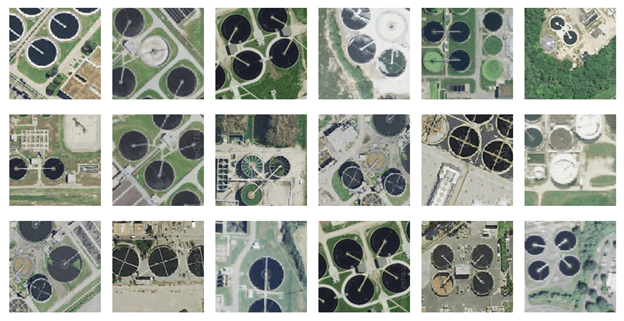
The world we inhabit is filled with countless objects, waiting to be found and understood. With the launch of GeoVisual Search by Descartes Labs, the act of searching for specific objects across the globe has transformed from a mere conception to a highly interactive reality. This innovative tool not only aids researchers and analysts but also marks the dawn of a new era for geospatial intelligence.
What is GeoVisual Search?
Descartes Labs, a pioneering geospatial analytics startup based in Los Alamos, New Mexico, has unveiled GeoVisual Search, a highly flexible tool that allows users to search for various objects worldwide. From ubiquitous shipping containers to hidden parking lots, users can simply create a bounding box around an area of interest, and the system will provide similar instances found globally.
The Science Behind the Search
The backbone of GeoVisual Search leverages machine learning and satellite imagery analysis, enabling predictive analytics in agriculture and other sectors. The company employs a sophisticated 50-layer ResNet model, utilizing Keras for deep learning tasks, optimized for specific geospatial queries. The process involves layering multiple satellite images, which enhances quality by selecting the best pixels from extensive areas and addressing atmospheric disturbances—ensuring users receive clear and relevant results.
Expanding Capabilities
While GeoVisual Search is a remarkable tool, it is still evolving. Currently, it may not completely differentiate between visually similar objects, such as windmills and turbines. Descartes Labs’ CEO Mark Johnson intriguingly hints at a future possibility of a Tinder-like interface, where users could swipe through search results, an exciting concept for refining search outputs.
Accessibility for All: Bridging the Resource Gap
One of the most captivating aspects of GeoVisual Search is its potential to democratize access to powerful geospatial data. Large tech companies, like Facebook, have historically had the upper hand in utilizing advanced analytics. However, with GeoVisual Search being free for users, even small organizations can embark on ambitious projects that were previously exclusive to those with immense resources.
Unlocking New Possibilities
- Environmental Monitoring: Smaller institutions and nonprofits could track environmental changes using satellite imagery analysis.
- Urban Planning: Local governments can identify land use patterns effectively and devise smarter urban expansion strategies.
- Logistics Optimization: Companies can enhance supply chains by locating shipping containers or parking lots with precision.
The Competitive Landscape
Descartes Labs’ GeoVisual Search stands apart from other initiatives like Carnegie Mellon’s Terrapattern. While Terrapattern limit its search capabilities primarily to select urban areas, GeoVisual Search takes a tremendous leap by facilitating a global search horizon with data from NAIP Aerial Imagery, PlanetScope, and Landsat 8.
Future Directions
As GeoVisual Search continues to improve, the intersection of technology and geospatial data promises transformative applications across various sectors. The potential for collaboration with analysts and researchers can lead to a wealth of applications, enhancing global connectivity efforts and providing insights into resource allocation.
Conclusion
In summary, Descartes Labs’ GeoVisual Search marks a watershed moment in the realm of geospatial discovery. By enabling users to search vast expanses of our planet with intuitive interaction, it opens the doors for groundbreaking research and innovative solutions across various fields. For organizations eager to leverage this tool, the possibilities are as expansive as the Earth itself.
At **[fxis.ai](https://fxis.ai/edu)**, we believe that such advancements are crucial for the future of AI, as they enable more comprehensive and effective solutions. Our team is continually exploring new methodologies to push the envelope in artificial intelligence, ensuring that our clients benefit from the latest technological innovations.
For more insights, updates, or to collaborate on AI development projects, stay connected with **[fxis.ai](https://fxis.ai/edu)**.