
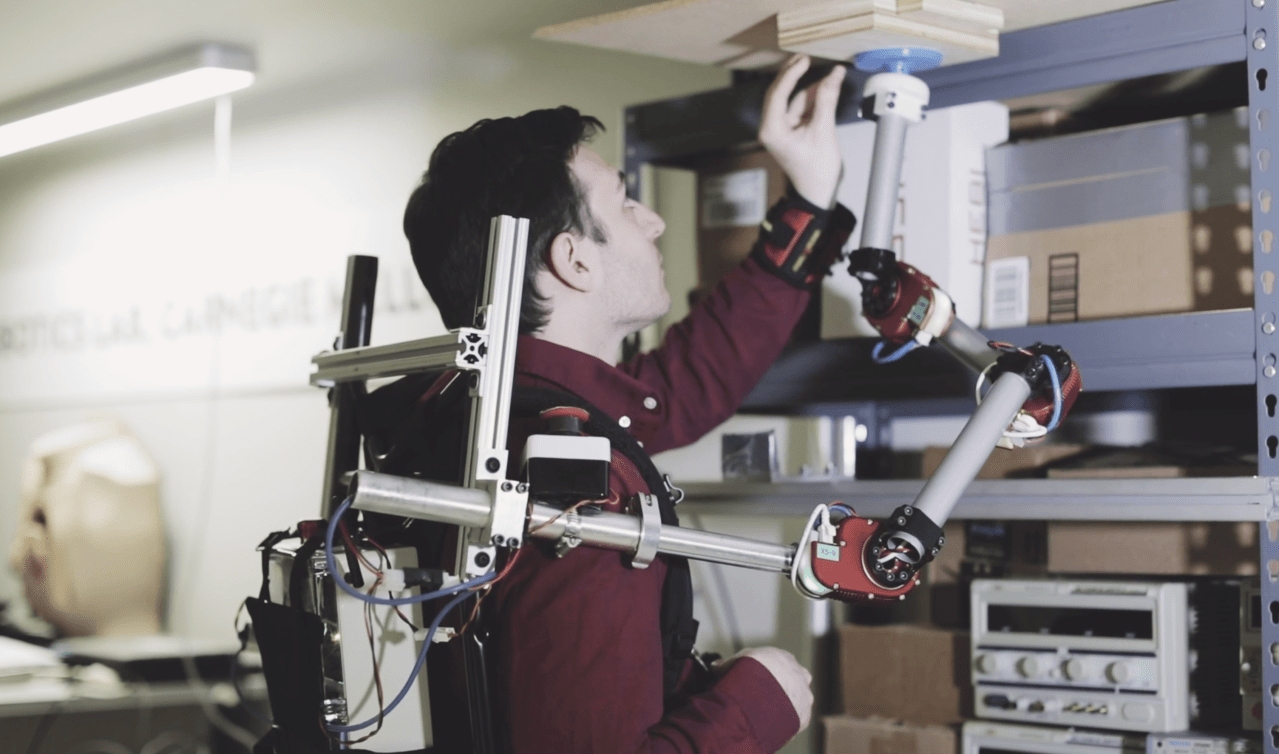
In the realm of robotics, few institutions have made as profound an impact as Carnegie Mellon University’s Biorobotics Lab. Known for its pioneering work on modular robots, this lab is at the forefront of technological innovation. One of its latest projects, a robotic arm that attaches to a backpack, aims to elevate the capabilities of human workers, especially in industries involving complex assembly tasks. Let’s dive deeper into the intricate workings of this project and explore its potential implications.
The Genesis of Modular Robotics
The Biorobotics Lab’s journey began with the creation of a modular snake robot, originally intended for search and rescue missions. This innovative design deployed modularity, enabling engineers to mix and match various components to adapt to different tasks. This adaptability has spurred an array of projects, including a spider-like hexapod robot and the commercial ventures of startups like Hebi, showcasing how modular technology is reshaping the robotics landscape.
The Novel Concept of an Extra Limb
Fast forward to the latest endeavor: a wearable robotic arm that extends human capabilities. Julian Whitman, a doctoral student associated with this project, emphasizes that it’s not just another exoskeleton. Instead, it’s a versatile robotic arm that assists in executing tasks that exceed the limitations of human dexterity.
- Functionality: The system is designed to aid in complex assembly tasks, such as holding components in place during automotive or airplane assembly. This innovation seeks to replace the need for an extra worker, simplifying the operational flow.
- Control Mechanics: Currently, the robotic arm is operated via a game controller, with potential for voice command features. This user-friendly interface allows for intuitive control, although there remains a challenge in managing multiple limbs concurrently.
- Future Prospects: The vision for this project extends beyond basic functionality. Researchers aim to equip these arms with autonomous capabilities, allowing them to perceive their environment and make decisions independently, thus further enhancing productivity.
Balancing Complexity and Control
One of the intriguing challenges highlighted by Whitman is the balance between operational complexity and user control. As the number of robotic limbs increases, so does the difficulty for the operator to manage them effectively. This inherent limitation underscores the importance of refining control systems for future iterations.
Imagine a scenario akin to “Dr. Octopus,” where a user could wield multiple robotic arms for various tasks—a tantalizing prospect that could revolutionize manual labor across several industries. Yet, the question remains: how can engineers ensure seamless and intuitive control in such situations?
The Broader Implications for Industry
The implications of this research extend far beyond the confines of a laboratory. By integrating such technology into industries like automotive manufacturing and aircraft assembly, organizations could significantly enhance efficiency and reduce labor costs. It offers a glimpse into a future where humans and robots collaborate symbiotically to achieve greater feats than either could alone.
Conclusion
The work being done at CMU’s Biorobotics Lab exemplifies the extraordinary potential of modular robotics. By creating a robotic arm that attaches to a backpack, researchers are paving the way for innovations that not only augment human capabilities but also redefine how industries approach manual labor. As we continue to witness advancements in autonomous technologies, the future looks promising for the harmonious integration of robotics in daily work processes.
At fxis.ai, we believe that such advancements are crucial for the future of AI, as they enable more comprehensive and effective solutions. Our team is continually exploring new methodologies to push the envelope in artificial intelligence, ensuring that our clients benefit from the latest technological innovations.
For more insights, updates, or to collaborate on AI development projects, stay connected with fxis.ai.